
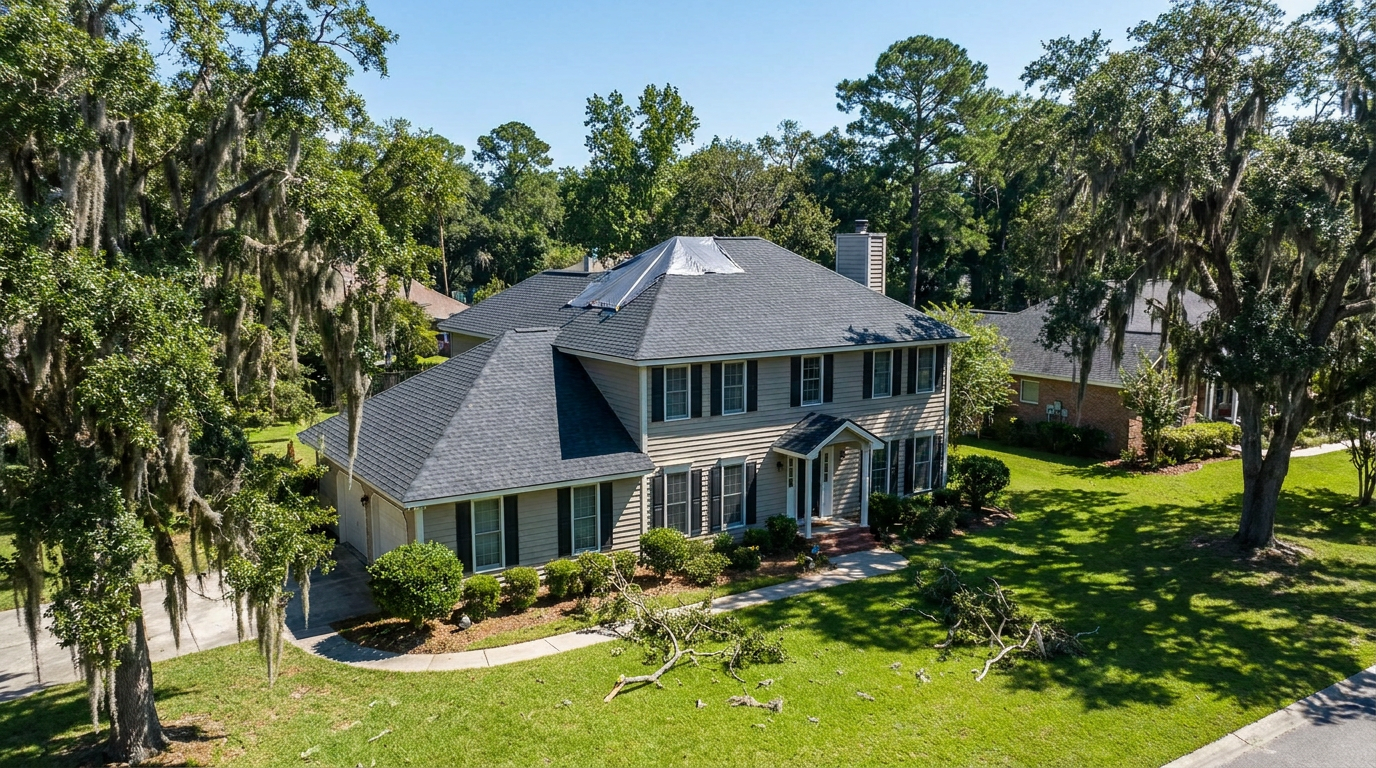
The moments following a severe coastal storm can be overwhelming. In Savannah and across the Southeast, high-velocity winds, torrential rain, and falling debris from our iconic live oaks can wreak havoc on even the sturdiest roofing systems. When you realize your home has sustained damage, the clock starts ticking.
The first 24 hours are critical. How you handle this window determines whether you face a straightforward repair or a long, expensive battle with water intrusion and insurance delays. Here is a professional roadmap for navigating the first day after a storm.
Prioritize Immediate Safety
Before you look up at your shingles, look around your property. After a Southeast storm, the most immediate threats are often invisible or grounded.
Watch for Downed Power Lines
High winds and falling branches frequently bring down utility lines. If you see a line down on your property or touching your roof, do not approach it. Assume all downed wires are live and contact your local utility provider immediately.
Assess Structural Integrity
If a large tree limb has penetrated your roof or if you notice sagging ceilings inside the home, do not stay in those rooms. Structural damage can worsen quickly as weight shifts or water saturates support beams. If the damage is severe, it is safer to vacate the premises until a professional can verify the home's stability.
Conduct a Ground-Level Damage Assessment
You do not need to climb onto your roof to get a clear picture of the damage. In fact, we strongly advise against it. After a storm, roof surfaces are slick, and structural damage may have made certain sections unstable.
Look for Displaced Materials
Walk the perimeter of your home and look for "roof debris" on the lawn. This includes:
- Whole or partial asphalt shingles
- Metal flashing or drip edges
- Pieces of siding or fascia
- Granules (which look like coarse sand) accumulating at the base of your downspouts
Identify "Impact Zones"
Scan your roof from the ground for missing shingles, lifted metal panels, or cracked tiles. Pay close attention to the ridges and valleys, as these are the areas most susceptible to wind uplift during hurricanes and tropical storms.
Document Everything for Insurance Purposes
Your insurance company will require evidence to process your claim efficiently. The first 24 hours are the best time to capture this data before any temporary repairs are made or further weather events occur.
Take Comprehensive Photos
Use your smartphone to take wide-angle photos of the entire house, as well as close-up shots of specific damage areas from the ground. Document damaged fences, dented gutters, and broken windows as well, as these often serve as "collateral damage" evidence for high-wind events.
Check the Interior
Head to your attic or the upper floors of your home. Look for water spots on the ceiling, damp insulation, or sunlight peeking through the roof deck. Document these interior signs of failure, as they prove the exterior envelope has been breached.
Prevent Secondary Water Damage
In the humid climate of Georgia and South Carolina, moisture is the enemy. Once water enters your home, mold and mildew can begin to grow within 24 to 48 hours. Taking steps to mitigate damage is actually a requirement in most insurance policies.
Place Buckets and Move Valuables
If you have an active leak, place containers to catch the water and use towels to soak up standing moisture. Move electronics, furniture, and heirlooms out of the affected area immediately.
Professional Tarping
While some homeowners attempt to tarp their own roofs, this is dangerous work. A professional roofing contractor can provide emergency dry-in services, securing heavy-duty tarps to prevent further rain from entering the home while you wait for a full inspection and insurance adjustment.
Beware of "Storm Chasers"
In the wake of a major weather event in Savannah, door-to-door contractors often flood the area. While some are legitimate, many are "storm chasers" who travel from state to state, performing sub-par work and disappearing before warranties can be honored.
Check for Local Roots
Ensure the contractor you call has a physical office in the region (Georgia, Florida, or South Carolina) and a proven track record with local references. Verify their licensing and insurance to ensure you aren't liable for any accidents that occur on your property.
Demand a Detailed Inspection
A reputable contractor will provide a comprehensive inspection report rather than just a verbal estimate. They should check for subtle signs of damage, such as bruising on shingles from hail or loosened fasteners that may lead to leaks months down the line.
Why Professional Restoration Matters in the Southeast
Our regional climate presents unique challenges. Between the intense UV rays that degrade shingles and the high humidity that encourages algae growth (Gloeocapsa magma), your roof is already under stress. When storm damage is added to the mix, the degradation process accelerates.
A local expert like Diamond Roof Restorations understands these specific environmental factors. We don't just patch holes; we restore the roof’s ability to withstand the next hurricane season and the relentless Southern sun.
Get Your Free Damage Assessment Today
Don't let the first 24 hours pass without professional guidance. If your home has been affected by wind, hail, or fallen debris, the team at Diamond Roof Restorations is ready to help. We serve homeowners across Savannah, GA, and the surrounding regions with honest assessments and high-quality craftsmanship.
Protect your investment and your family. Call Diamond Roof Restorations at (912) 207-6273 or contact us online to schedule your free, no-obligation storm damage inspection.