
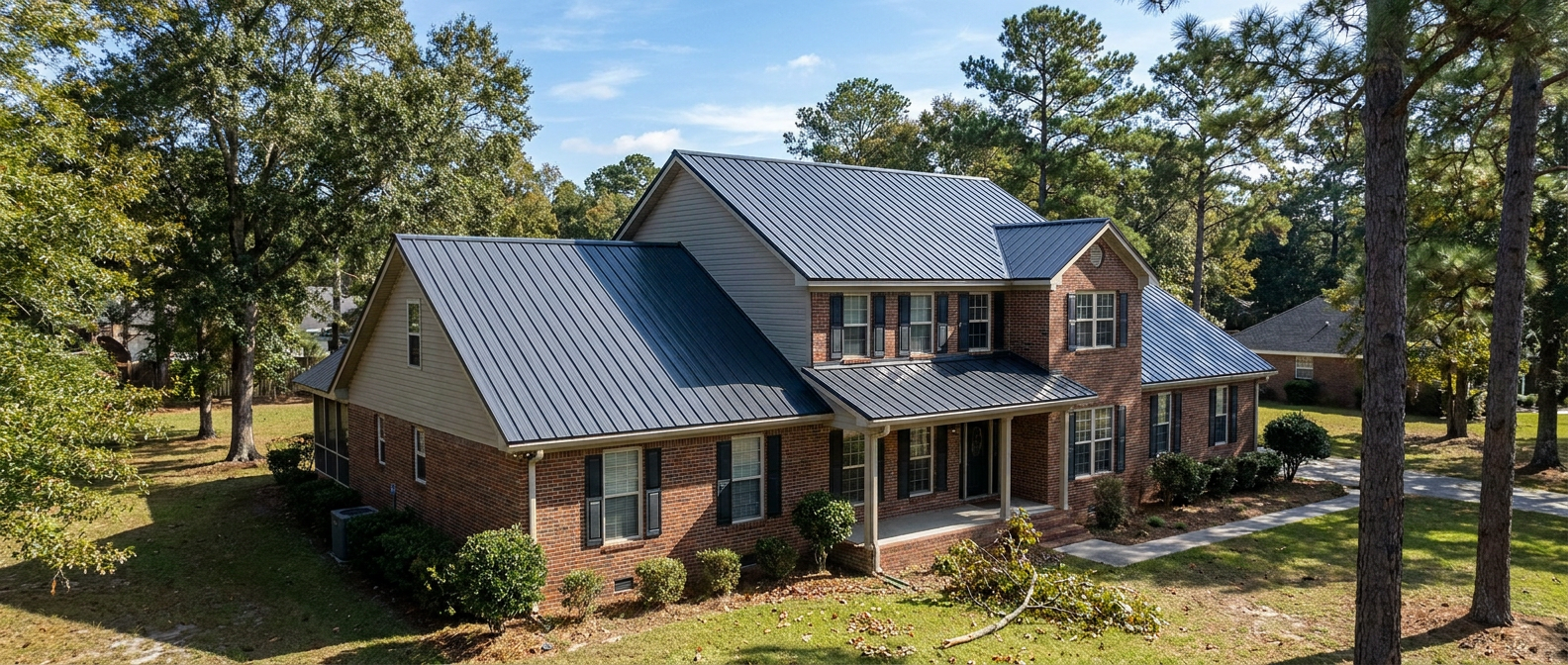
The immediate aftermath of a severe storm in Hinesville, Georgia, is often a blur of high adrenaline and stress. Whether it was a fast-moving summer thunderstorm, a hurricane-related wind event, or a sudden hail burst, seeing debris on your lawn and missing shingles on your roof can be overwhelming.
However, the actions you take in the first 24 hours are the most critical for two reasons: protecting your home from further interior water damage and ensuring your insurance claim is processed smoothly. In the humid Southeast climate, a small leak can turn into a major mold issue in a matter of days. This guide outlines the immediate steps you should take to secure your property and your peace of mind.
1. Prioritize Immediate Safety
Before you look at the roof, ensure your family and property are safe. If the storm was severe enough to knock down power lines or large tree limbs, stay clear of the area.
Check for Electrical Hazards
If you notice water dripping through light fixtures or ceiling fans, do not turn them on. Water and electricity are a lethal combination. Turn off the power at the breaker box for the affected rooms and avoid standing in any pooled water.
Structural Integrity
If you see a significant sag in the roofline or large cracks in the drywall that weren’t there before the storm, the structural integrity of the home may be compromised. In these rare cases, it is best to evacuate until a professional can assess the damage.
2. Document Everything from the Ground
Your insurance company will require evidence of the damage. While it is tempting to climb up a ladder to get a closer look, we strongly advise staying on the ground. Professional roofing contractors have the safety gear and training to navigate slick, damaged roofs; homeowners do not.
Visual Documentation
Use your smartphone to take photos and videos of the exterior of your home. Focus on:
- Missing Shingles: Look for “bald spots” on the roof where the dark underlayment is visible.
- Granule Loss: Check your downspouts. If you see piles of sand-like granules, your shingles have likely suffered impact damage from hail or high winds.
- Dented Gutters: Dents in metal gutters or downspouts are often the “smoking gun” for hail damage insurance claims.
- Fallen Debris: Document any tree limbs that have landed on the roof, even if they haven't visibly punctured the surface.
Interior Assessment
Head to your attic with a flashlight. Look for damp insulation, water staining on the rafters, or sunlight peeking through the roof deck. Document any leaks in the living areas, including ceiling stains and bubbling paint.
3. Mitigation: Prevent Secondary Damage
In the state of Georgia, most insurance policies require homeowners to take “reasonable steps” to prevent further damage after a loss. This is known as the duty to mitigate.
Contain Interior Leaks
If water is dripping from the ceiling, place buckets underneath and move furniture or electronics out of the way. If the ceiling is bulging with water, you may need to carefully poke a small hole in the center of the bulge to release the pressure and direct the water into a container. This prevents the entire drywall sheet from collapsing under the weight.
Professional Tarping
If the roof has a visible hole or a large section of missing shingles, it needs to be tarped. Because of the high humidity in Hinesville and the surrounding Liberty County area, even a small amount of moisture can trigger rapid mold growth. Contact a local roofer who offers emergency tarping services to provide a temporary barrier against the next rain shower.
4. Understanding Southeast-Specific Damage
Roofing in Georgia, South Carolina, and Florida faces unique challenges that standard national guides often overlook.
Wind Uplift and Seal Failure
In the Southeast, we deal with high wind speeds that don't always rip shingles off. Instead, they lift the shingle, breaking the thermal seal. Once that seal is broken, the shingle loses its ability to shed water properly and becomes highly susceptible to the next storm. Even if your roof looks “okay” from the ground, the structural integrity of the shingles may be compromised.
The Role of Algae and Humidity
You may notice black streaks on your roof (Gloeocapsa magma). While this is common in Hinesville due to our humidity, a storm can worsen the situation. High winds can strip away the protective granules that are already weakened by algae growth, leading to premature roof failure.
5. Contact Your Insurance Agent
Once you have documented the damage and ensured the home is safe, call your insurance company to start a claim.
- Ask for the Claim Number: Keep this handy for all future correspondence.
- Avoid Hasty Settlements: An insurance adjuster may offer a quick payout. It is often wise to have a professional roofing contractor present when the adjuster inspects the property to ensure no hidden damage is overlooked.
6. Choose a Local, Reputable Contractor
After a major storm, “storm chasers” often flock to Hinesville. These are out-of-state contractors who follow storms, perform quick repairs, and disappear before the next season.
Always work with a local company that understands Georgia building codes and Southeast weather patterns. A local contractor like Diamond Roof Restorations will be here to honor warranties and provide follow-up service long after the storm clouds have cleared.
Get a Professional Inspection Today
The first 24 hours are about safety and documentation, but the following 48 hours should be about restoration. Don't let a small leak turn into a costly structural repair or a mold infestation.
If you suspect your home has sustained damage from recent winds, hail, or falling debris, contact the experts at Diamond Roof Restorations. We provide comprehensive inspections and help you navigate the complexities of the restoration process. We proudly serve Hinesville, GA, and the surrounding regions across Georgia, Florida, and South Carolina.
Call us at (912) 207-6273 or visit our website to schedule your free, no-obligation roof inspection.