
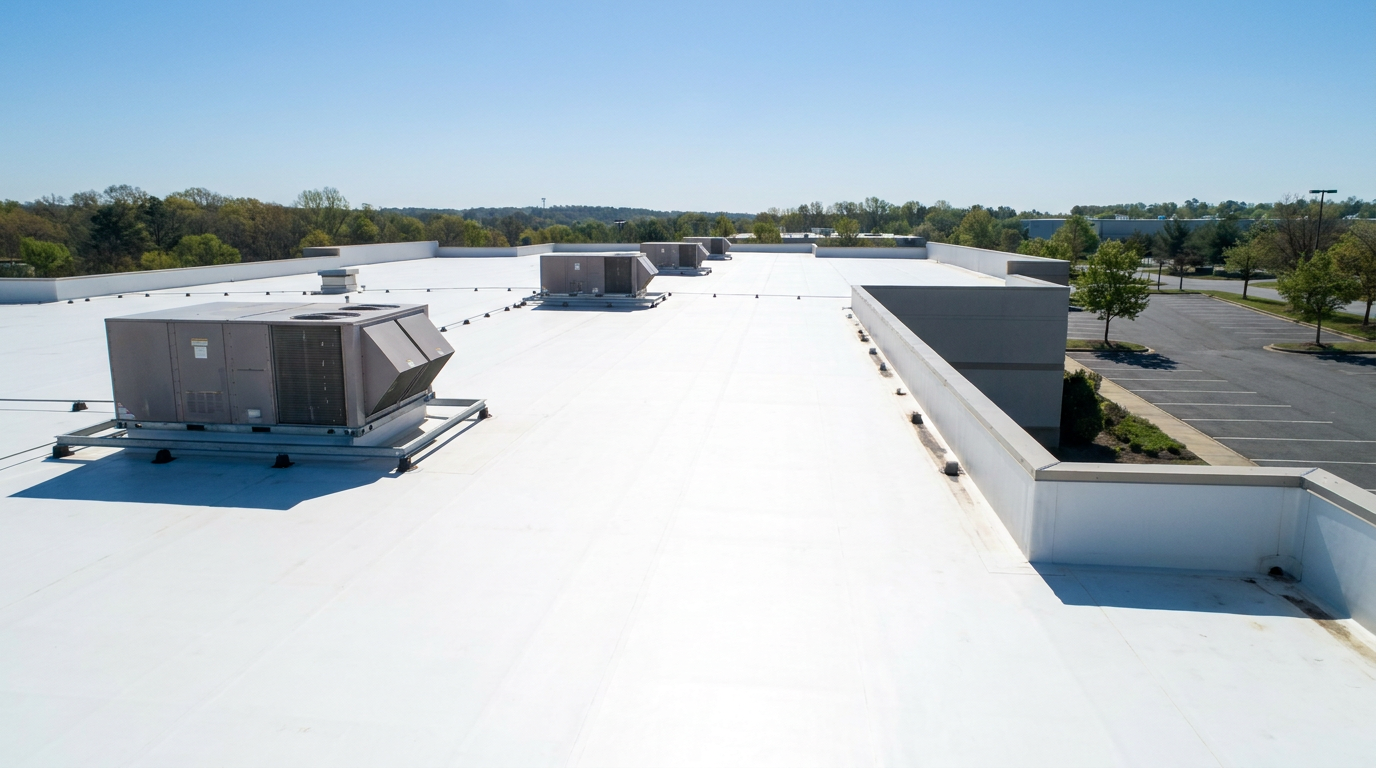
For business owners in Hinesville, Georgia, the roof over your head is more than just a structural necessity—it is a critical asset that protects your inventory, your employees, and your bottom line. Unlike sloped residential roofs that shed water quickly, flat commercial roofing systems require a proactive approach to prevent moisture intrusion and premature failure.
The subtropical climate of Liberty County, characterized by intense humidity, heavy seasonal rains, and the looming threat of Atlantic hurricane activity, places unique stresses on TPO, EPDM, and modified bitumen systems. A neglected roof doesn't just leak; it compromises your building's energy efficiency and structural integrity. Implementing a consistent flat roof maintenance schedule is the most effective way to extend the life of your system and avoid the high costs of emergency replacements.
The Quarterly Inspection: Why Consistency Matters
In the Southeast, a "set it and forget it" mentality is dangerous for commercial roofing. A quarterly inspection allows you to catch minor issues before the next heavy storm turns them into major liabilities.
Spring: Post-Pollen and Storm Prep
Spring in Georgia brings heavy yellow pollen and the start of thunderstorm season. During this time, the focus should be on cleanliness. Pollen and organic debris can accumulate in corners, creating a substrate for moss and algae growth. This biological growth holds moisture against the roofing membrane, leading to accelerated degradation.
Summer: UV Protection and Thermal Expansion
Hinesville summers are brutal. Flat roofs bear the brunt of intense UV radiation, which can cause membranes to become brittle. Additionally, the cycle of extreme daytime heat followed by cooling evening rains causes "thermal shock," where the roof expands and contracts rapidly. Summer inspections should focus on flashings and seams to ensure the movement hasn't caused separations.
Autumn: Leaf Debris and Drainage
As trees shed their leaves, your drainage system becomes the priority. A flat roof is only as good as its ability to move water off the surface. Clogged scuppers or internal drains lead to ponding water, which adds thousands of pounds of unnecessary weight to your building's structure.
Winter: Seal Integrity
While our winters are mild compared to the North, the cooler temperatures are the ideal time to inspect the elasticity of sealants around HVAC units, vents, and pipes. Seals that have dried out over the summer are prone to cracking when temperatures finally drop.
Essential Tasks for Your Maintenance Checklist
A comprehensive maintenance plan involves more than just a quick walk-around. To truly protect your investment, your facility manager or roofing partner should address the following areas:
1. Debris Removal
Limbs, leaves, and wind-blown trash act like sponges, trapping moisture. On a flat roof, this can lead to "ponding," defined as water that remains on the roof for more than 48 hours after a rain event. Professional cleaning ensures that water flows freely toward your drainage points.
2. Clearing Drains, Gutters, and Scuppers
In Hinesville, we often experience several inches of rain in a single afternoon. If your drains are obstructed, that water has nowhere to go but under your flashings or into your building. Ensuring that all drainage components are clear is the single most important task for preventing interior water damage.
3. Inspecting Seams and Flashings
Most flat roof leaks do not occur in the middle of the membrane; they occur at the edges. Flashings—the material used to seal the roof around edges, walls, and penetrations—are the most vulnerable points. We look for lifting, cracking, or gaps where the adhesive may have failed.
4. Monitoring Equipment Curbs
Commercial roofs often house heavy HVAC units. The "curbs" these units sit on are common leak points. Vibrations from the machinery can loosen fasteners or break seals over time, requiring periodic reinforcement.
Addressing Southeast-Specific Challenges
Operating in Georgia, Florida, and South Carolina presents challenges that contractors in other regions rarely face. Your maintenance schedule must account for these local factors:
Humidity and Algae Growth
The high humidity in Liberty County promotes the growth of Gloeocapsa magma, a type of cyanobacteria that appears as black streaks. Beyond being an eyesore, algae can reduce the reflectivity of "cool roofs," leading to higher cooling costs for your business.
Hurricane and Tropical Storm Preparedness
Before hurricane season peaks in late summer, a professional inspection is vital. Loose metal coping or poorly secured flashings can act like a sail in high winds, leading to a catastrophic roof blow-off. Strengthening these attachment points is a core part of a preventative maintenance strategy.
The Financial Benefits of Professional Oversight
Many business owners view roof maintenance as an expense, but it is actually a cost-saving measure. Documented professional maintenance can:
- Preserve Warranty Validity: Most manufacturers require proof of regular maintenance to honor their long-term warranties.
- Extend Roof Life: A well-maintained flat roof can last 20-25 years, whereas a neglected one may fail in as little as 10 to 12.
- Tax Benefits: General maintenance is often deductible as a business expense in the year it is performed, unlike a full replacement which must be capitalized.
- Accurate Budgeting: Regular reports give you a clear timeline of when you will eventually need a replacement, allowing you to plan your capital expenditures years in advance.
Secure Your Commercial Property with Diamond Roof Restorations
Don't wait for a ceiling leak to tell you that your roof is failing. At Diamond Roof Restorations, we specialize in helping business owners across Hinesville, GA, and the surrounding Southeast regions maximize the lifespan of their commercial roofing systems. Our team understands the specific demands of the coastal climate and provides the thorough, honest assessments you need to keep your operations running smoothly.
Protect your assets and gain peace of mind with a professional evaluation. Contact Diamond Roof Restorations today at (912) 207-6273 to schedule your free, no-obligation flat roof inspection. Let us help you build a maintenance schedule that works for your building and your budget.