
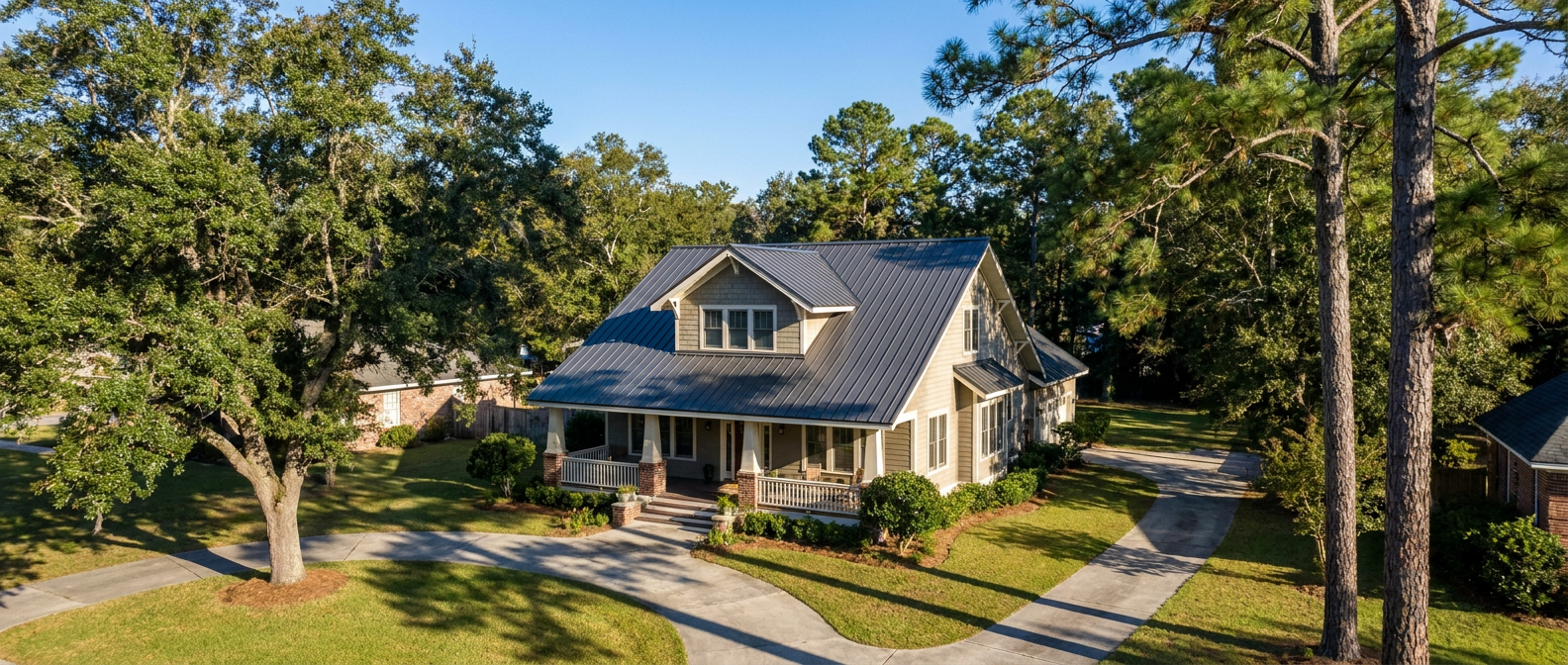
If you have noticed dark, vertical smears creeping down your roof, you aren't alone. For homeowners across the Southeast—from the coastal plains of South Carolina down through the humid corridors of Georgia and Florida—those unsightly black streaks are a common sight. In Waycross, GA, our unique combination of high humidity and intense heat creates the perfect breeding ground for these organisms.
While many people mistake these stains for dirt, soot, or mold, the reality is more biological. Understanding what is growing on your shingles is the first step in protecting one of your home's most significant investments. At Diamond Roof Restorations, we believe that an informed homeowner is the best defense against premature roof failure.
What Causes Black Stains on Southeast Roofs?
Contrary to popular belief, those black streaks are usually not mold or mildew. In the vast majority of cases in the Southeast, the culprit is a cyanobacteria called Gloeocapsa magma.
This specific type of algae thrives in warm, moist environments. It hitches a ride on the wind or is carried by birds, landing on your shingles and beginning to colonize. The black color you see is actually a protective outer coating the algae develops to shield itself from the intense Georgia sun.
Why Your Shingles Are the Target
Modern asphalt shingles contain crushed limestone as a filler. To Gloeocapsa magma, this limestone is a food source. As the algae consumes the limestone, it weakens the structural integrity of the shingle. Over time, this leads to the loss of protective granules, which are essential for reflecting UV rays and shedding water during our heavy summer thunderstorms.
The Regional Impact: Why Waycross is Algae-Prone
Living in Waycross and the surrounding Ware County area means dealing with a specific set of environmental stressors. Our proximity to the coast and the Okefenokee Swamp ensures that humidity levels remain high year-round.
Humidity and Heat
Algae requires moisture to survive. Even during dry spells, the overnight dew point in the Southeast is often high enough to provide the hydration these organisms need. When you combine this moisture with 90-degree days, you have a literal laboratory for algae growth.
Hurricane and Storm Debris
We also face significant wind events and tropical systems. These storms often deposit organic debris—leaves, pine needles, and branches—onto roof surfaces. If this debris isn't cleared, it traps moisture against the shingles, accelerating the growth of algae, moss, and lichen.
Why You Shouldn't Ignore the Streaks
It is tempting to view black stains as a purely cosmetic issue. However, ignoring them can lead to several long-term problems that eventually require expensive interventions.
Reduced Energy Efficiency
Your roof is designed to reflect sunlight. The dark pigments of Gloeocapsa magma absorb heat rather than reflecting it. This can significantly increase your attic temperature, forcing your air conditioning system to work harder and driving up your monthly utility bills during a South Georgia summer.
Accelerated Shingle Decay
As the algae eats through the limestone filler, the granules that protect the shingle begin to slough off. Once these granules are gone, the asphalt beneath is exposed to the elements. This leads to "balding" shingles, which become brittle and are much more likely to crack or blow off during high winds.
Effective Prevention Strategies
Prevention is always more cost-effective than restoration. There are several steps homeowners in Georgia, Florida, and South Carolina can take to minimize algae growth.
Professional Soft Washing
Never use a high-pressure power washer on your roof. High pressure can blast away the protective granules and void your manufacturer's warranty. Instead, professional roofers use a "soft wash" method. This involves applying a specialized, biodegradable solution that kills the algae at the root without damaging the shingles.
Improving Airflow and Sunlight
Algae thrives in the shade. If you have large trees overhanging your home, consider trimming them back. Increasing the amount of sunlight that hits your roof and improving the airflow across the shingles will help moisture evaporate more quickly, making the environment less hospitable for bacteria.
Regular Gutter Maintenance
Clogged gutters cause water to back up onto the roof's edge. This constant saturation promotes the growth of moss and algae. Ensuring your gutters are clear allows the roofing system to shed water as intended.
The Role of Zinc and Copper Strips
One proactive measure is the installation of metallic strips (usually zinc or copper) near the roof peak. When it rains, minute particles of the metal are washed down the roof. These metals are naturally antimicrobial and can prevent algae from taking hold. While this isn't a 100% cure for existing stains, it is an excellent preventative measure for new or recently cleaned roofs.
Choosing a Professional in the Southeast
Roofing in the Southeast requires a specific skill set. Between the threat of Atlantic hurricanes and the localized humidity of Waycross, GA, you need a contractor who understands regional building codes and the specific challenges of our climate.
DIY roof cleaning is dangerous and often results in damaged shingles or personal injury. A professional contractor has the safety equipment and the correct chemical ratios to ensure your roof is cleaned effectively without harming your landscaping or the integrity of your home.
Protect Your Home with Diamond Roof Restorations
Don't let black streaks diminish your home's value or shorten the life of your roof. Whether you are in Georgia, Florida, or South Carolina, Diamond Roof Restorations is here to help you maintain a beautiful, functional roof.
Our team specializes in identifying the specific biological growths affecting your shingles and providing safe, effective solutions tailored to the Southeast climate. We pride ourselves on transparency and quality workmanship for every Waycross neighbor we serve.
Ready to restore your roof's beauty and protection? Contact Diamond Roof Restorations today at (912) 207-6273 to schedule your free, no-obligation roof inspection.