
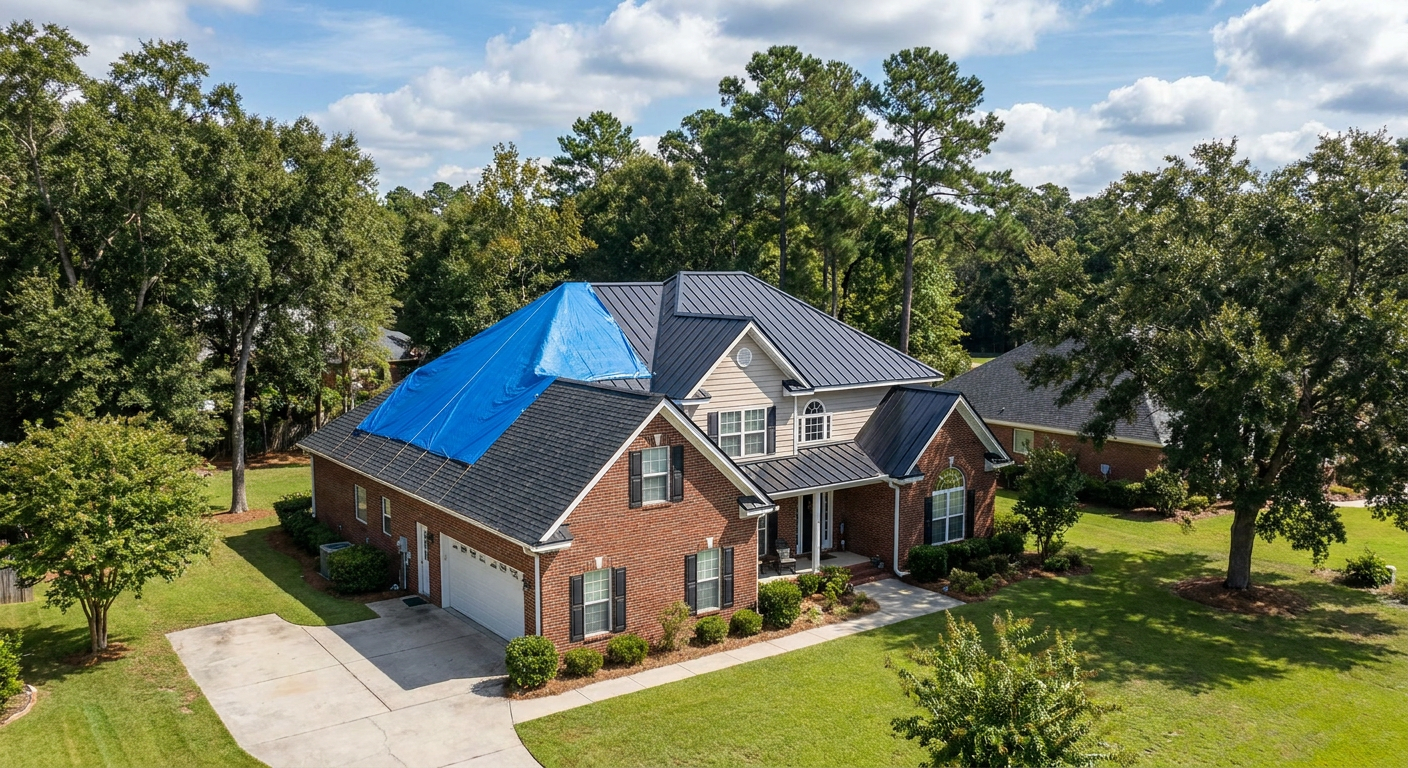
Living in the Southeast, especially around Statesboro, Georgia, means dealing with unpredictable and often violent weather. When a severe thunderstorm or hurricane-force wind tears through Bulloch County, your roof is the first line of defense. But what happens when that defense is breached?
If you find missing shingles, punctured decking, or water dripping through your ceiling after a storm, the clock is ticking. Secondary water damage—mold growth, rotted structural beams, and ruined insulation—can begin within hours. Emergency roof tarping is the most critical step you can take to mitigate damage while you wait for permanent repairs.
Why Emergency Tarping is Non-Negotiable
When a roof is damaged, the interior of your home is exposed to the elements. In Statesboro’s humid climate, moisture is the enemy. A temporary tarp serves as a vital barrier, preventing further rain from entering and securing your property against opportunistic pests.
Preventing Secondary Water Damage
Even a small leak can lead to a massive restoration bill. Water follows the path of least resistance, often traveling down rafters and pooling in areas far from the original entry point. By applying a heavy-duty, weather-resistant tarp, you stop the influx of water, keeping your drywall, flooring, and electrical systems safe.
Fulfilling Insurance Requirements
Most homeowners' insurance policies in Georgia and Florida include a "mitigation clause." This clause requires the policyholder to take reasonable steps to prevent further damage after a loss occurs. If you leave a hole in your roof uncovered and a subsequent rainstorm ruins your hardwood floors, the insurance company may deny the claim for the flooring. Professional tarping provides documented proof that you took proactive steps to protect your asset.
The Hazards of DIY Tarping in the Southeast
It is tempting to grab a blue tarp from a local hardware store and a ladder, but DIY emergency roofing is fraught with risks, especially following a storm.
Structural Instability
After a storm, the structural integrity of your roof may be compromised. Weakened decking or loose rafters can give way under a person's weight. Professional roofers are trained to identify these soft spots and navigate a damaged surface safely.
Slippery Conditions and High Humidity
Statesboro is known for high humidity, which can make even a dry roof slippery due to algae growth (Gloeocapsa magma). After a rain, the surface becomes a skating rink. Professionals use specialized safety harnesses and high-traction footwear to mitigate these risks.
Improper Fastening
Simply weighing down a tarp with bricks or 2x4s is rarely effective against the gusty winds common in South Carolina and Georgia. If a tarp isn't tensioned correctly and fastened with furring strips, the wind can get underneath it, turning the tarp into a sail that can pull off even more shingles.
The Professional Tarping Process
When Diamond Roof Restorations arrives for an emergency call, we follow a rigorous process to ensure your home remains dry.
1. Damage Assessment and Debris Removal
Before a tarp can be placed, we clear away fallen branches, broken shingles, and loose debris. We also perform a quick assessment to understand the extent of the damage, which helps in the eventual insurance claim.
2. Measuring and Sizing
The tarp must extend over the ridge of the roof to prevent water from running underneath the top edge. We use heavy-duty, UV-resistant polyethylene tarps designed to withstand the intense Georgia sun.
3. Secure Fastening with Furring Strips
We don't just nail through the tarp. We use wooden furring strips to sandwich the tarp edges against the roof. This creates a tight seal that prevents wind from lifting the material and stops water from seeping through nail holes.
4. Transitioning to Permanent Repair
A tarp is a temporary solution, typically rated for 30 to 90 days. During this window, we work with you to finalize a restoration plan, whether that involves targeted repairs or a full roof replacement.
Understanding Southeast Roofing Challenges
Roofing in the Southeast requires a specific approach due to our unique environment.
Hurricane Winds and Tropical Depressions
Inland areas like Statesboro may not get the direct storm surge of the coast, but we frequently experience tropical-storm-force winds. A standard tarping job that works in the Midwest may fail here. We ensure our emergency measures are robust enough to handle the lingering gusts of a passing system.
The Role of Algae and Mold
Our heat and moisture create a breeding ground for mold. If a leak is left untarped for even 48 hours, the internal humidity of your home spikes. This can trigger the growth of mold in your attic space, which is not only expensive to remediate but also a health hazard for your family.
Choosing a Local Restoration Expert
When disaster strikes, "storm chasers" often flood the area. These are out-of-state contractors who follow storms, perform quick fixes, and disappear before the warranty can be honored. Choosing a local contractor serving Georgia, Florida, and South Carolina ensures that you have a partner who understands local building codes and will be here for the long haul.
Diamond Roof Restorations specializes in the rapid response needed to protect homes in Statesboro. We understand the stress of storm damage, and our goal is to provide peace of mind through professional, durable emergency services.
Secure Your Home Today
Don't wait for the next rain cloud to appear. If your roof has sustained damage, every minute counts. Protect your investment, satisfy your insurance requirements, and keep your family dry with professional emergency tarping.
Contact Diamond Roof Restorations today for a comprehensive, free roof inspection. Our team is ready to secure your home and guide you through the restoration process.
Call us at (912) 207-6273 to speak with a roofing specialist.