
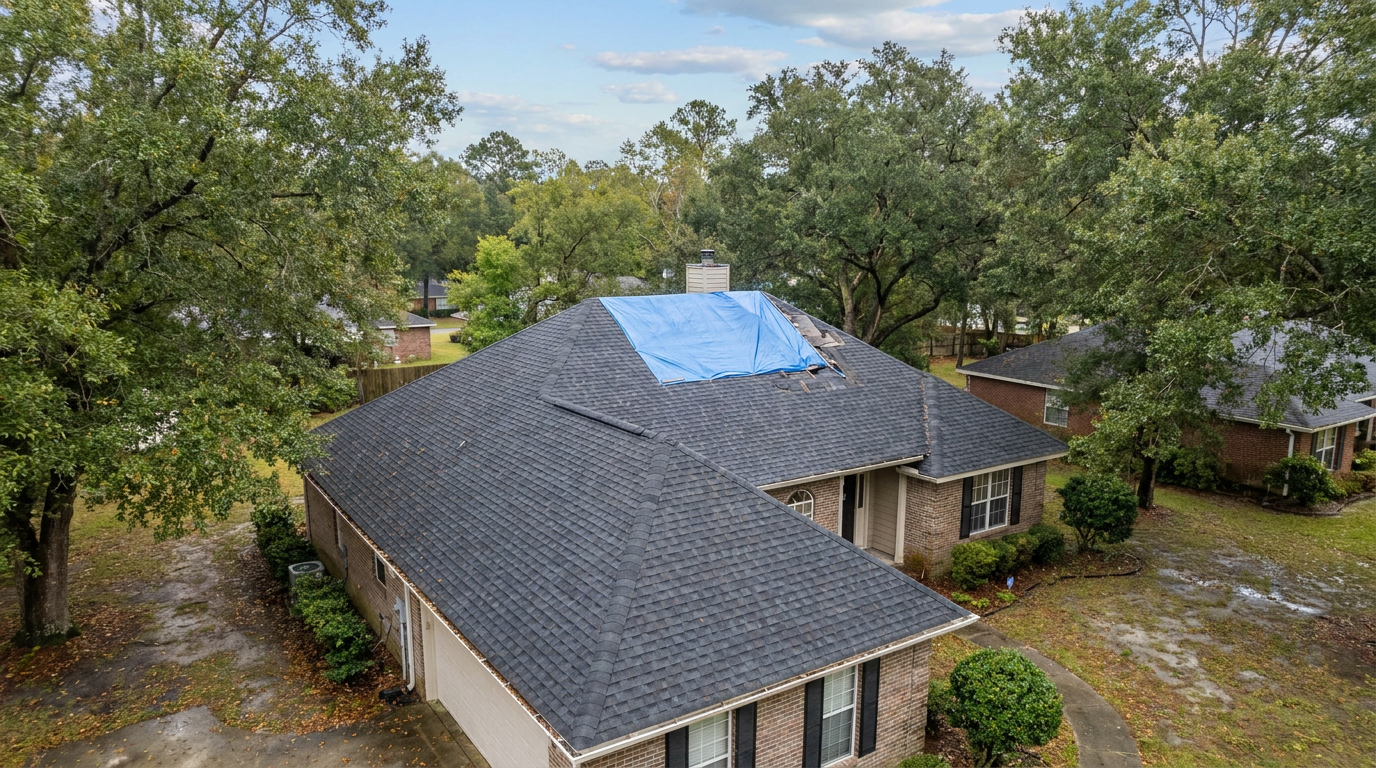
When a severe storm system rolls through Waycross, Georgia, the aftermath can be overwhelming. High winds, fallen pine branches, and torrential rains often leave homeowners facing the reality of a compromised roof. In the Southeast, where humidity levels are high and summer squalls are frequent, a small leak can transform into a major structural issue in less than 48 hours.
Emergency roof tarping is the most critical first step in the recovery process. It acts as a temporary shield, preventing secondary water damage, mold growth, and interior destruction while you coordinate with your insurance company and a professional roofing contractor for a permanent fix.
Why Speed is Critical in Southeast Storm Recovery
In the Waycross area, we deal with a unique set of meteorological challenges. Between hurricane season and the intense humidity of the Georgia-Florida line, a damaged roof is a ticking time bomb.
Preventing Secondary Water Damage
Once shingles are torn away or a limb punctures your decking, your home’s insulation, drywall, and electrical systems are exposed. In the Southeast, a single afternoon thunderstorm can dump inches of rain in minutes. Without a professional tarp, this water migrates through the attic, saturating ceiling joists and eventually leading to collapsed drywall.
The Threat of Rapid Mold Growth
Georgia’s heat and humidity provide the perfect breeding ground for mold. If water enters your home and is not addressed immediately, mold spores can begin to colonize within 24 to 48 hours. Emergency tarping keeps the moisture out, helping to maintain a dry environment and saving you thousands in potential remediation costs.
The Risks of DIY Tarping
It is tempting for homeowners to grab a ladder and a blue tarp from the local hardware store, but DIY tarping carries significant risks—both to your safety and your property.
Physical Safety Hazards
Roofing surfaces are incredibly dangerous when wet. Furthermore, storm-damaged roofs may have structural instabilities that aren't visible from the ground. A soft spot in the decking can lead to a dangerous fall. Professional crews use safety harnesses and have the experience to navigate compromised structures safely.
Improper Installation
Simply throwing a tarp over a hole and weighing it down with bricks or tires is ineffective. High winds, common in South Carolina and Georgia, will easily catch the edges of a loose tarp, blowing it off and potentially causing more damage. Professionals use furring strips to nail the tarp down securely, creating a watertight seal that can withstand subsequent weather events.
What to Expect During the Emergency Tarping Process
When Diamond Roof Restorations arrives for an emergency call in Waycross, we follow a systematic approach to ensure your home is stabilized.
1. Damage Assessment and Safety Check
Before stepping onto the roof, we assess the surrounding area for downed power lines and structural hazards. We then perform a quick but thorough inspection to identify all points of entry for water.
2. Clearing Debris
We remove fallen branches, loose shingles, and grit that could prevent the tarp from laying flat. A clean surface is essential for a proper seal.
3. Measuring and Positioning
The tarp must be large enough to cover the damaged area and extend over the peak (ridge) of the roof. This prevents water from running underneath the top edge of the tarp.
4. Securing with Furring Strips
Instead of just nailing through the fabric, we use wooden furring strips along the perimeter. This distributes the pressure of the nails and prevents the tarp from tearing in high winds.
Insurance and Emergency Repairs
Most homeowners' insurance policies in Georgia and Florida actually require the homeowner to take reasonable steps to prevent further damage after a loss. This is known as "mitigating the damage."
Emergency tarping falls directly into this category. By hiring a professional to secure the roof immediately, you are demonstrating to your insurance carrier that you have taken the necessary steps to protect the property. We recommend documenting the damage with photos before the tarp is installed to assist with your future claim.
Why Choose a Local Expert Near the GA/FL Border?
Roofing needs in the Waycross area differ from those in the Midwest or North. Our roofs face intense UV radiation, which can make older shingles brittle and more prone to shattering during hail or wind events. We also deal with Gloeocapsa magma—the black algae streaks common in the South—which can hold moisture and weaken shingle granules over time.
Diamond Roof Restorations understands these local variables. Serving Georgia, Florida, and South Carolina, we provide rapid-response emergency services tailored to the specific architectural styles and weather patterns of the Southeast.
Move From Temporary Protection to Permanent Restoration
While a tarp is an excellent short-term solution, it is not a permanent roof. Tarps are designed to last for a few weeks while you wait for an insurance adjuster and a scheduled repair date. Leaving a tarp on for too long can lead to UV degradation of the plastic and may eventually allow leaks to resume.
Once your home is secured, the next step is a comprehensive damage report and a plan for a full restoration or replacement. Whether you have architectural shingles, metal roofing, or a flat commercial roof, the goal is to return your property to a pre-storm condition—or better.
Schedule Your Free Inspection Today
Don't wait for the next storm cloud to appear over Waycross. If your roof has been compromised by wind, hail, or fallen debris, take immediate action to protect your investment and your family.
Diamond Roof Restorations specializes in emergency tarping and full-scale roof restoration across Georgia, Florida, and South Carolina. Our team is ready to provide the professional service and peace of mind you need during a stressful time.
Contact Diamond Roof Restorations today at (912) 207-6273 to schedule your free, no-obligation roof inspection and secure your home against the elements.