
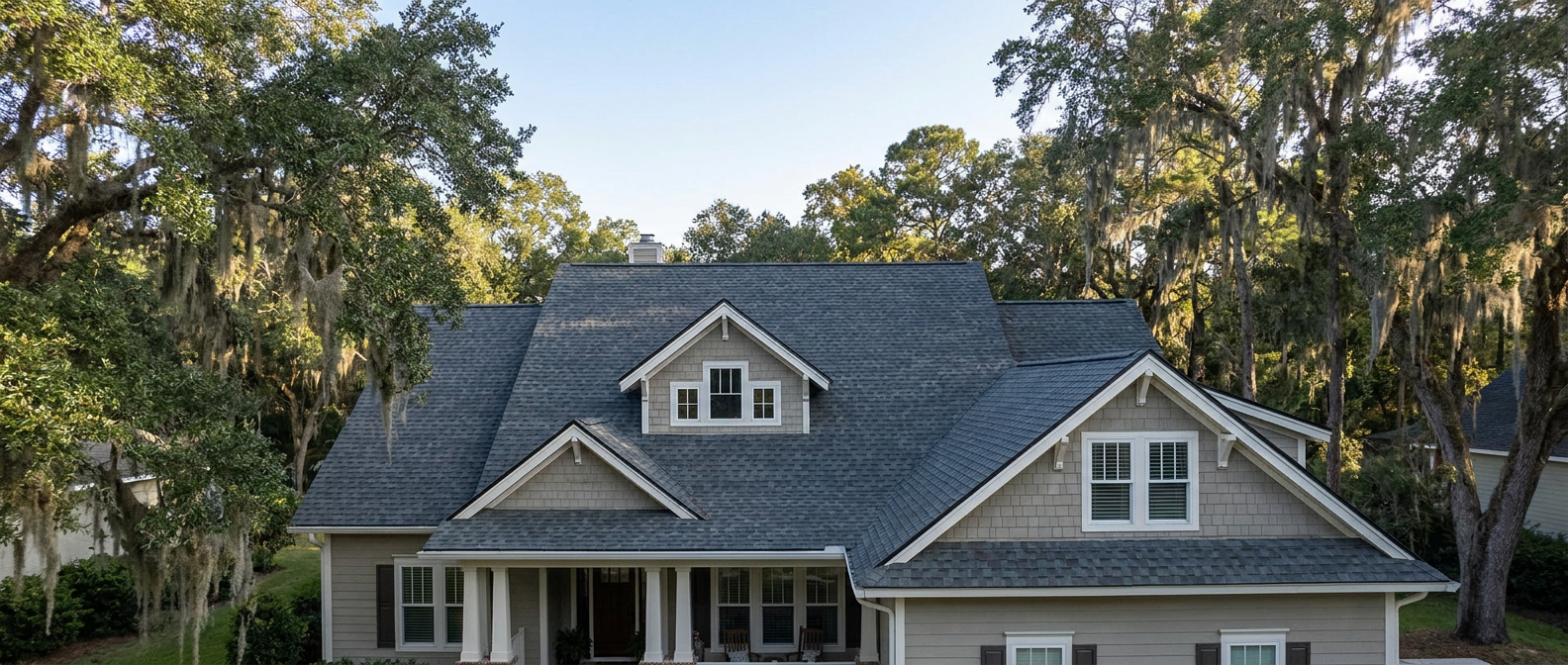
The moments following a severe storm in Brunswick, Georgia, can feel overwhelming. Whether it is a late-summer hurricane spinning off the Atlantic or a sudden spring thunderstorm with high winds, the impact on your roof can be immediate and severe. In our humid Coastal Georgia climate, letting moisture sit in a compromised roof for even a few days can lead to rapid mold growth and structural decay.
Knowing exactly what to do in the first 24 hours is the difference between a smooth insurance claim and a long-term property headache. Here is your professional roadmap for managing storm damage immediately after the clouds clear.
1. Prioritize Immediate Safety
Before assessing your roof, ensure the area is safe for your family. Storms often leave behind hidden hazards that are not immediately apparent.
Watch for Downed Power Lines
High winds in the Glynn County area frequently knock down branches and power lines. Never approach a downed wire, even if it looks "dead." If a line is touching your roof or resting in standing water near your home, call Georgia Power or your local utility provider immediately and keep everyone away.
Check for Gas Leaks
If you smell sulfur or a "rotten egg" odor, leave the premises and contact the gas company. Severe storms can shift structures or cause falling debris to rupture external lines.
Structural Integrity
If you see significant sagging in your ceiling or daylight through the attic, the structural integrity of your roof may be compromised. In these cases, it is safer to stay with a neighbor or at a local hotel until a professional can verify the home’s stability.
2. Conduct a Visual Ground-Level Inspection
You do not need to climb a ladder to identify major storm damage. In fact, we recommend staying on the ground to avoid slips on wet shingles.
Spotting Missing or Damaged Shingles
Walk around the perimeter of your home and look for shingles in the yard or hanging from the gutters. In Brunswick, we often see "wind uplift," where the edges of shingles are pulled back, breaking the sealant strip. Even if the shingle didn't blow off, its ability to shed water is now gone.
Identifying Hail Impact
Hail in the Southeast can be sporadic but destructive. Look at your soft metals first—check the downspouts, gutters, and window flashing for dings or dents. If the metal is dented, your shingles likely suffered granule loss, which accelerates UV damage from our intense Georgia sun.
Debris and Clogged Drainage
Check if large limbs are resting on the roof. In our humid environment, organic debris traps moisture against the shingles, leading to rapid algae growth and rot. Ensure your gutters aren't overflowing; standing water at the foundation is a common secondary result of storm-damaged drainage systems.
3. Document Everything for Insurance
Your insurance adjuster will need proof of the damage. The first 24 hours are critical for capturing the scene before any cleanup begins.
Take High-Quality Photos and Video
Use your smartphone to document the damage from multiple angles. Take wide shots of the whole house and close-ups of specific damaged areas. If you find shingles or pieces of metal in the yard, photograph them where they landed before picking them up.
Check the Interior
Go into your attic with a flashlight. Look for water stains on the rafters, damp insulation, or active drips. Check the ceilings in your living areas for yellow or brown "water rings." Documenting interior leaks helps prove that the roof envelope was breached during the storm event.
4. Prevent Further Damage (Mitigation)
Most insurance policies require homeowners to take "reasonable steps" to prevent further damage after a loss. This is known as damage mitigation.
Tarping and Boarding Up
If you have a visible hole or a major leak, it may need to be tarped. However, do not attempt to tarp a roof yourself during or immediately after a storm when surfaces are slick. Professional roofing contractors offer emergency dry-in services to secure your home without risking your safety.
Water Extraction
If water has entered the home, use towels or a wet-vac to remove as much as possible. In the Georgia heat, high humidity trapped inside a home can lead to mold in as little as 24 to 48 hours. Turn on the AC or use fans to move air if the power is on.
5. Contact a Local Roofing Professional
While you should eventually call your insurance company, your first call should often be to a trusted local roofer. Why? Because insurance adjusters are often overwhelmed after a storm and may miss subtle signs of damage that a specialist will catch.
The Value of a Professional Inspection
A professional roofer from Diamond Roof Restorations knows the specific vulnerabilities of Coastal Georgia homes. We look for hidden wind damage, fractured fiberglass mats in shingles, and compromised flashing that a standard adjuster might overlook. Having a detailed professional report ready when you file your claim can significantly streamline the process.
Avoiding "Storm Chasers"
After a major weather event in Brunswick or St. Simons Island, out-of-state contractors often flood the area. These "storm chasers" may offer quick fixes but often disappear when warranty issues arise. Always choose a contractor with a permanent footprint in the Georgia, Florida, or South Carolina area to ensure you have long-term support.
6. Navigating the Insurance Process
Once you have your documentation and a professional assessment, contact your insurance provider to start the claim. Provide them with the date of the storm and the list of damages you identified.
Keep a log of everyone you speak with, including their names, titles, and the date of the conversation. This paper trail is invaluable if there are delays in your claim processing.
Why Speed Matters in Brunswick
In Brunswick, GA, we don't just deal with rain; we deal with extreme humidity and salt air. A small leak that might be a minor nuisance in a drier climate can quickly become a full-scale mold remediation project here. Protecting your investment means acting decisively within those first 24 hours.
At Diamond Roof Restorations, we specialize in helping homeowners navigate the aftermath of Atlantic storms. We understand the local building codes and the specific challenges posed by our coastal environment.
If you suspect your roof has been damaged by recent winds or hail, do not wait for a leak to appear inside your home. Contact Diamond Roof Restorations today at (912) 207-6273 for a comprehensive, no-obligation storm damage inspection. Let our team provide the peace of mind you need to protect your home.