
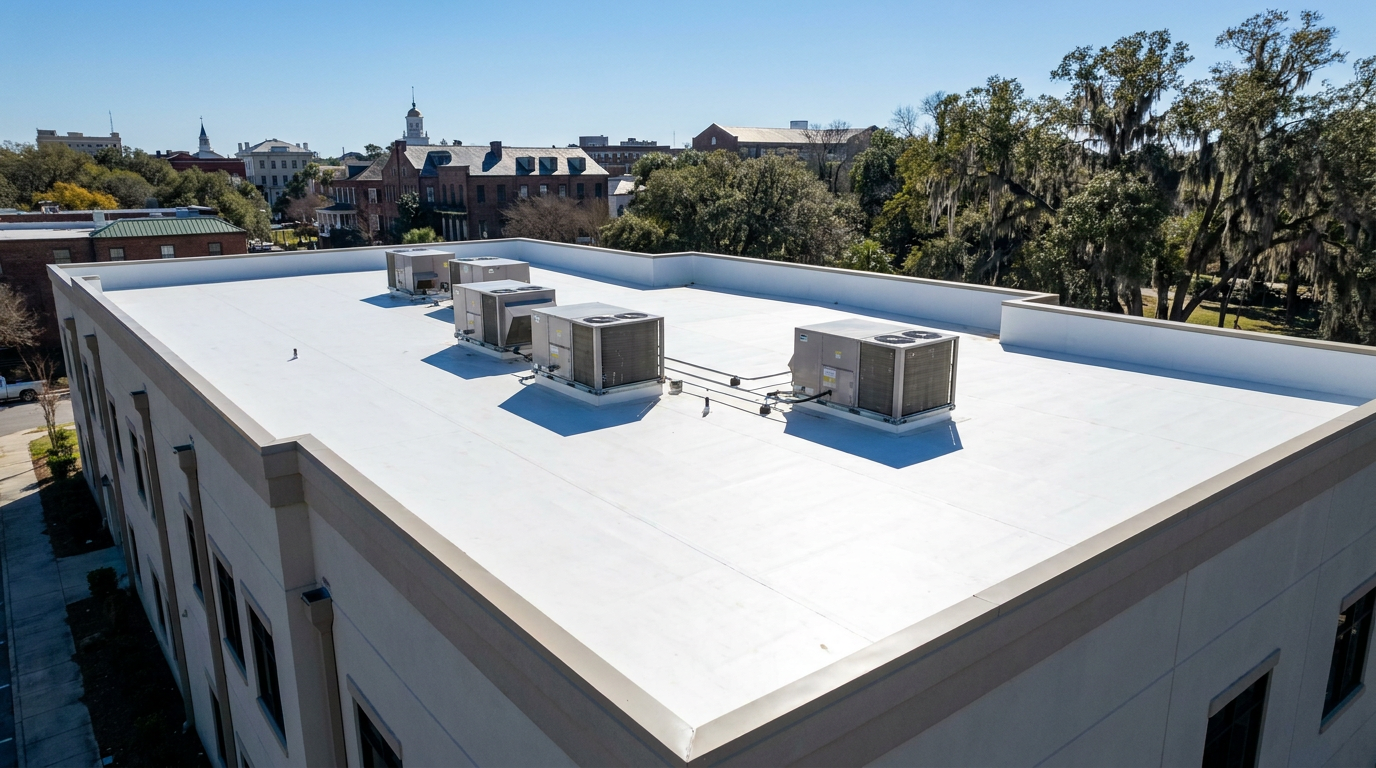
For many business owners in Savannah, the roof is often a case of "out of sight, out of mind"—until a drip appears in the warehouse or a dark stain spreads across the office ceiling. Unlike pitched residential roofs, commercial flat roofs are sophisticated systems that must work significantly harder to shed water, manage heat, and withstand the intense coastal elements of Georgia and the surrounding states.
A proactive maintenance strategy is the difference between a roof that lasts its full 20-year design life and one that requires a premature, six-figure replacement. By following a structured maintenance schedule, you can identify minor vulnerabilities before they escalate into structural emergencies.
The Impact of the Southeast Climate on Flat Roofs
Savannah’s unique geographical position presents specific challenges for commercial roofing systems. Between the oppressive humidity, the salt air, and the threat of tropical systems, your roof is under constant environmental stress.
High Humidity and Biological Growth
In the Lowcountry, moisture is omnipresent. Flat roofs are particularly susceptible to algae, mold, and moss growth. These biological agents do more than just look unsightly; they can trap moisture against the membrane and cause premature degradation of TPO, EPDM, or modified bitumen surfaces.
Intense UV Exposure and Thermal Shock
The Georgia sun beat down on dark or aging flat roofs, causing surface temperatures to soar. This leads to "thermal shock," where the rapid expansion and contraction of the roofing material during afternoon thunderstorms can cause seams to pull apart and flashings to loosen.
Hurricane Season and High Winds
From June through November, the risk of high-wind events increases. For flat roofs, wind uplift is a primary concern. If a corner of the membrane is loose or a gravel stop is unsecured, the wind can get underneath the system and peel it back like a sardine can.
The Bi-Annual Maintenance Inspection
Professional roofing contractors generally recommend two major inspections per year: one in the Spring to prepare for the summer heat and storm season, and one in the Autumn to clear debris and check for vulnerabilities before winter rains arrive.
Spring: Preparing for the Heat
During the spring inspection, the focus is on waterproofing integrity. This is the time to ensure that the "sun-baking" of the previous year hasn't caused brittleness. Contractors will check for "alligatoring" (cracking that looks like reptile skin) and ensure that all reflective coatings are still performing as intended to keep cooling costs down.
Autumn: Post-Storm Recovery and Debris Removal
After a long Southeast summer, your roof likely has an accumulation of pine needles, leaves, and perhaps even wind-blown debris. Organic matter left on a flat roof holds moisture and acidic rot against the membrane. Clearing the roof and checking for small punctures caused by flying debris during summer storms is critical during this window.
Monthly Checklist for Facilities Managers
While a professional should handle the technical inspections, your internal maintenance team can perform monthly "walk-arounds" to spot obvious issues. This simple habit can save thousands in emergency repair costs.
1. Clear Drainage Points
Standing water (ponding) is the number one enemy of a flat roof. Most commercial systems are designed to be dry within 48 hours of rainfall. Check all scuppers, internal drains, and gutters. If water is sitting for days, it adds immense weight to the structure and increases the likelihood of a catastrophic leak.
2. Inspect Perimeter Flashings
The edges of your roof are where most leaks begin. Check the metal edges and termination bars to ensure they haven't pulled away from the wall. In Savannah’s wind-prone climate, secure flashings are your first line of defense.
3. Monitor Rooftop Equipment
HVAC units are frequently serviced by technicians who may accidentally drop tools or heavy panels, causing punctures in the membrane. Always inspect the area around your HVAC units after any service call to ensure the roof wasn't damaged during the repair.
Identifying Common Flat Roof Red Flags
Knowing what to look for can help you call in the experts at Diamond Roof Restorations before a leak affects your inventory or operations. Watch for these signs:
- Blistering: Bubbles forming under the membrane, usually caused by trapped moisture or air.
- Open Seams: The areas where sheets of roofing material meet. If the adhesive or heat-weld is failing, water will migrate under the system.
- Ponding Water: Any area where water stays for more than two days after a rain event.
- Interior Staining: Water spots on ceiling tiles or rust on metal decking are late-stage indicators that the roof system has already been breached.
The Role of Roof Restorations
If your flat roof is aging but the insulation remains dry, you may not need a full tear-off. Restoration coatings—such as silicone or acrylic systems—can add a seamless, waterproof layer over your existing roof. This is a highly effective way to extend the life of a commercial roof in the Southeast while improving energy efficiency by reflecting the intense Georgia sun.
Secure Your Asset with a Professional Inspection
A commercial roof is one of the most significant investments in your business infrastructure. Don't wait for a ceiling collapse to find out your roof is failing. Serving Georgia, Florida, and South Carolina, the team at Diamond Roof Restorations understands the specific needs of Savannah business owners.
Is your roof ready for the next storm season? Protect your property and your bottom line with a professional assessment. Contact Diamond Roof Restorations today at (912) 207-6273 to schedule a comprehensive free inspection. Let us help you develop a maintenance plan that keeps your business dry and your investment secure.