
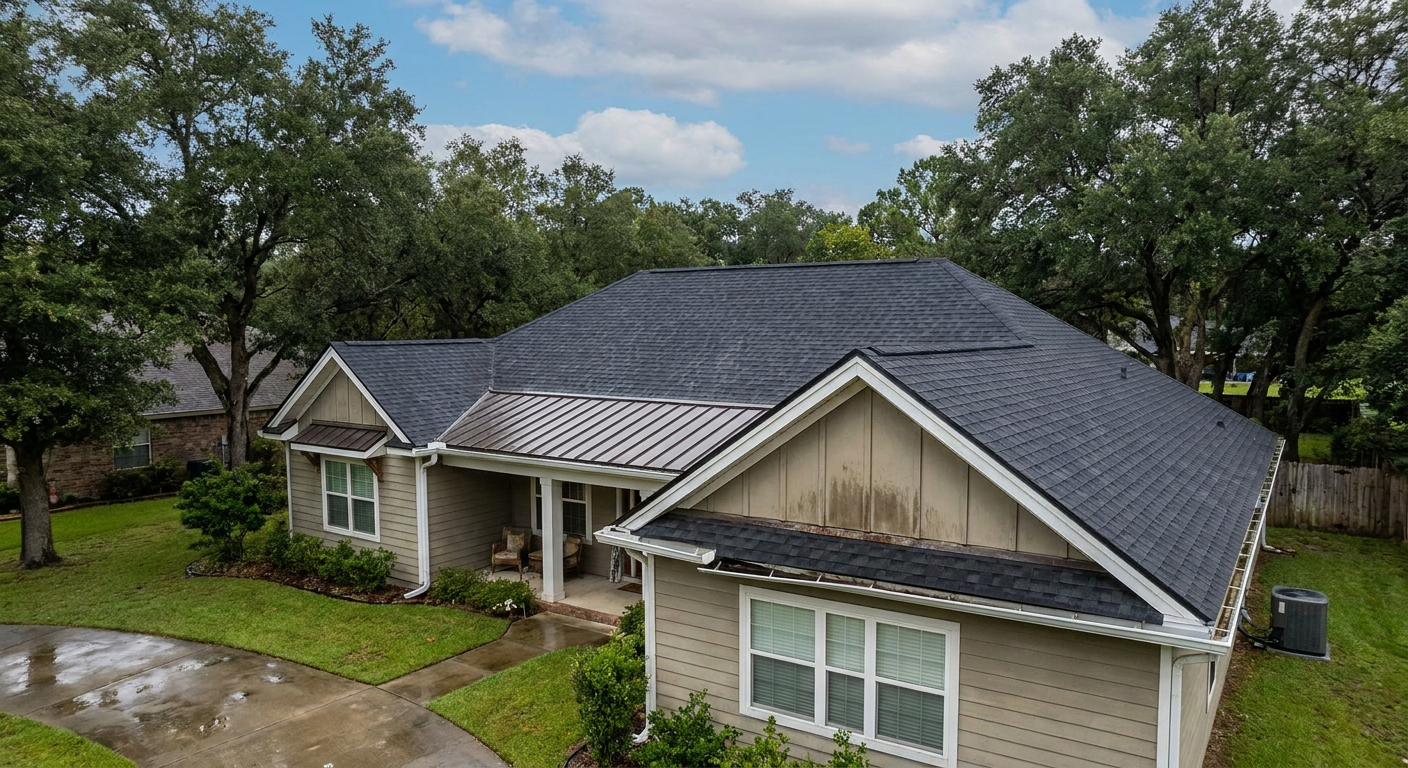
Heavy rainfall is a way of life in Baxley, Georgia. While our landscapes thrive on the moisture, the sheer volume of water delivered during a Southeast thunderstorm can be devastating to a home’s exterior. When the sky opens up, your roofing system—specifically your gutters and fascia boards—acts as the primary defense mechanism, channeling thousands of gallons of water away from your foundation.
However, when these components fail, the consequences are often invisible until they become expensive. For homeowners in Appling County, understanding the relationship between heavy rain and structural integrity is the first step in preventing long-term water damage.
The Role of Gutters and Fascia in Storm Protection
To understand the damage, one must first understand the system. The fascia is the long, thin board that runs along the lower edge of your roof, serving as the finishing edge and the support structure for your gutters. The gutters, in turn, are the troughs that catch runoff and direct it toward downspouts.
In the humid climate of Georgia and South Carolina, this system works overtime. Beyond just managing rain, it handles the debris from local pine trees and the high moisture levels that characterize our summers. When heavy rain hits, a functioning gutter system keeps the soil around your home stable and prevents water from seeping into your crawlspace or basement.
How Heavy Rain Triggers Gutter Failure
Many homeowners assume that if water is coming out of the downspouts, the system is working. Unfortunately, Georgia storms often push systems past their capacity, leading to several types of failure.
Weight and Structural Sagging
One gallon of water weighs approximately 8.3 pounds. During a torrential downpour in Baxley, a standard gutter run can suddenly be tasked with supporting hundreds of pounds of moving water. If your gutters are older or have slightly loosened hangers, this weight causes the metal to sag. Once a gutter sags, it loses the "pitch" required for gravity to move the water, leading to standing water that breeds mosquitoes and accelerates rust.
Debris Clogs and Overspill
In the Southeast, we deal with significant organic debris—from pine needles to oak tassels. Heavy rain washes this debris into the gutter troughs, creating dams. When water cannot reach the downspout, it spills over the back or front of the gutter. Overspill behind the gutter is particularly dangerous, as it puts water in direct contact with the wooden fascia board and the roof's sub-structure.
Fastener Pull-Out
The constant expansion and contraction caused by Georgia's high humidity and sudden temperature shifts can loosen the spikes or screws holding the gutters to the fascia. During a heavy storm, the wind and water pressure can finally pull these fasteners out, leaving the gutter hanging at a dangerous angle.
Identifying Fascia Damage After the Storm
While gutters are made of aluminum or copper, fascia boards are typically made of wood or composite materials. This makes them susceptible to rot when exposed to excessive moisture. Because the fascia is hidden behind the gutter, damage often goes unnoticed by the untrained eye.
Wood Rot and Fungal Growth
The high humidity in Georgia creates a breeding ground for wood-decaying fungi. If water spills over the back of the gutter, it saturates the fascia. Over time, the wood softens and begins to rot. If you notice dark stains on the wood or see "alligatoring" (cracking that looks like reptile scales) in the paint, your fascia is likely compromised.
Pest Infestation
Soft, rotting wood is an open invitation for pests. Termites, carpenter ants, and even rodents are attracted to the moisture-rich environment of a damaged fascia board. Once these pests establish a colony in the fascia, it is only a short distance for them to migrate into your attic or wall cavities.
Mold and Algae Staining
Have you noticed black or green streaks on the exterior of your home? While some of this is common atmospheric algae, localized staining near the roofline usually indicates a gutter leak. This moisture provides the perfect habitat for mold to thrive, which can eventually impact the air quality inside your home if it reaches the soffit vents.
The Hidden Danger: Foundation and Landscape Erosion
Damage to the gutters and fascia isn't just a roofing issue; it’s a foundation issue. In Baxley, our soil compositions vary, but consistent water pooling near the base of a home can lead to soil erosion and foundation settling.
When gutters fail during a heavy rain, the water falls vertically with immense force. This "trenching" effect can destroy expensive landscaping and, more importantly, force water under the foundation slab or into the crawlspace. Replacing a few feet of fascia is a minor repair compared to the cost of foundation stabilization.
Why Professional Inspection is Vital in Georgia
Because Georgia is prone to extreme weather events—from afternoon thunderstorms to the remnants of coastal hurricanes—your roof and gutter system undergo more stress than homes in many other parts of the country. A DIY visual check from the ground is rarely enough to spot the early stages of fascia rot or subtle gutter misalignment.
Professional roofing contractors use specialized tools to check for moisture levels in the wood and ensure that the gutter pitch is precise to the millimeter. Catching a loose hanger or a small soft spot in the fascia today can prevent a total system replacement after the next big storm.
Protect Your Baxley Home with Diamond Roof Restorations
Your home is your most significant investment, and its defense against the elements starts at the roofline. If you have noticed water spilling over your gutters, visible gaps between your roof and the gutter line, or staining on your home’s exterior, do not wait for the next Georgia downpour to take action.
At Diamond Roof Restorations, we specialize in identifying and repairing the specific damage caused by Southeast weather patterns. We serve Baxley and the surrounding communities with high-quality craftsmanship and honest assessments.
Is your gutter system ready for the next storm? Contact Diamond Roof Restorations today at (912) 207-6273 to schedule your comprehensive free inspection. Let us ensure your home stays dry and protected, no matter how hard the rain falls.