
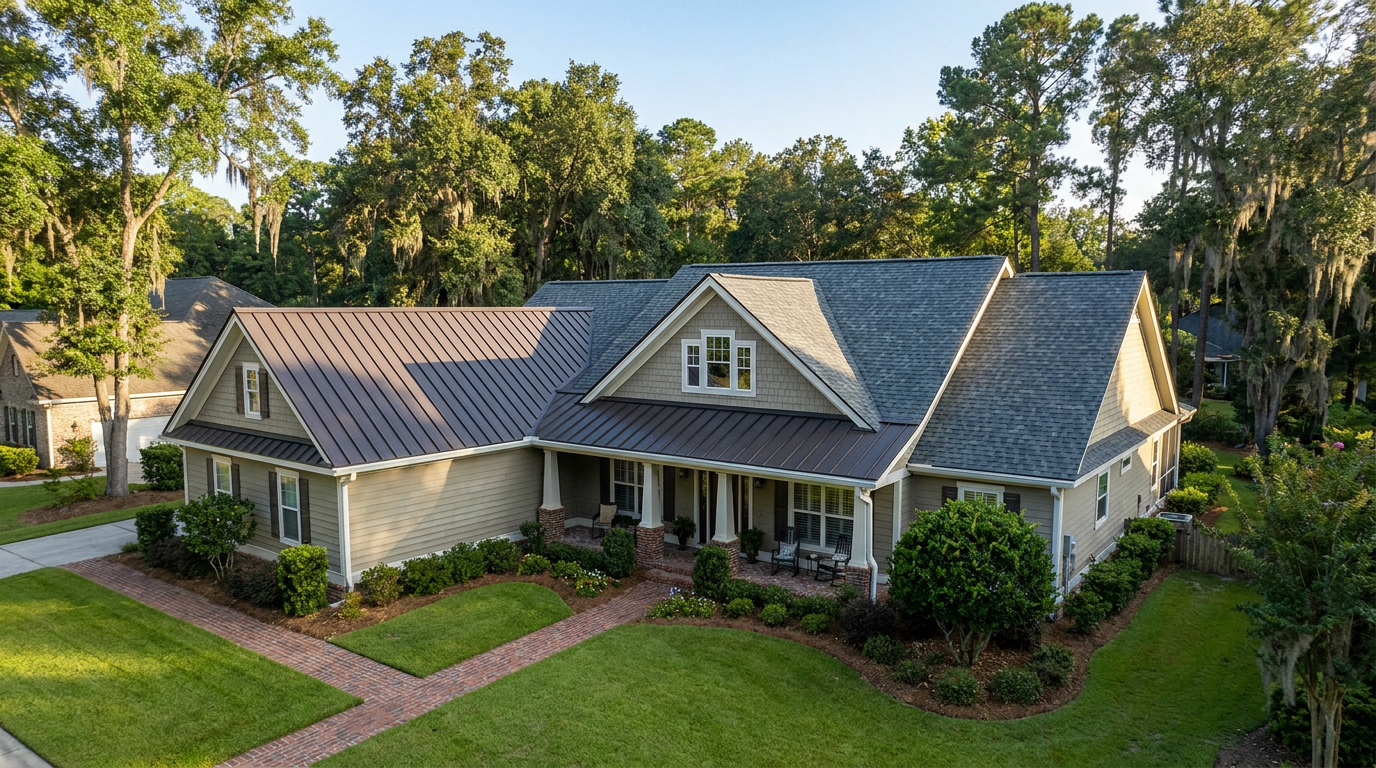
Choosing a new roof in Pooler, Georgia, isn't just about curb appeal; it is a critical decision based on survival against the elements. Homeowners in the Savannah metro area face a unique trifecta of roofing challenges: oppressive humidity, salt-heavy air, and the seasonal threat of tropical storms. As you drive through neighborhoods like Savannah Quarters or Forest Lakes, you will notice a mix of traditional asphalt shingles and modern standing seam metal roofs.
Both materials have their merits, but when the Georgia dew point rises, one often outperforms the other in terms of longevity and maintenance. Here is how metal roofing and asphalt shingles stack up against the specific climate demands of coastal Georgia.
The Impact of Humidity on Coastal Roofing
In Pooler, relative humidity levels often soar above 80%, creating a breeding ground for biological growth. This moisture doesn't just sit on the surface; it interacts with the chemical composition of your roofing materials.
Algae and Gloeocapsa Magma
If you have noticed black streaks on your roof or your neighbor's roof, you are likely looking at Gloeocapsa magma. This cyanobacteria thrives in the Southeast’s humid climate, feeding on the limestone filler found in modern asphalt shingles. While many manufacturers now offer "algae-resistant" shingles infused with copper granules, these eventually wear thin over time.
Metal roofing is naturally resistant to these organisms. Because metal is non-porous and lacks the organic "food" that algae crave, your roof stays cleaner for longer without the need for frequent pressure washing or chemical treatments that can degrade shingle integrity.
Trapped Moisture and Ventilation
Humidity isn't just an external threat. In coastal Georgia, the temperature differential between your air-conditioned home and the sweltering attic can lead to condensation. Asphalt shingles, being thicker and layered, can sometimes trap heat if the attic isn't perfectly vented. Metal roofs, specifically those installed with a proper thermal break, reflect a significant portion of solar radiation, reducing the cooling load on your HVAC system during those brutal July afternoons.
Wind Resistance: Navigating Hurricane Season
Living in the Pooler and Savannah area means keeping one eye on the Atlantic every June through November. The structural integrity of your roof is your home’s first line of defense against high-wind events.
Shingle Performance in High Winds
Modern architectural shingles are rated for high wind speeds, often up to 110–130 mph when installed with specialized high-wind fastening patterns. However, shingles are individual units. If the seal strips are compromised by age or heat, a single loose tab can lead to a chain reaction of shingles tearing away, exposing the underlayment to torrential rain.
The Metal Advantage
Metal roofing systems—particularly standing seam panels—are mechanically fastened or interlocked. This creates a continuous surface that is much harder for wind to "catch." In coastal environments, metal roofs are often preferred for their ability to remain intact during tropical-force gusts, providing peace of mind when the local news starts tracking a system heading toward the Georgia coast.
Longevity and The Salt Air Factor
Being just a short drive from the Atlantic coast means our air carries a higher salt content than inland Georgia. Salt is a corrosive agent that requires careful material selection.
Corrosion-Resistant Coatings
If you opt for a metal roof in Pooler, the type of metal matters. Diamond Roof Restorations recommends high-quality coatings like Galvalume or aluminum for coastal applications. Aluminum is naturally rust-resistant, making it an excellent choice for homes closer to the salt spray, while Galvalume offers a zinc-aluminum alloy coating that protects the steel core from the humid, salty air.
Shingle Degradation
Asphalt shingles tend to have a shorter lifespan in the Southeast than they do in drier climates. The combination of intense UV rays and high humidity causes the oils in the asphalt to dry out and the granules to shed. In Pooler, a standard shingle roof typically needs replacement significantly sooner than a metal roof, which can easily last 40 to 60 years with minimal maintenance.
Energy Efficiency in the Georgia Heat
Georgia Power bills can be staggering in the summer. Your roofing material choice directly impacts your monthly overhead.
- Cool Roof Technology: Metal roofs are highly reflective. Instead of absorbing heat and radiating it into your attic (as dark shingles do), metal bounces the sun's energy away. This "cool roof" effect can reduce cooling costs by up to 25%.
- Thermal Mass: While shingles hold onto heat long after the sun goes down, metal cools off almost instantly once the shade hits, allowing your home to recover faster in the evenings.
Making the Right Choice for Your Pooler Home
So, which is better? The answer depends on your long-term goals.
- Choose Shingles if: You are looking for a lower upfront investment, prefer a traditional aesthetic, or plan on moving within the next 5–10 years.
- Choose Metal if: You want the lowest lifetime cost of ownership, maximum protection against hurricanes, and the highest possible energy efficiency for the Georgia climate.
Regardless of the material you choose, the quality of the installation is what ultimately determines how well your roof handles the coastal humidity. A roof is only as good as its flashing, underlayment, and the expertise of the crew putting it together.
Protect Your Home with Diamond Roof Restorations
Whether you are dealing with storm damage or simply noticed your current roof is showing the tell-tale signs of Georgia humidity, don't wait for a leak to take action. Diamond Roof Restorations specializes in helping homeowners in Pooler, GA, and throughout the Southeast navigate the complexities of coastal roofing.
We provide expert guidance on material selection and precision installation to ensure your home stays dry and efficient for decades to come.
Ready to see which roofing system is right for your home? Contact Diamond Roof Restorations today at (912) 207-6273 to schedule your free, no-obligation roof inspection.