
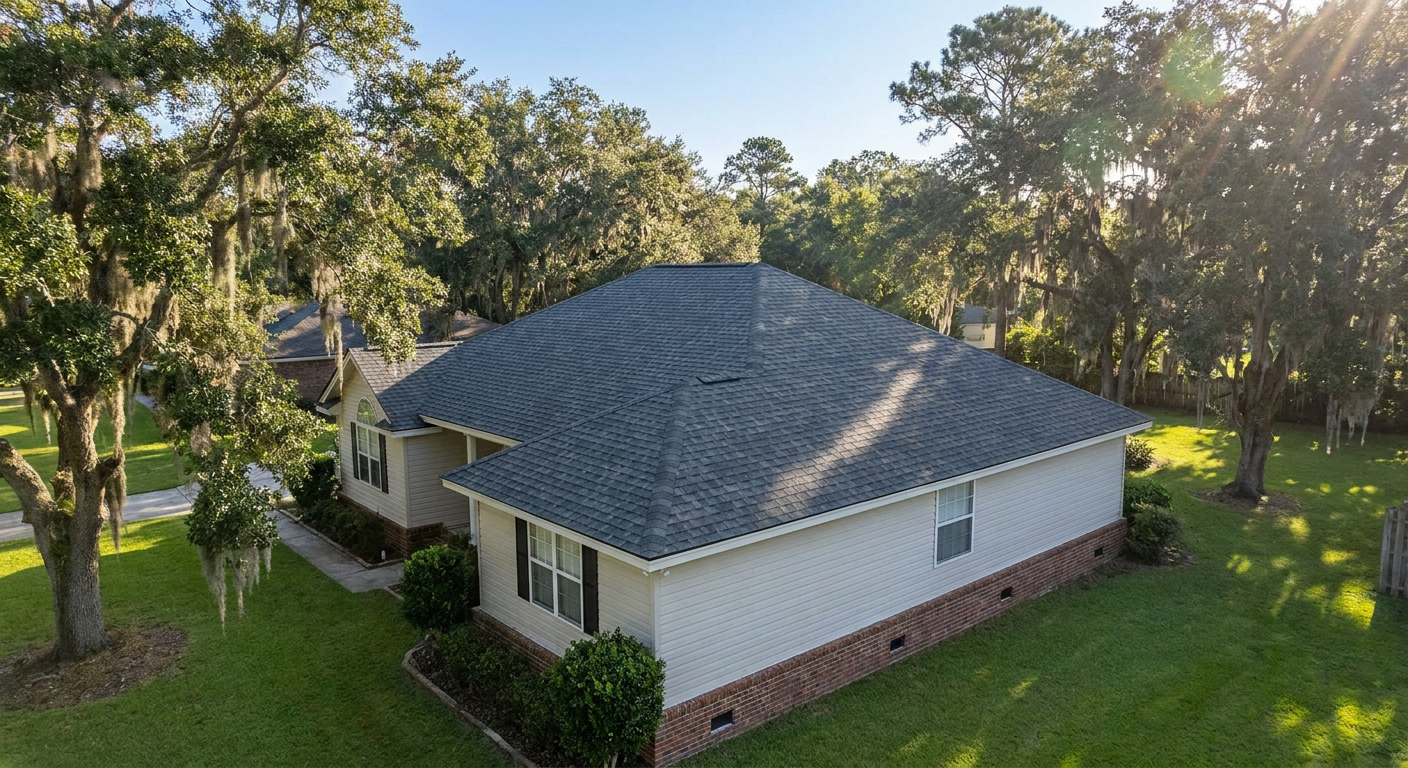
If you have noticed long, dark streaks running down your shingles, you are not alone. For homeowners in Brunswick, Georgia, and across the Southeast, these unsightly black stains are a common sight. While many residents mistake these marks for soot, dirt, or even mold, they are typically caused by a specific type of hardy bacteria known as Gloeocapsa magma.
In the humid climate of the Coastal Empire and the Lowcountry, these stains do more than just hurt your home’s curb appeal. If left untreated, they can compromise your roof’s integrity and shorten the lifespan of your shingles. Understanding what causes these stains and how to prevent them is essential for protecting your largest investment.
The Culprit: Understanding Gloeocapsa Magma
Unlike mold or mildew, the black streaks on Southeast roofs are usually a cyanobacteria called Gloeocapsa magma. This organism has evolved a dark, UV-protective outer shell that allows it to thrive even under the intense Georgia sun.
In places like Brunswick, GA, the environment is a perfect breeding ground for this algae. High humidity, heavy seasonal rainfall, and warm temperatures provide the moisture necessary for the bacteria to colonize. Furthermore, most modern asphalt shingles contain limestone as a filler. Gloeocapsa magma feeds on this limestone, effectively eating away at the very material meant to protect your home.
Why Southeast Roofs Are Particularly Vulnerable
Homeowners in Georgia, South Carolina, and Florida face a unique set of challenges regarding roof maintenance. The coastal proximity means higher salt content in the air and near-constant moisture.
High Humidity and Tropical Air
Algae thrives in damp, shaded areas. In the Southeast, the night-time dew points often remain high enough that roofs stay moist well into the late morning. This moisture, combined with the heat, creates a laboratory-like environment for bacterial growth.
The Impact of Hurricane Season
Frequent storms and heavy rains can wash away protective granules already loosened by algae growth. Furthermore, high winds from tropical storms can carry algae spores from one rooftop to another, meaning if your neighbor has an infestation, your roof is likely next in line.
The Hidden Costs of Black Stains
Beyond the aesthetic issue, these black streaks can lead to significant financial consequences if ignored.
- Heat Absorption: Dark stains absorb more solar radiation. During a blistering Brunswick summer, a stained roof can become significantly hotter than a clean one, forcing your HVAC system to work overtime and driving up energy bills.
- Shingle Damage: As the algae consumes the limestone fillers, the granules on your shingles begin to loosen and fall off. These granules are your roof’s primary defense against UV rays. Without them, the asphalt substrate dries out and cracks.
- Voided Warranties: Some manufacturers require regular maintenance to keep a roof warranty valid. Allowing biological growth to compromise the shingles could complicate future insurance claims or warranty payouts.
Professional Removal vs. DIY Cleaning
When homeowners see these stains, the first instinct is often to grab a pressure washer. However, this is one of the most damaging things you can do to an asphalt shingle roof. High-pressure water will blast away the protective granules, effectively aging your roof by ten years in a single afternoon.
The Soft Wash Method
Professional roofing contractors, such as Diamond Roof Restorations, utilize a "Soft Wash" approach. This involves applying a specialized, biodegradable chemical solution that kills the algae, moss, and lichen at the root without the need for high pressure. This method is safe for the shingles and ensures that the biological growth is actually eliminated rather than just moved around.
Long-Term Prevention Strategies
Once your roof is clean, the goal is to keep it that way. There are several proactive steps you can take to prevent the return of Gloeocapsa magma.
1. Trim Overhanging Branches
Algae thrives in the shade. If you have large oaks or pines overhanging your roof line in Brunswick, they are likely dropping debris and creating the shaded, damp environment algae loves. Trimming these branches allows more sunlight to reach the roof and improves airflow, helping the shingles dry faster after a rainstorm.
2. Improve Gutter Drainage
Clogged gutters lead to standing water and excess moisture at the roof’s edge. Ensure your gutters are cleaned at least twice a year—especially after the pollen season and the autumn leaf drop—to facilitate proper drainage away from the roof deck.
3. Zinc or Copper Strips
One of the most effective long-term deterrents is the installation of zinc or copper strips near the roof peak. When it rains, minute amounts of metallic particles wash down the roof. These metals are naturally toxic to algae but harmless to your shingles, creating a protective barrier that prevents new colonies from forming.
4. Upgrade to Algae-Resistant Shingles
If you are nearing the time for a roof replacement, ask about algae-resistant (AR) shingles. These shingles are manufactured with copper-containing granules baked in, providing built-in protection against staining for a decade or more.
Protect Your Investment with Diamond Roof Restorations
Your roof is your home’s first line of defense against the unpredictable Southeast weather. Don't let algae streaks diminish your home's value or compromise its structural integrity. If you've noticed black stains or moss growth on your roof in Brunswick, St. Simons Island, or the surrounding areas, it is time for a professional assessment.
At Diamond Roof Restorations, we specialize in identifying the specific needs of Georgia and South Carolina roofs. We provide expert cleaning and restoration services designed to extend the life of your roof and keep it looking pristine.
Ready to restore your roof’s beauty? Contact Diamond Roof Restorations today at (912) 207-6273 to schedule your free, no-obligation roof inspection.