
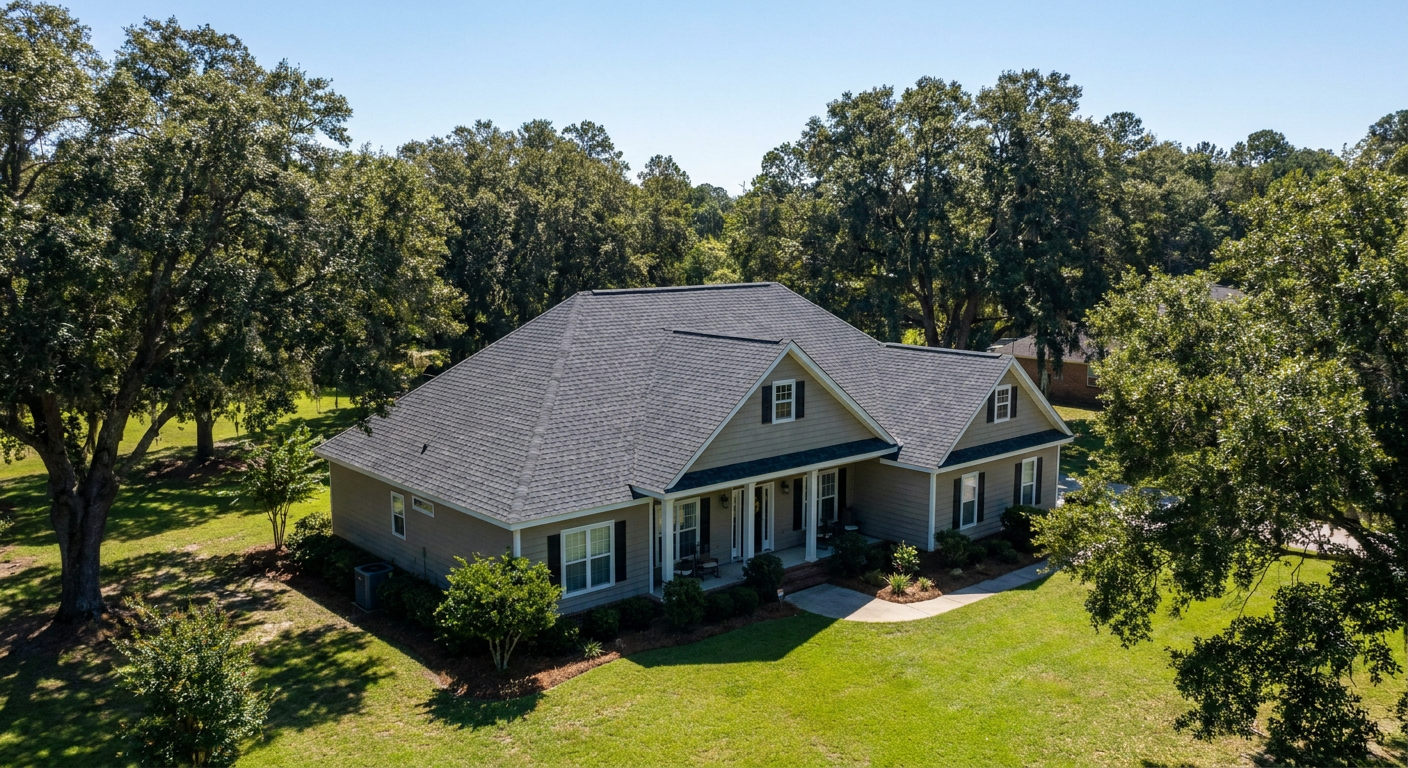
For homeowners in Jesup, Georgia, your roof is the first line of defense against a relentless climate. Between the sweltering heat of Southeast summers, high humidity, and the seasonal threat of tropical storms, your asphalt shingles work harder than almost anywhere else in the country.
Knowing when to transition from simple repairs to a full roof replacement is a critical financial decision. Waiting too long can lead to structural rot and expensive interior damage, while replacing too early can be an unnecessary expenditure. This guide outlines the definitive signs that your asphalt shingle roof is nearing the end of its life, specifically tailored to the conditions we face here in Wayne County and across the Southeast.
The Impact of Southeast Weather on Shingle Longevity
In the Tri-State area of Georgia, Florida, and South Carolina, roofing materials age differently than in drier or cooler climates. The intense UV radiation breaks down the asphalt oils that keep shingles flexible. When these oils evaporate, shingles become brittle and lose their ability to shed water. Furthermore, our high humidity promotes the growth of Gloeocapsa Magma—the bacteria responsible for those unsightly black streaks—which can trap moisture and accelerate decay.
1. Widespread Granule Loss and Clogged Gutters
Asphalt shingles are coated with mineral granules that protect the underlying bitumen from UV damage. Over time, these granules loosen. If you notice a heavy accumulation of what looks like coarse sand in your gutters or at the base of your downspouts, your roof is losing its protective shield.
Why Granule Loss Matters
Once the granules are gone, the sun’s rays hit the asphalt directly, causing it to bake, crack, and eventually leak. If your roof appears "bald" or has dark patches where the color seems to have worn away, the shingles are no longer performing their primary function.
2. Curling, Buckling, or Clawing Shingles
Take a look at your roofline from the ground. Do the edges of the shingles turn upward (curling), or are the middles starting to hump up (buckling)?
In Jesup, this is often a symptom of poor attic ventilation combined with extreme heat. When heat and moisture get trapped in the attic, they cook the shingles from the underside. Curled shingles are highly susceptible to wind uplift; a strong gust during a summer thunderstorm can easily catch a curled edge and rip the shingle right off the deck.
3. Persistent Algae and Moss Growth
While black streaks (algae) are primarily an aesthetic issue, the presence of actual moss or lichen is a red flag. Moss acts like a sponge, holding moisture against the shingle surface for extended periods. In our humid climate, this moisture can cause the shingle roots to rot and can even lead to wood decay in the decking underneath. If your roof has become a hanging garden, the structural integrity of the shingles is likely compromised.
4. Damaged or Rusted Flashing
Flashing is the metal material installed around chimneys, vents, and valleys to divert water away from sensitive junctions. In older roofs, flashing was often sealed with tar or caulk that dries out and cracks.
If you see rusted metal or gaps where the flashing meets the brick or shingles, water is likely penetrating your home. While flashing can sometimes be repaired, widespread failure across multiple roof penetrations often indicates that the entire system is reaching the end of its reliable lifespan.
5. The Age Factor: The 20-Year Benchmark
Most architectural asphalt shingles are designed to last 20 to 30 years, but the environmental stressors in Georgia and South Carolina often shorten this window. If your roof was installed over two decades ago, it is statistically likely to fail soon, even if it looks okay from the ground.
The Danger of "Roof Overs"
If your current roof was installed over an older layer of shingles (a layover), you should be even more vigilant. Layovers trap heat and prevent the new shingles from sealing properly, often cutting their expected lifespan by as much as 50%.
Interior Warning Signs
Sometimes the best way to check your roof is from the inside. Visit your attic during the day with a flashlight. Look for:
- Light peeking through: If you see "stars" through the roof boards, water can get in too.
- Water stains: Look for dark spots or streaks on the rafters or the underside of the decking.
- Sagging: A sagging roof deck is a sign of long-term water damage and requires immediate professional intervention.
Why Local Expertise Matters in Jesup
Roofing in the Southeast requires specific knowledge of wind codes and moisture management. A contractor familiar with Jesup, GA, understands the local building requirements and the specific brands of shingles that hold up best against our unique humidity and storm patterns.
Choosing a local expert ensures that your replacement isn't just a temporary fix, but a long-term investment in your home’s safety and curb appeal.
Protect Your Home with a Professional Inspection
Identifying these signs early can save you thousands of dollars in secondary damage to your drywall, insulation, and electrical systems. If you have noticed any of these warning signs, or if your roof has recently weathered a major storm, it is time for a professional evaluation.
At Diamond Roof Restorations, we provide comprehensive, honest assessments for homeowners across Georgia, Florida, and South Carolina. We pride ourselves on transparency and quality craftsmanship, ensuring your home stays dry no matter what the Atlantic hurricane season throws our way.
Don't wait for a leak to become a flood. Contact Diamond Roof Restorations today at (912) 207-6273 to schedule your free, no-obligation roof inspection.