
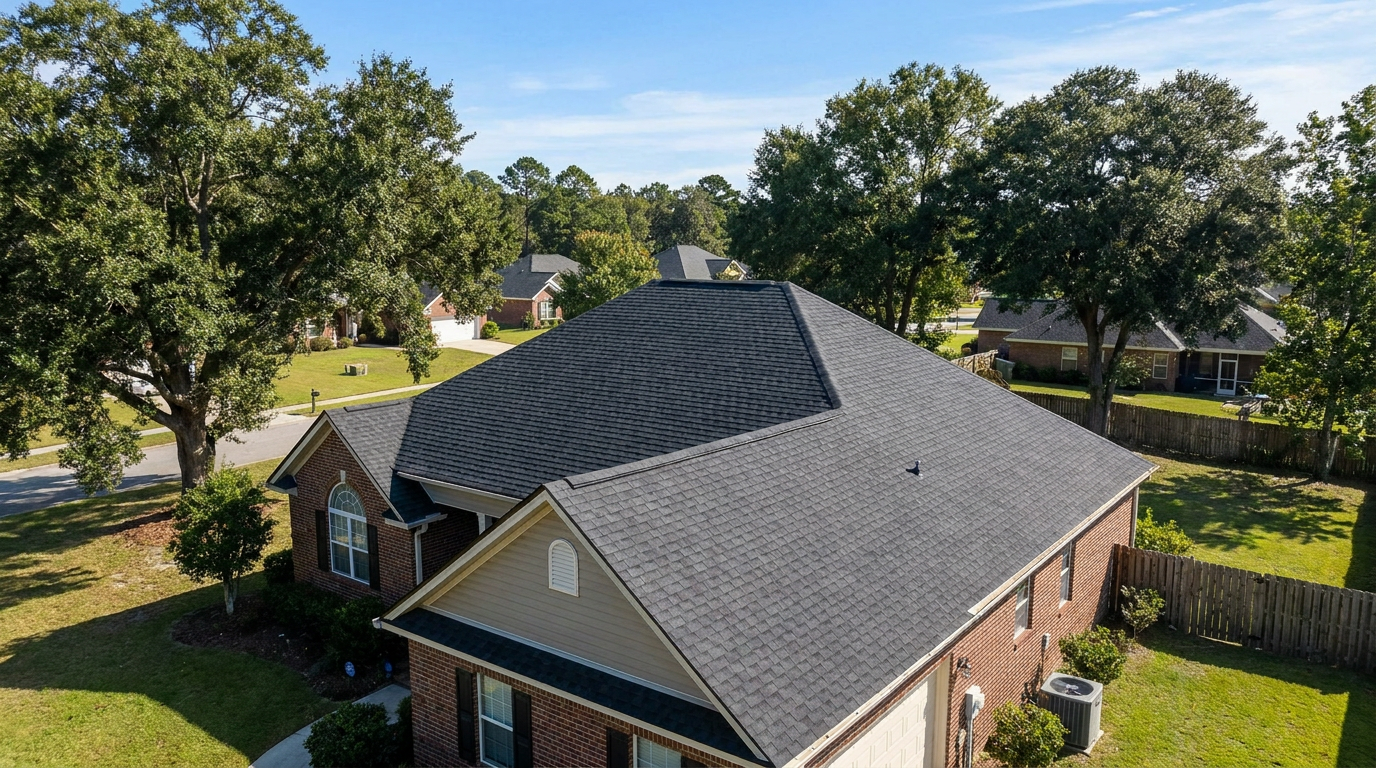
For homeowners in Hinesville, GA, and throughout the Southeast, your roof is the first line of defense against scorching humidity, intense summer storms, and the occasional hurricane-force wind. However, because your roof is "out of sight, out of mind," small issues often evolve into expensive structural problems before they are ever noticed from the ground.
You have likely seen advertisements for a "free roof inspection," but you might be skeptical. Is it just a sales pitch, or is there real value involved? At Diamond Roof Restorations, we believe a transparent inspection is the cornerstone of responsible homeownership. Here is a detailed breakdown of what a professional roof inspection actually covers and why it is essential for properties in Georgia, Florida, and South Carolina.
The Exterior Surface Assessment
The most visible part of the inspection involves a thorough walk-through of the roof surface. In the Southeast, the climate is particularly harsh on roofing materials. We look for specific indicators of wear and tear that are unique to our region.
Shingle Health and Granule Loss
As asphalt shingles age, they lose their protective granules. These granules shield the underlying bitumen from UV rays. In places like Hinesville, where the sun is relentless, UV degradation can cause shingles to become brittle and crack. We check for "balding" shingles or piles of granules in your gutters, which signal that the roof is nearing the end of its functional life.
Wind and Storm Damage
Living in a coastal or near-coastal state means dealing with high-wind events. An inspector looks for lifted, creased, or missing shingles. Even if a shingle is still attached, a wind-broken seal can allow water to migrate underneath during the next heavy downpour, leading to hidden rot.
Gloeocapsa Magma (Black Algae)
If you see black streaks on your roof, it isn't just dirt; it’s likely Gloeocapsa magma, a type of algae that thrives in the humid climates of Georgia and South Carolina. While it starts as a cosmetic issue, it can eventually feed on the limestone filler in shingles, weakening the roof structure. We assess the severity of this growth during our visit.
Examination of Penetrations and Flashing
Statistically, most roof leaks do not start in the middle of a shingle field; they start at the "penetrations." These are the areas where the roof surface is broken to accommodate vents, chimneys, or pipes.
Pipe Boots and Vents
Rubber pipe boots are prone to cracking due to the extreme temperature fluctuations we experience in the South. A free inspection includes checking every seal around plumbing stacks and exhaust vents to ensure the rubber hasn't dry-rotted or pulled away from the pipe.
Chimney Flashing
Flashing is the metal material used to direct water away from the seams of the roof. We inspect the counter-flashing and step-flashing around chimneys. In areas with high rainfall, such as Hinesville and Liberty County, poorly installed or rusted flashing is a leading cause of interior ceiling stains.
Gutter and Drainage Evaluation
A roof is only as good as its drainage system. During a free inspection, we look at how water moves off your roof.
Clogs and Pitch
If gutters are clogged with pine needles or debris, water can back up under the eave shingles, causing the fascia boards to rot. We check to ensure your gutters are properly pitched and that downspouts are effectively moving water away from your home’s foundation.
Drip Edge Inspection
The drip edge is a metal flashing installed at the edges of the roof to push water into the gutters. Without a functional drip edge, water often wicks back toward the house, rotting the roof deck and inviting pests like carpenter ants or termites.
The Attic and Structural Integrity
A comprehensive inspection doesn't just happen outside. A look into the attic can reveal more about the health of a roof than the shingles themselves.
Detecting Hidden Leaks
Often, water enters the home but doesn't reach the ceiling drywall immediately. It may travel down a rafter or soak into insulation. We look for dark water stains, mold growth, or damp insulation that indicates a slow, persistent leak.
Proper Ventilation
In the heat of a Georgia summer, an attic can reach temperatures exceeding 150 degrees if not properly vented. This heat literally cooks the shingles from the inside out. We evaluate your soffit vents and ridge vents to ensure there is adequate airflow to regulate temperature and moisture levels.
Why Hinesville Homeowners Should Prioritize Inspections
Hinesville residents are no strangers to the volatile weather of the Atlantic coast. From tropical storms to the intense humidity that promotes organic growth, your roof faces a constant uphill battle. A professional inspection identifies these regional threats early, allowing for minor repairs that prevent a full-scale replacement.
Furthermore, if you are planning to file an insurance claim after a storm, having a professional inspection report provides the documentation you need to prove the extent of the damage. We help homeowners understand whether the damage they have is a simple maintenance fix or a legitimate insurance event.
Schedule Your Free Inspection Today
Don't wait for a drip in your living room to find out your roof is failing. A free inspection with Diamond Roof Restorations gives you the peace of mind that comes with knowing the exact condition of your home’s most important defense.
Serving Hinesville, GA, and the surrounding areas across Georgia, Florida, and South Carolina, our team provides honest, thorough assessments with no obligation. We are committed to protecting our local communities, one roof at a time.
Ready to get started? Contact Diamond Roof Restorations today at (912) 207-6273 to schedule your free, comprehensive roof inspection.