
How to compare two commercial roof coating bids
Read initial and three-year roof coating reflectance ratings, compare the repairs and warranty in each proposal, and download a two-bid worksheet.
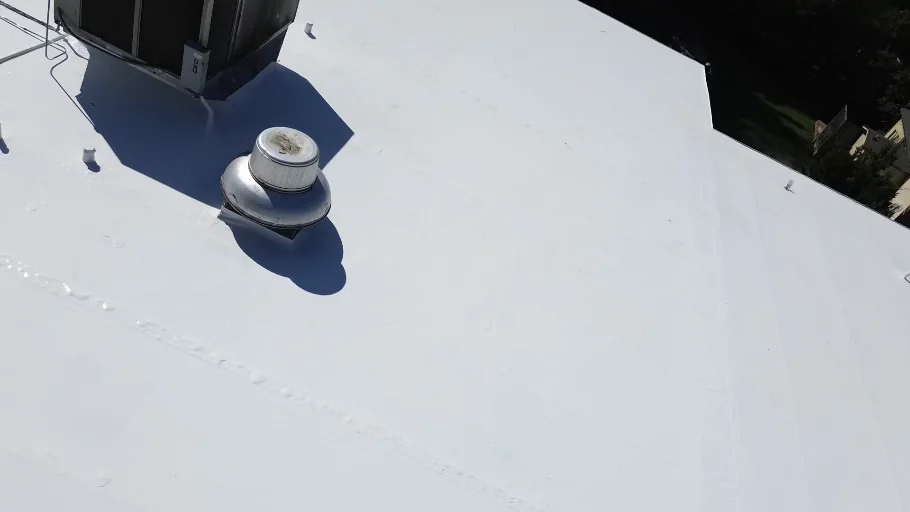
Start with the name on the pail
Two bids can both say “white roof coating” and describe different work. Ask each contractor for the manufacturer, exact topcoat, color, and Cool Roof Rating Council (CRRC) product ID. Match those details in the directory. If the ID ends in “smooth” or “rough,” record which surface was tested and ask how it compares with your roof.
Solar reflectanceThe fraction of incoming sunlight a surface reflects. A value of 0.70 means the sample reflected 70% of the sunlight under test conditions.
Thermal emittanceHow readily a warm surface gives off infrared heat, measured against an ideal emitter at the same temperature. Compare this figure in its own column.
Solar Reflectance Index (SRI)A calculated index that combines reflectance and emittance under standard conditions. An SRI of 90 is an index value. It cannot be read as 90% energy savings.
-
Illustrative rating of 0.7070%
This example means 70 out of every 100 units of incoming sunlight are reflected under the test conditions. Energy savings require a building-specific estimate.
Source: CRRC roof-rating program
Compare the three-year column
A new sample describes the finish on day one. For the aged rating, specimens weather outdoors in Arizona, Ohio and Florida before an independent laboratory measures them again. Florida gives the test a hot, humid exposure that matters to coastal Georgia owners. The published value represents standardized testing across locations.
Match initial with initial and aged with aged. An asterisk identifies an interim, laboratory-aged result. If a proposal gives only the initial number, leave the aged field open and ask for the directory entry. Insulation, cooling hours and equipment determine how a roof surface change affects a particular building’s electric bill.
Read a real specification

American WeatherStar’s Met-A-Sil guide lists an initial reflectivity of 0.87 and an initial emittance of 0.89 for High-Solids Silicone 412. Enter 0.87 in the initial reflectance box. The guide gives no three-year reflectance figure alongside it. Ask the bidder for that separate rating.
-
High-Solids Silicone 41287%
This is the initial rating. Obtain the matching three-year rating separately before comparing aged performance.
The same system guide calls for checking drainage, fasteners, seams and penetrations and recommends testing the coating’s bond to the existing metal. Those are separate items a bidder can price and document.
Read the American WeatherStar metal system specification (PDF)
Compare the work behind the price
Ask each bidder to mark the roof sections included in the base price. If one bid covers the whole building and the other covers only a leaking wing, compare prices for the same sections first. A quote with a low initial price can change if the crew finds wet insulation or more damaged fasteners. A written allowance or unit price tells you how that discovery would affect the bill.
Use one worksheet per building. Enter the proposal page or product-sheet link beside each answer. Leave an unknown blank and put the question in the follow-up column.
Repairs and preparationWhich wet or damaged sections will be replaced? Who will address drainage, repair flashing and verify adhesion before coating?
Coating thicknessWhat finished dry film thickness does the selected system require, and what record will the owner receive to document application?
Warranty and exclusionsGet the exact sample offered with the bid. Use the warranty questions below to compare its coverage and owner responsibilities.
Expected savingsIf the bid predicts lower bills, ask which baseline usage, energy rate, cooling hours and roof insulation it assumes. Keep that estimate alongside the product rating so you can evaluate each on its own terms.
Compare more than the warranty years
Ask each bidder for the exact sample warranty and any separate contractor workmanship terms. Match them to the system, roof areas and price in the proposal.
For example, American WeatherStar’s 20-year material warranty sample (PDF) excludes labor and makes no waterproofing promise. Its 20-year NDL system warranty sample (PDF) addresses covered leaks, subject to its requirements and exclusions. Use these as reading examples; your proposal must identify the warranty actually offered.
| Term to compare | Ask the bidder to put this in writing |
|---|---|
| Issuer and term | Who issues it, how long does it run, and what acceptance or registration starts coverage? |
| Materials | Which products and roof areas are covered? Is the remedy repair material, replacement or a credit? |
| Labor | Which installation or repair labor is covered, who performs it, and who pays? |
| Limits and charges | Are there dollar limits, proration, deductibles or inspection charges? What does “NDL” cover in this document? |
| Exclusions | How are storms, underlying roof defects, rooftop equipment, work by others and damage inside the building treated? |
| Maintenance | Which inspections and records are required, who may perform them, and what does the owner pay? |
| Transfer | Can a new owner receive coverage? What approval, deadline or fee applies, and does the expiration change? |
| Claims | Who receives notice, how soon, in what form, with which records, and who must approve repairs? |
The worksheet gives these questions separate rows so an unanswered item stays visible during bid review.