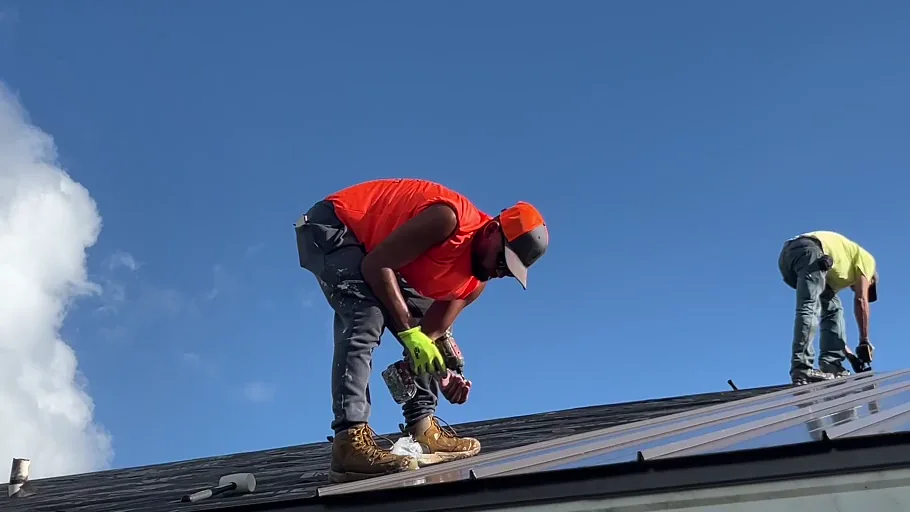
A standing seam roof has clean, uninterrupted lines. An exposed-fastener panel has a row of screws you can see. The pitch of your roof, the finish you want and the details around each opening help narrow the choice.
A metal roof can give a home or commercial building a crisp architectural finish. Its value comes from choosing a panel, attachment and finish that suit the property and how you plan to maintain it.
A clean architectural look
Raised standing seams create a consistent rhythm across the roof. Different panel widths, rib heights and finishes let you shape that appearance. Compare a physical sample with the siding and trim before choosing the color.
Concealed fastening options
Standing seam panels conceal their attachment beneath the roofing. This keeps the main panel fasteners out of direct weather exposure. The exact attachment and seam design still depend on the selected system; the flashing details remain important.
Designed for roof movement
Suitable standing seam attachment details allow panels to expand and contract as temperatures change. The design must account for panel length and the particular profile. Snap-lock, nail-flange and mechanically seamed panels have different installation requirements.
Steel that can be used again
Steel can be recycled repeatedly into new steel products. When a steel roof reaches the end of its service, plan to recover its panels for a suitable recycling facility. Collection and processing turn the material’s recyclability into a practical benefit.
Where metal fits your priorities
Metal is worth comparing when appearance and a long-term ownership plan matter. Include the initial cost, finish, fastening details and maintenance in that comparison. Exposed-fastener panels can offer a lower-cost route into metal roofing, with screws and sealing washers that need periodic inspection. Ask which panel is suitable for your roof slope and how the proposal handles valleys, walls and penetrations.
The panel attachment sits beneath raised seams. A snap-lock seam and a mechanically seamed panel are different designs. Ask which profile fits your roof pitch and how wide the panels will look from the street.
Exposed-fastener panels
Screws pass through the face of each ribbed panel. The screw, sealing washer and closures are part of the system. Include a plan for checking these exposed details as the roof ages.
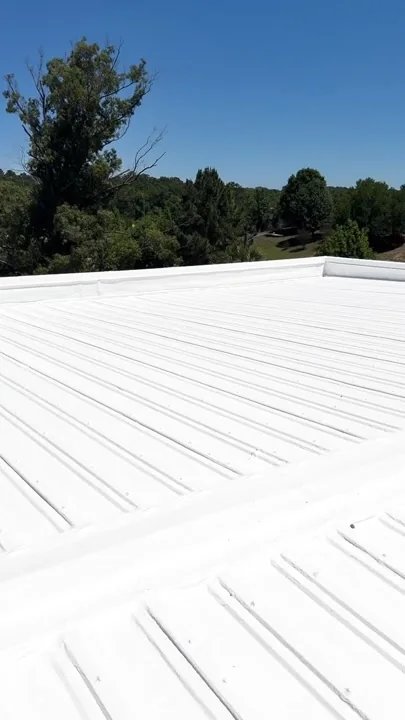
Restoring existing metal
A sound commercial metal roof with leaks at seams or fasteners may be a coating candidate. We review rust, loose panels and the existing finish before proposing restoration. See the seams and screws up close
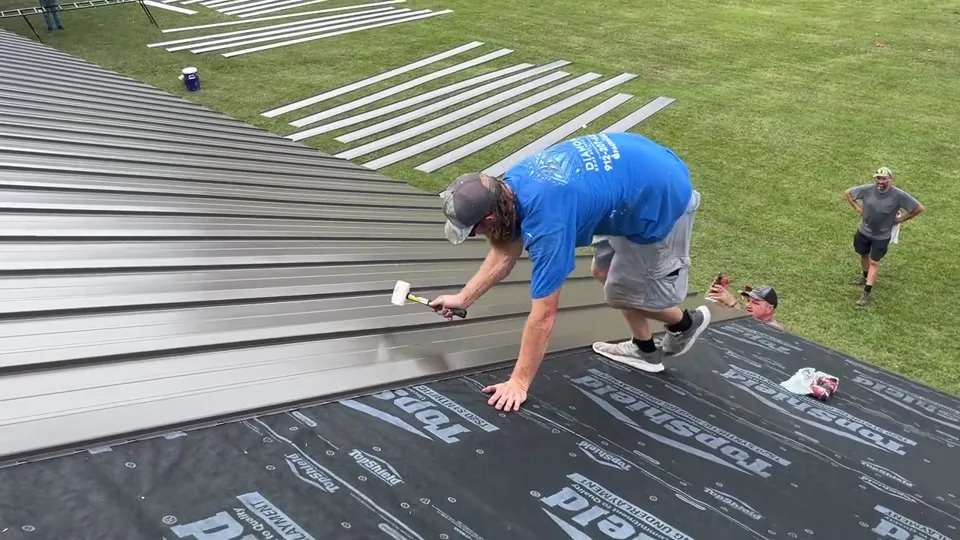
How we install your metal roof
For a tear-off and replacement, your estimate identifies the panel
profile, gauge, finish and attachment method. Here’s how those choices
come together on the roof.
Expose and inspect the roof deck
We remove the existing roofing listed in your estimate, check the
decking and refasten loose areas as specified. If we uncover damaged wood,
we document the repair and get your written approval before replacing it.
Protect the deck and the leak-prone areas
We install synthetic underlayment over the deck and high-temperature
membrane at the valleys, pipe openings and roof-to-wall transitions
called for in your scope.
Lay out and secure the panels
We align the panels at the eave and follow the fastening pattern for
your roof. Exposed-fastener panels use screws with sealing washers
through the panel face. On a nail-strip standing seam roof, the next
panel locks over the attachment strip and conceals the fasteners.
Fit the edges, ridge and openings
We fit closures to the panel shape at the eaves and hips. A nonvented
ridge uses foam closures beneath the cap. A vented ridge uses closures
designed to let air out. We fit flashing where the roof meets a wall and
seal pipe boots to the surrounding panels.
Clean up and review the finished roof
We remove loose screws and metal shavings that could leave rust
spots on the finish. We check the seams, fasteners and trim, take
completion photos and review the finished work with you.
What your metal roof warranty covers
Yoder publishes separate manufacturer terms for the factory color and
the Galvalume steel. Diamond’s workmanship coverage addresses the installation.
40 years
Factory color
Yoder advertises a manufacturer’s color warranty on its painted metal.
The warranty issued for your finish sets the coverage, limits and
conditions for your location.
25 years
Galvalume steel
Yoder lists a separate manufacturer’s guarantee for Galvalume steel.
We verify the selected metal and site conditions against the written
terms when preparing your estimate.
3 years
Diamond workmanship
Diamond’s metal roof replacement scope provides three years of
workmanship coverage starting on the date of completion. Your signed
estimate sets out the installation work included.
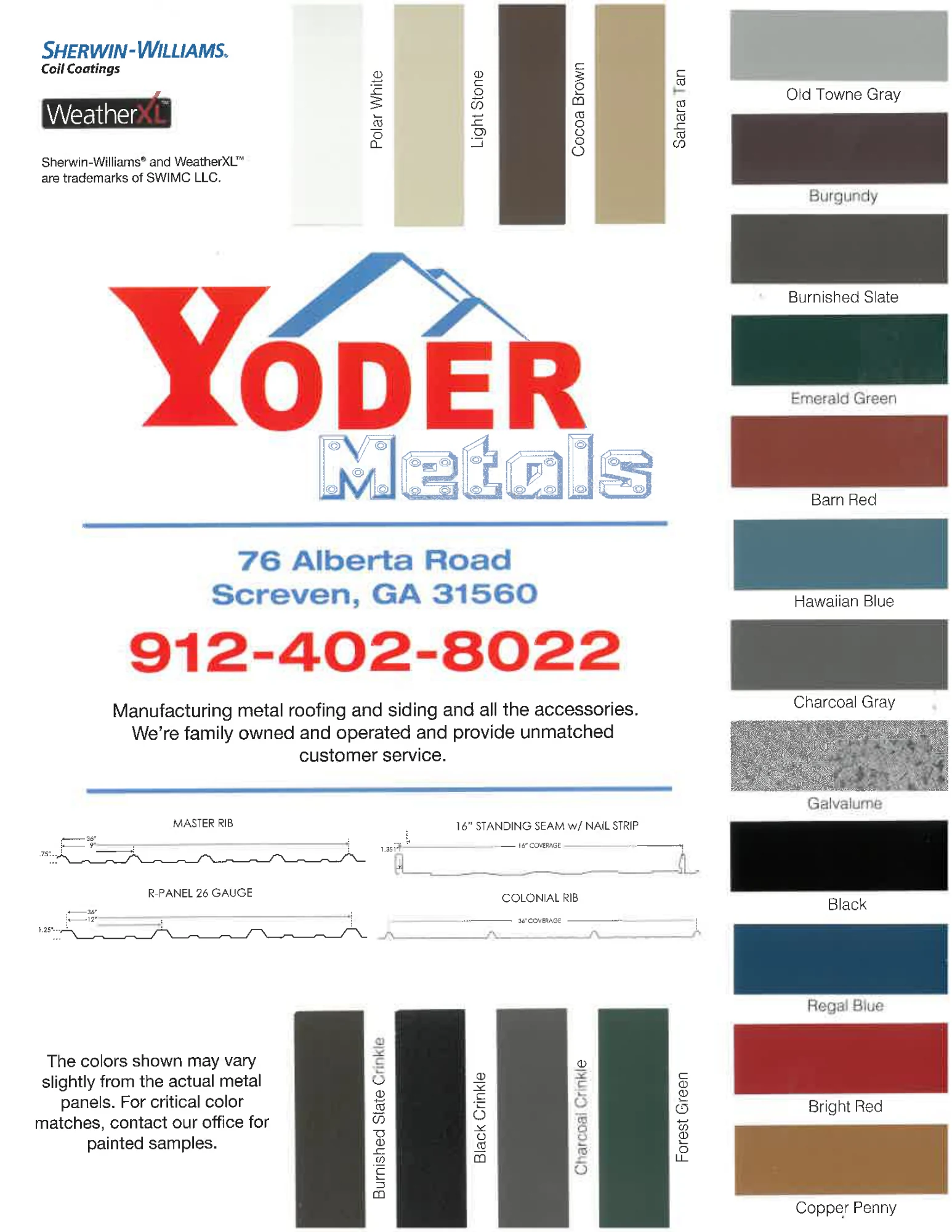
We source metal from Yoder Metals, a family-owned supplier on Alberta Road.
Yoder roll-forms steel into roofing panels and makes the trim to match. Its
chart shows Master Rib, 26-gauge R-panel, Colonial Rib and a 16-inch
standing seam panel with a concealed nail strip.
At Coastal Manor in Ludowici, Yoder formed the standing seam panels on site for Diamond’s shingle-to-metal conversion. Meet the family business behind those panels and explore the materials, people and local relationship that help bring a roof together.
On WeatherXL™ painted panels, the steel receives a Sherwin-Williams
two-coat silicone-modified polyester finish before it is formed. The finish
helps resist scratches and chipping and holds its color and gloss outdoors.
Explore every sample from Yoder’s chart below, including smooth colors,
textured Crinkle finishes and Galvalume. We confirm availability for your
panel and gauge, then compare a painted sample with your siding and trim
in daylight.
All 20 samples from Yoder’s published chart are here: 16 smooth painted colors,
three textured Crinkle finishes and Galvalume. Compare the whole palette with your
siding, brick and trim.
We confirm availability for your panel profile,
gauge and finish before ordering. These samples come from the supplier’s printed
chart; ask us for a painted metal sample to check the final color in daylight.
Six finishes from the Sherwin-Williams WeatherXL™ color card. Use the swatches to shortlist colors. Before ordering, compare an actual painted panel sample beside your siding and trim in both sun and shade. Confirm the finish is available for your panel.
The World Steel Association identifies steel as 100% recyclable.
The material can be recovered and processed into new steel products
when a steel roof reaches the end of its service.
40 years of factory color coverage.Yoder’s published manufacturer color warranty for eligible painted metal.
Recover the panelsPlan collection of removed steel roofing when the replacement scope is prepared.
Sort and processConfirm the material can be accepted and handled by the selected recycling facility.
Make new steelRecovered steel can return to steelmaking. The 100% figure describes the material’s recyclability; actual recovery depends on collection and processing.
Confirm your panel, finish and published specifications
Match the profile, gauge, coating and color to the panel you order.
Yoder’s chart shows local options; the manufacturer’s finish data and
matching CRRC record provide the full technical specifications for
a particular color, substrate and surface texture.
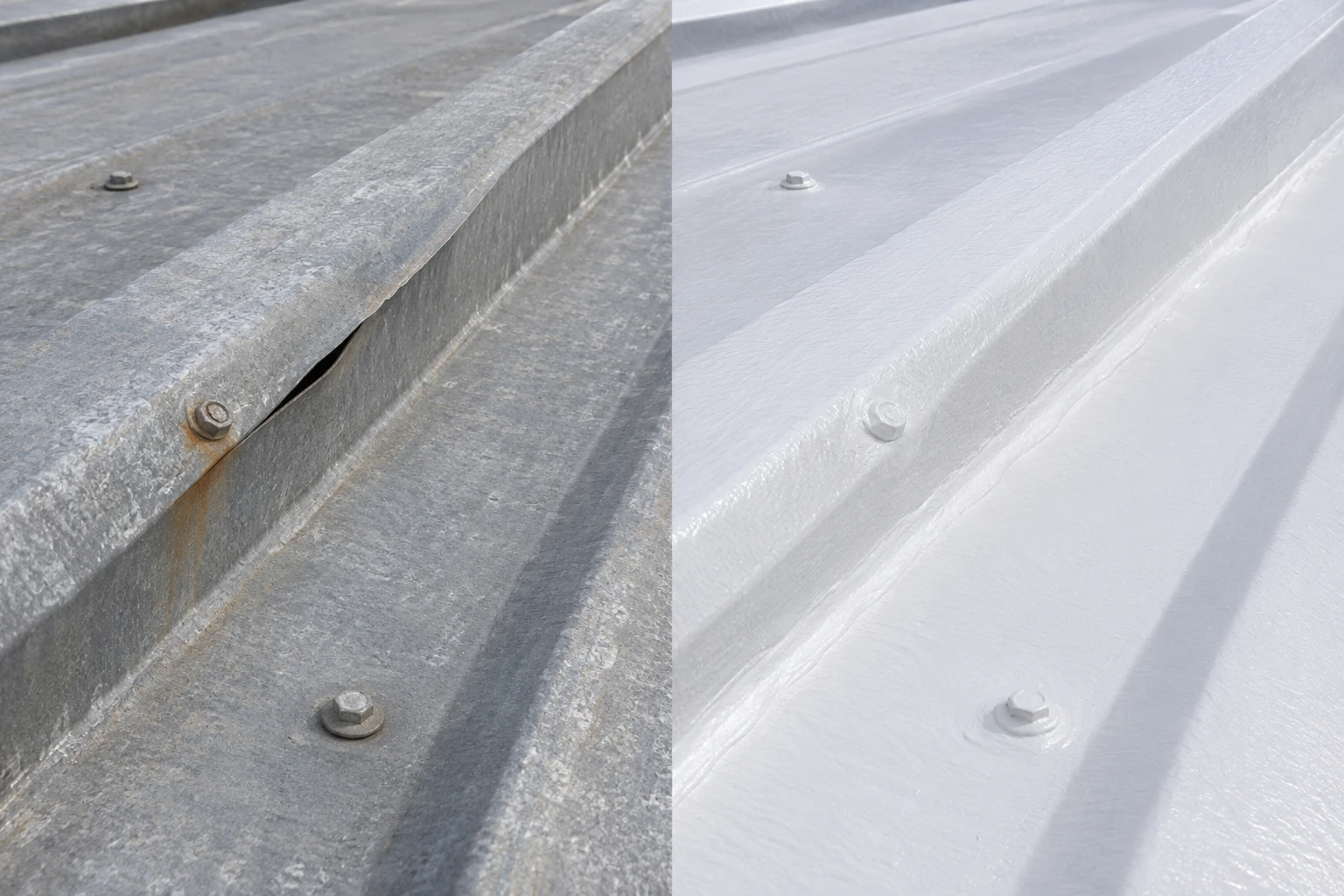
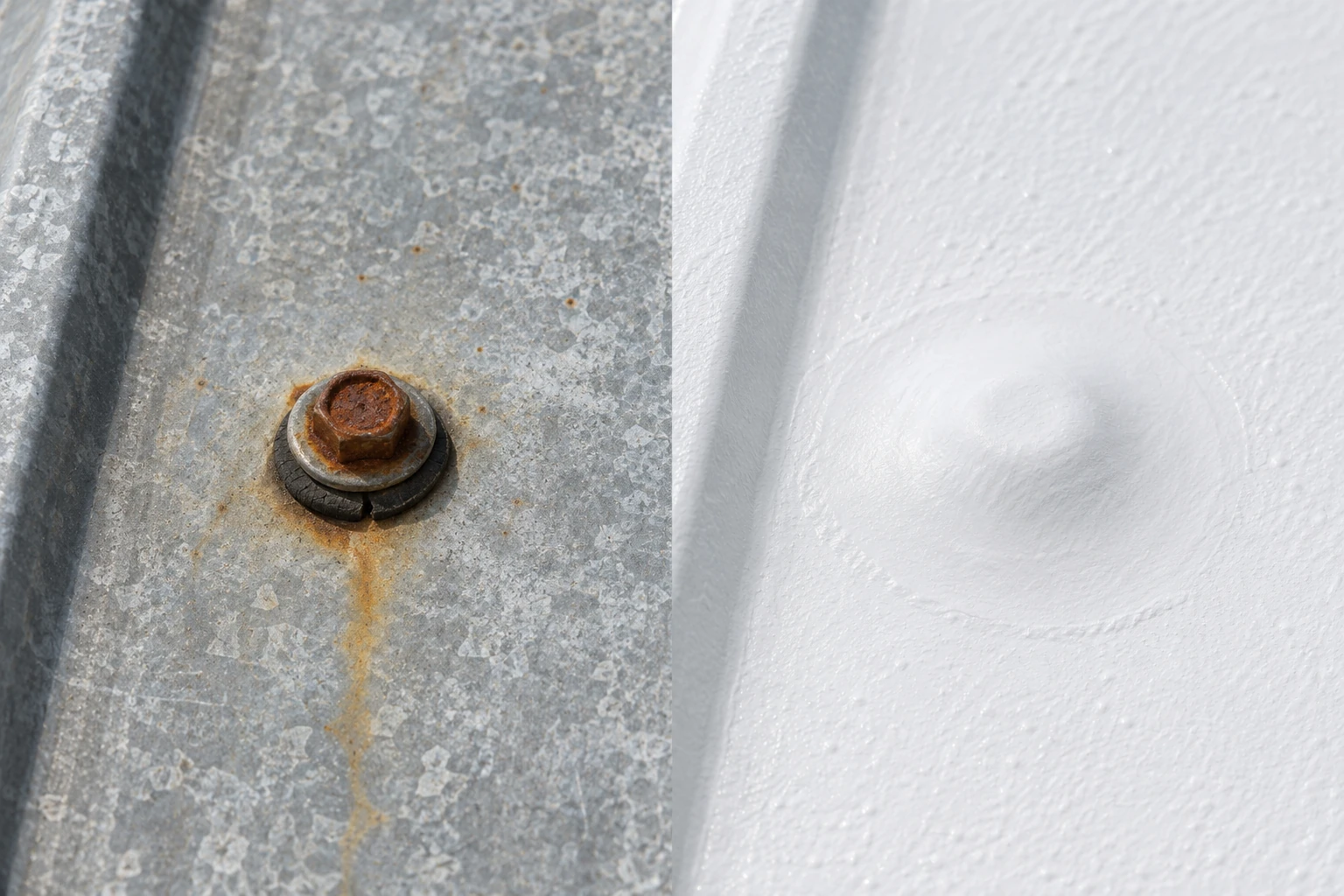
On an exposed-fastener roof, a screw hole and a panel overlap give water two different ways in. These AI-generated illustrations show what each repair looks like beneath a continuous white finish.
Before repairAfter white coating
An open panel seam
A lifted edge leaves a path for wind-driven rain. We check that both panels are sound, bring the overlap back into position and fasten it to the panel manufacturer’s specification. The crew seals the secured lap with the detail specified for the coating system.
A loose screw or worn sealing washer can let water follow the fastener through the roof. We check the metal and the attachment underneath, replace failed hardware, seat the washer correctly and seal the head and its perimeter as the restoration system requires.
We clean and dry the roof, treat surface rust with the specified primer and replace metal that has lost its strength. After the seams and fasteners are detailed, we apply the selected base and finish coats across the panels and check the coating thickness against the system specification.
Follow a panel rib uphill with your eye. Whether it runs alongside the wall or ends at it changes which flashing belongs in the estimate.
Sidewall
The long edge of the roof runs beside the wall. Ask how the sidewall trim will connect to the siding or counterflashing above it. See an ATAS sidewall example (PDF)
Endwall
The uphill ends of the panels meet the wall. The trim sheds water from the wall onto the roof, and the closures fit the particular panel profile. See ABC’s endwall example
Common questions
Can you price the skylights on a commercial metal roof?
Yes. Tell us how many openings you want reviewed and whether you want to keep the daylight, replace damaged units or price closing the openings. Existing photos or a roof plan help us identify which panels and flashings to inspect. See Diamond’s Atlanta skylight work
Can metal go over my shingles?
Sometimes. Roof condition, the number of existing layers, deck attachment requirements and the selected panel system guide that decision. A tear-off exposes the deck for a closer inspection.
Is Burnished Slate the same across brands?
Color names can repeat across manufacturers. Match the finish name and code on the supplier’s physical sample, and confirm the trim color with the panel order.
Price your metal roof
Tell us your city, the roof you have today and which panel finish you’re considering.