
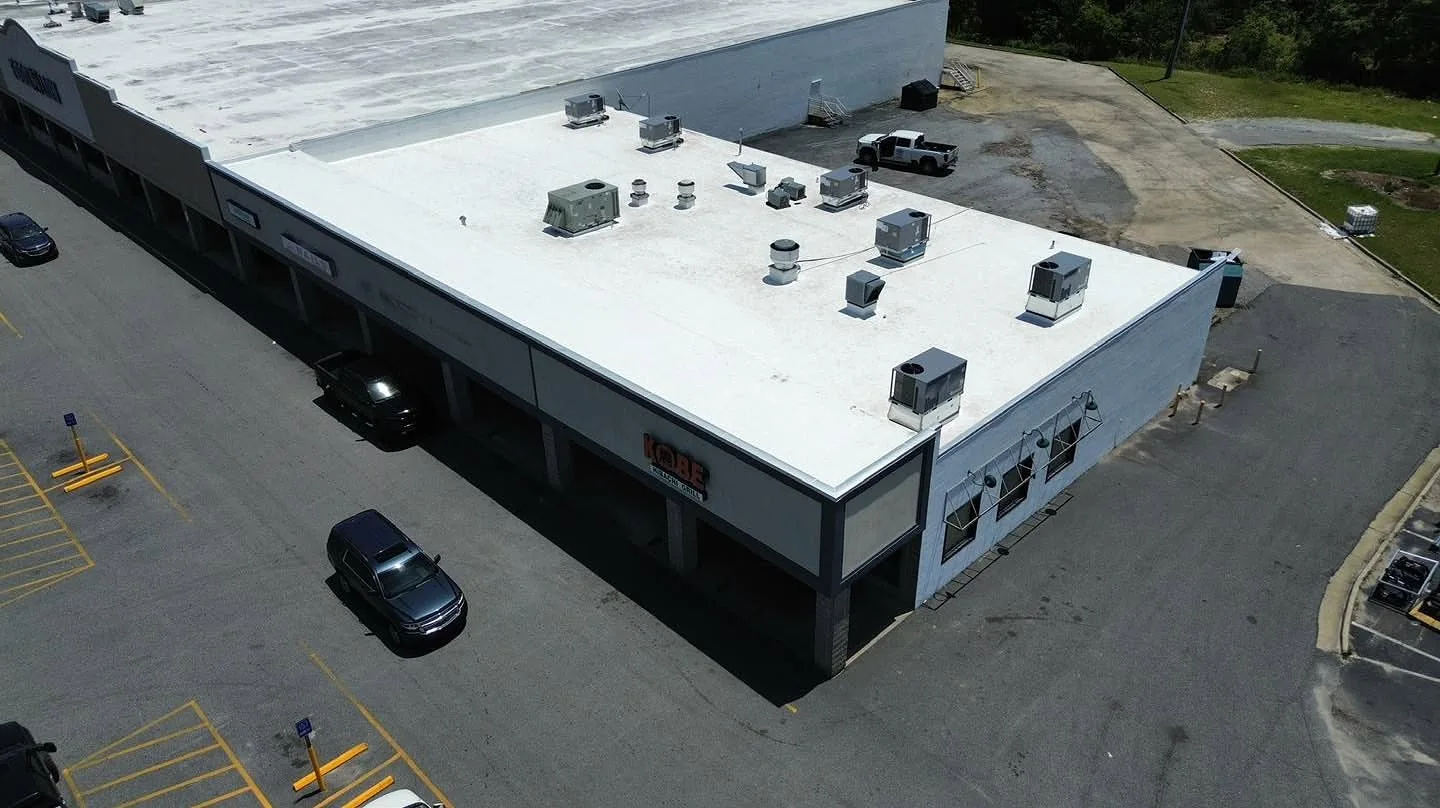
Diamond project · Jesup, Georgia

TPO roofing

TPO is a single-ply thermoplastic membrane for low-slope roofs. The sheets join at heat-welded seams. The roof deck, insulation and route to each drain matter just as much as the sheet on top.

Completed Firestone TPO roof

The benefits of TPO flat roofing

TPO is a practical option when a low-slope building needs a new membrane roof. Its factory-made sheets, welded seams and available reflective surfaces work as part of an assembly selected for that building.

Heat-welded seams

Hot air fuses overlapping membrane sheets at the seams. Correct preparation and welding settings matter to the finished connection. The proposal should also address flashing at drains, walls and rooftop equipment, where the field membrane meets another detail.
A reflective white surface

White TPO reflects sunlight and can reduce heat absorbed at the roof. That can help reduce cooling demand. Results vary with climate, insulation and building operation; a reflective membrane does not replace the insulation beneath it.

Weathering performance

TPO products are formulated for exposure to heat and ultraviolet light. Select the particular membrane and thickness for the project. Roof access and equipment service routes also need suitable walkway protection to help protect the membrane from maintenance traffic.

Flexible installation choices

Approved TPO assemblies offer different attachment methods and membrane options. Some suitable existing roofs can receive a recover system. Moisture, deck condition and the approved assembly determine what can remain and what needs removal before installation.

Plan drainage and match the exposure

A flat roof still needs a route for water to reach drains or scuppers. Tapered insulation can help create that route where appropriate. Grease, oils, chemicals or unusual heat may change the membrane recommendation. Ask for the complete assembly, protection for service areas and written warranty terms before comparing proposals.

What a full tear-off can reveal

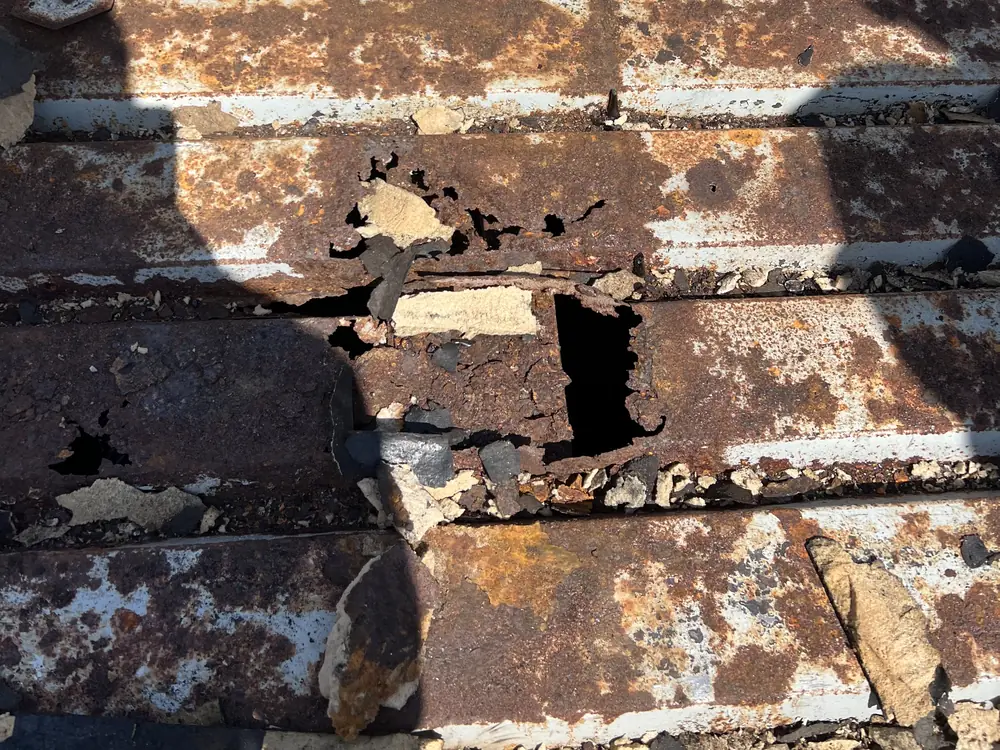
Ask how the contractor will photograph, measure and price damaged decking before covering it with new insulation.

On a commercial roof in Jesup, Diamond’s full tear-off included deck repairs, new insulation and coping metal, removal of three obsolete air-conditioning units, and a 60-mil Firestone TPO membrane.

Explore the Jesup TPO roof replacement

An opening and rust in the corrugated steel roof deck exposed during tear-off
Removing the old roof exposed a hole in the steel decking.

Further reading: GAF EverGuard TPO features; GAF’s membrane selection and drainage guide; TPO walkway protection.

Repair, recover or replace?

Targeted repair

When damage is isolated, the surrounding membrane, seams and wet areas determine whether a local repair makes sense. Tell us what changed before the leak began, including any recent rooftop service.

Recover

A new system over a suitable existing roof can reduce tear-off. Moisture checks and, where needed, test cuts help establish what can stay. The proposal should identify any wet materials to remove and how the new system will attach.

Full tear-off

Removing the roof to the deck lets the crew inspect its condition and rebuild the assembly. This can suit widespread moisture damage or a roof that needs its insulation and drainage redesigned.

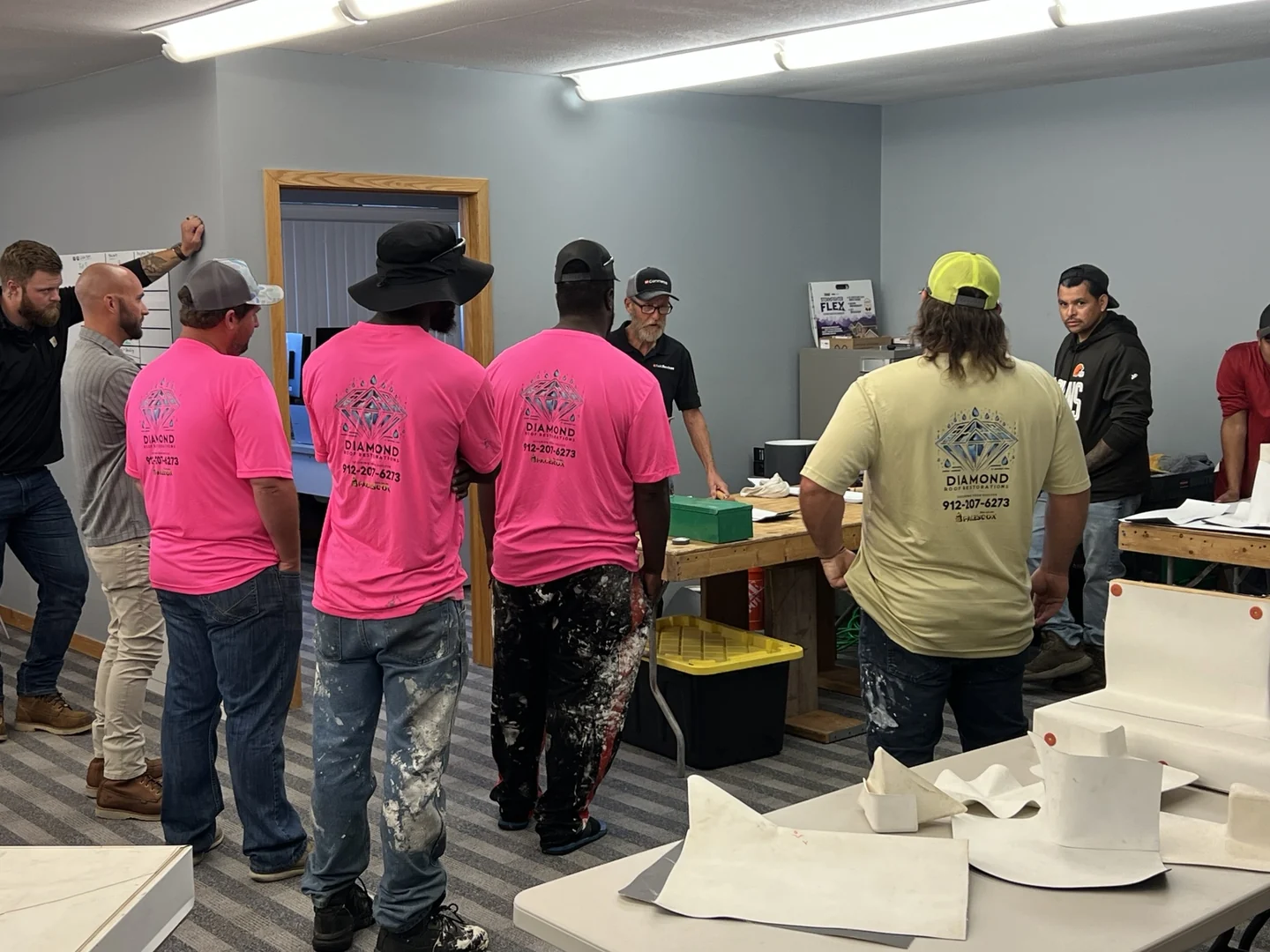
Diamond crew at a GAF TPO training class

From the class

GAF TPO training

See Diamond’s crew take part in hands-on TPO membrane practice, from hot-air welding to seam rolling.

Watch our training video

Specify the complete assembly

Use these details to compare two TPO proposals for the same building.

Membrane and attachment
A 60-mil membrane is 0.060 inches thick. The written scope should name the manufacturer, membrane thickness and attachment method. Mechanically attached, induction-welded and adhered systems use different ways to secure the roof.
Insulation and cover board
Ask which insulation type and thickness are included, where tapered insulation will direct water and whether the design calls for a cover board beneath the membrane.
Drainage and penetrations
Identify the existing drains and scuppers, the low points and the route water takes. Have each drain marked for retention, repair or replacement. Pipe boots and rooftop equipment curbs each need a defined flashing detail.
Where the membrane turns up a wall
Ask how the membrane will be secured where the roof meets the wall. Some designs carry the flashing over a parapet beneath a cap. Others stop it on the wall face and protect the upper edge. The proposal should identify how water above that edge drains outward. See GAF’s wall flashing examples
Phasing and handover
For an occupied building, identify the entrance or drive lane that must stay open and the hours a delivery truck or lift can use it. Agree on temporary weather protection between workdays. Ask for the proposed warranty terms, maintenance responsibilities and final records in writing.

Common questions

Can I request a quote for just one roof section?

Yes. Identify the section by the room, loading bay or entrance beneath it. Ask the proposal to show where the work will stop and how it will meet the adjoining roof. See Diamond’s roof survey in Buena Vista, Georgia. The aerial photographs document the existing roof wings, the courtyards and the equipment locations before a scope is selected.

Can an assessment start with photos?

Yes. Useful starting points are interior leak locations, recent repair records, a roof plan and existing photos. A site assessment can then confirm the membrane, drainage and condition below the surface.

Does a thicker membrane guarantee a longer warranty?

Coverage depends on the approved assembly, installation and the manufacturer’s terms. Request the specific term and scope for your building. Read the GAF EverGuard® TPO data sheet (PDF)

Could a coating still be an option?

A sound, compatible membrane may be a candidate for restoration after inspection. Surface condition, adhesion and underlying moisture help decide. See the Jesup TPO roof Diamond restored with silicone.

Price your low-slope roof

Send the building city, approximate roof area, known leak locations and any bid deadline.

Request a Roof Assessment

Request an assessment

Tell us where the property is and what needs attention. Roof inspections and estimates are free, with measurements, photos, a video walkthrough and drone views included. You’ll receive a request reference number.

Add address, timing or project details (optional)