A new roof can look finished while the most expensive mistakes are already covered up. Here is what to compare before signing a shingle or metal roofing estimate.
Where the second bill comes from
Say a leak starts beside a plumbing vent after a reroof. The next roofer has to find the entry point, lift shingles, replace the faulty flashing and put the roof back together. If the deck stayed dry, the repair may end there. If water reached insulation or the ceiling below, drying and interior repairs become separate costs.
When quotes differ, compare the price for the same finished job. Ask each contractor to identify included flashings, the unit price for damaged decking and who pays for a return visit under the workmanship warranty.
Six roofing details worth checking before they disappear
Shingles nailed outside the fastening zone
A nail set too high can miss the shingle course below. An overdriven nail can cut into the shingle. A few loose tabs may be the first visible sign, but the same fastening pattern can repeat across a whole slope.
Before you sign. Ask for the shingle model, its fastening instructions and a photo of the nail line before the next course covers it.
Felt or synthetic underlayment lapped the wrong way
Roof underlayment is a second layer that sheds water beneath the shingles. If an uphill sheet ends beneath the downhill sheet, water running down that joint can reach the deck. A wrinkle trapped under a shingle can also show through the finished roof.
Before you sign. Ask for photos at laps, valleys and penetrations before the crew installs the roof covering.
Underlayment left out of the bid
When the roof assembly calls for underlayment, omitting it removes a layer of protection. If wind lifts a shingle, the deck below has a direct exposure. Correcting the omission after installation can require removing otherwise new shingles.
Before you sign. Have each bidder name the underlayment, where it goes and how it meets the requirements for your roof covering, slope and location.
Metal roof panels attached incorrectly
Through-fastened panels depend on screws and sealing washers. An overdriven screw can deform its washer. Standing-seam panels use a different attachment detail. Clips placed too far from the eave can leave panel ends vulnerable to wind.
Before you sign. Get the panel profile and attachment detail in writing, including the eaves and corners. Ask how the crew checks alignment as it works.
Required closures missing from a metal roof
If the ridge detail calls for shaped closure foam, gaps between the panel ribs and the ridge cap can admit wind-driven rain. A vented ridge needs its specified vented closure so it can exhaust air while shedding water.
Before you sign. Ask which solid or vented closure fits your panel profile and where it will be installed. Get a photo before the ridge cap covers it.
A worn pipe boot reused under new shingles
A split collar around a plumbing vent can let water follow the pipe into the attic. Replacing the shingles around an old boot leaves that leak path in place. A callback may require lifting new shingles to replace the flashing.
Before you sign. Ask the bidder to list roof penetrations and state which boots will be replaced. Have the crew document how each flashing meets the surrounding roofing.
What poor fastening looks like on a real roof
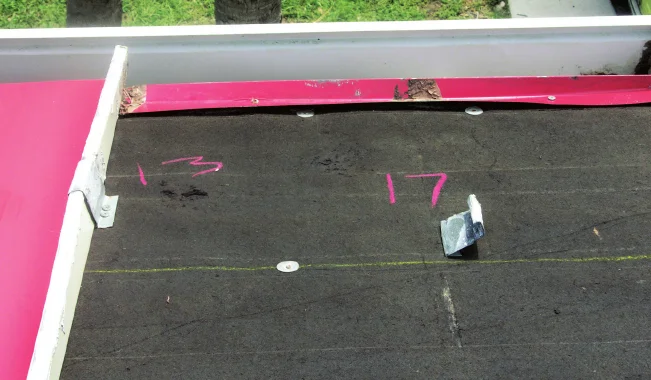
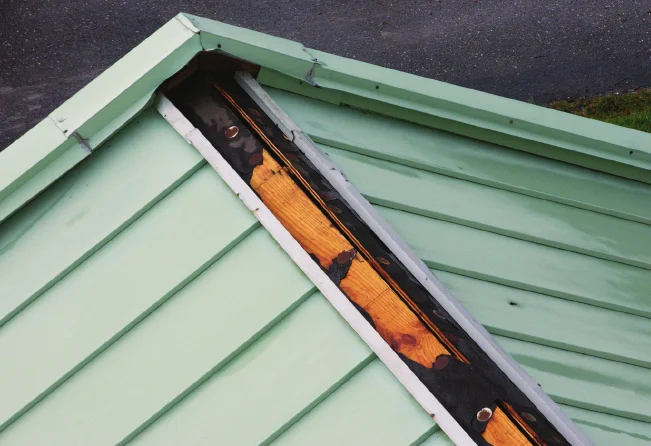
These field photographs come from FEMA’s Hurricane Ike recovery advisory. They show two different places where an attachment detail mattered.
The field team measured clips 13 and 17 inches back from the deck edge. They identified excessive setback at this eave. FEMA, figure 4.Fasteners spaced too far apart left this ridge flashing vulnerable. Once it lifted, the exposed ridge opened a path for rain. FEMA, figure 9.
Use the instructions for the exact products listed on your estimate. For asphalt shingles, GAF explains how fastening and roof deck protection work together. Its vent-pipe guide shows why the condition of the collar matters even when the surrounding roof covering is new.
Tell Diamond when the leak started and what work was done. An indoor photo, your estimate and the date of the last rain help us prepare for an assessment.