
Built-up and gravel roofs maintenance handbook
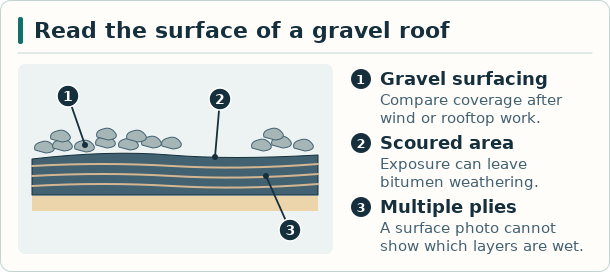
A built-up roof uses several layers of reinforcing material and bitumen. On a gravel-surfaced roof, aggregate shields those layers from weather. Gravel can hide small splits and also shifts in storms. Confirm the assembly from records, since loose stone can also cover a different kind of roof.
Download PDFBefore the first check
Identify this roof section on a sketch. Mark downspouts, drains, previous repairs and rooms where leaks have appeared. Find the installer’s care instructions and warranty notice requirements. Choose safe observation points you can return to.
What to check
- Identify each roof section
- Ask the roofer to mark the reinforced layers, surfacing, drains and past tear-offs on a plan. Keep photos of new work before gravel covers it. A photo of the finished surface alone cannot show which layers were repaired.
- Compare gravel coverage
- From a safe viewpoint or contractor photos, compare bare corners, perimeter strips and gravel piles with last season. Have the roofer inspect exposed asphalt for splits or weathering before any aggregate is replenished.
- Watch the low points
- Mark recurring puddles, gravel collected near drains and missing drain strainers on the plan. From the ground, note an overflow outlet discharging or a downspout that stays dry during rain. Request a drainage check if the pattern changes.
- Review raised and cracked areas
- A ridge that crosses the roof, a split near a deck joint, or a blister that has broken can involve several layers. Track whether it changes. Avoid digging through the gravel or covering the spot with generic roof cement.
- Inspect edges from below
- After winds, photograph displaced coping, loose metal edges or pieces of roof surfacing on the ground. Rope off the area below loose material and call the building manager or roofer.
- Track activity around equipment
- Require contractors to use designated access routes and remove loose screws, cut metal and packaging. Request before-and-after photos of roof areas beneath new equipment supports.
When to check
- Spring
- Obtain field photos of corners, drains, wall flashings and any previous cracks. Compare bare areas with last year’s plan and schedule priority work before the rainy season.
- Fall
- Arrange professional cleaning around drain bowls and scuppers. Make sure secondary outlets are accounted for and visible. Keep a record of any place that repeatedly traps gravel or leaves.
- After high wind or prolonged rain
- Check the ground for fallen material and the interior for new stains. Report an enlarged bare patch or prolonged pond with its location and the time since rainfall ended.
When something changes
- Wind leaves a bare patch in one corner
- Photograph the patch and nearby displaced gravel. Have the roofer check the exposed waterproofing and edge detail, then reinstate the specified protective surfacing.
- A room leaks while a nearby roof drain is flowing
- Record when the drip starts and stops. Ask the roofer and facilities plumber to distinguish the roof-to-drain seal from leaking pipe joints below. Both can be hidden by the roof and ceiling.
- Water collects in a new depression
- Keep people away from the affected area. Arrange prompt evaluation of drainage, insulation and deck support. If the ceiling sags or structure appears to move, clear the area below and seek urgent professional assistance.
What to ask the roofer
- Give the owner the locations where surfacing was moved and the findings beneath it. Re-cover inspected areas with the appropriate protection.
- For failed plies, ask how the repair ties into sound, dry material. Track any core samples and professional restoration of each opening.
- Ask for separate prices for localized repair, drainage correction and removal of wet sections. Record the accepted scope and inspect it after rain.
Who keeps the record?
Homeowners and property owners keep the roof file, authorize work and retain the written scope. Property managers log reports by room or roof section, coordinate trades and track repairs through closeout. Maintenance staff record accessible observations, restrict access to hazards and escalate changes. Leave roof access, probing, cleaning at height and repairs to trained, authorized people using an appropriate access plan.
For each visit, log the date, weather, roof section, observation, photo ID, responsible person and follow-up date. Close the entry with the repair record and the next inspection. A printable log is included in the PDF.