
EPDM rubber maintenance handbook
EPDM is a rubber sheet. Its seams are commonly taped or bonded, and the membrane may be fully adhered, mechanically attached or held down by ballast. Regular care centers on drainage, seams, perimeter attachment and protection from rooftop traffic.
Download PDFBefore the first check
Identify this roof section on a sketch. Mark downspouts, drains, previous repairs and rooms where leaks have appeared. Find the installer’s care instructions and warranty notice requirements. Choose safe observation points you can return to.
What to check
- Record the attachment and layout
- Use the roof documents to identify the system. Mark seams, pipes, drains and old repairs on a plan. With ballast or pavers, note which areas the last inspection could actually see.
- Keep drainage functioning
- Observe downspouts and overflow outlets from the ground after rain. Arrange safe removal of leaves and loose debris. On a ballasted roof, have the roofer keep stone out of drains without altering the designed ballast coverage.
- Compare seam and corner photos
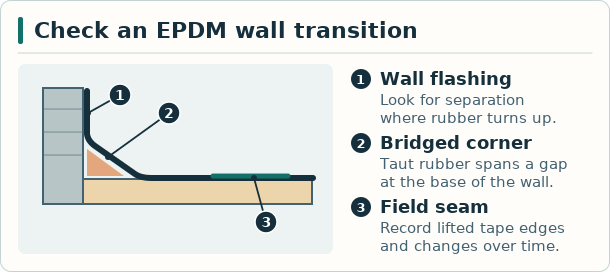
- Look for peeling tape edges, open patch corners or membrane pulled tight across the bottom of a wall. Report the location. A tensioned corner needs an attachment check before a contractor decides how to repair the flashing.
- Keep oils and unsuitable patches off the sheet
- Coordinate equipment service and spill control with the maintenance lead. If petroleum products or another chemical reach the rubber, record the substance and contact the membrane manufacturer or roofer for cleanup and assessment.
- Follow up on puncture risks
- Track the routes used by mechanics and installers. Arrange protective walkways where repeated service causes wear. Ask crews to collect fasteners and photograph any damage immediately.
When to check
- Spring
- Schedule a review of seams, edge restraint, pipe flashings and drain bowls. Compare corners with the last report to spot progressive pulling or newly open tape edges.
- Fall
- Arrange debris removal and check for branches that overhang the roof or gutter. Have trained staff or a roofer confirm strainers and overflow outlets are clear before seasonal rains.
- After a wind event or equipment change
- Photograph shifted ballast or pavers from a safe vantage and restrict traffic in the affected area until inspected. Send the roofer the storm date and the locations of recent service work.
When something changes
- The rubber pulls away at a wall or pipe
- Ask the roofer to evaluate movement and perimeter restraint along with the flashing. Pulling the sheet back by hand can damage an otherwise repairable detail.
- A damp spot returns despite a previous seam patch
- Compare timing with rain and equipment operation. Mark the patch and stain on the plan. Ask for an upstream investigation of neighboring seams, drains and wall flashing and confirmation of any wet insulation.
- Ballast has moved and bare rubber is visible
- Record the affected corner or edge and request a wind-damage review. Moving stone can expose or puncture the membrane. Let the qualified roofer inspect the sheet and restore the designed coverage.
What to ask the roofer
- For an open seam or puncture, ask for an EPDM-compatible repair matched to the membrane and backed by documented surface preparation.
- If a recoat is proposed, ask what defect it solves. EPDM generally needs no special coating as routine upkeep. Confirm adhesion and manufacturer eligibility if a particular restoration is being considered.
- Before approving repeated repairs, compare the map of failures with moisture findings and attachment condition. Request a written distinction between isolated detail repairs and areas requiring removal.
Who keeps the record?
Homeowners and property owners keep the roof file, authorize work and retain the written scope. Property managers log reports by room or roof section, coordinate trades and track repairs through closeout. Maintenance staff record accessible observations, restrict access to hazards and escalate changes. Leave roof access, probing, cleaning at height and repairs to trained, authorized people using an appropriate access plan.
For each visit, log the date, weather, roof section, observation, photo ID, responsible person and follow-up date. Close the entry with the repair record and the next inspection. A printable log is included in the PDF.