
Modified bitumen maintenance handbook
Modified bitumen comes in rolls. The overlaps, or laps, join the sheets into a continuous waterproof layer. Some top sheets have granules and others have an approved coating. Start by finding the installation record so the roofer knows which sheets and surfacing to maintain.
Download PDFBefore the first check
Identify this roof section on a sketch. Mark downspouts, drains, previous repairs and rooms where leaks have appeared. Find the installer’s care instructions and warranty notice requirements. Choose safe observation points you can return to.
What to check
- Make a simple roof map
- On a floor plan, mark drains, rooftop equipment, repaired areas and the rooms beneath them. Ask the roofer to label close-up photos with those same locations. Keep the roof access key and visit log with the building manager.
- Look along the overlaps
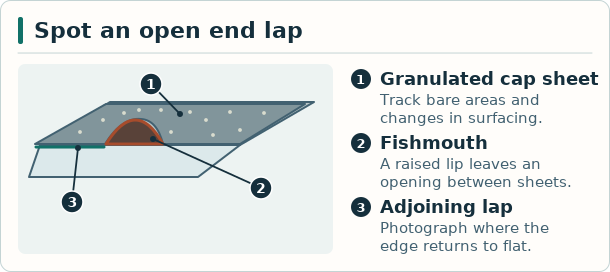
- Use the roofer’s photos to spot an end curling up like an open mouth, a long wrinkle running into a lap, or a split across a joint. Note its location and arrange a repair assessment. Leave probing and lifting sheets to the roofer.
- Track wear on the top sheet
- Compare the same area in dated photos. A growing bare patch in a granulated sheet, cracked exposed asphalt or a raised bubble that splits deserves attention. Do not puncture a bubble to see what is inside.
- Check where the roof meets a wall
- Ask for photos where the roofing turns up a wall or the base of a rooftop unit. Look for a pulled-away edge, slipping sheet or loose metal cover. Record the room below if the leak occurs only in wind-driven rain.
- Follow the rain to its outlet
- Observe downspout discharge from ground level. Record when rain ended and whether a puddle remains in later photos. Arrange debris removal and inspection of any high drain or low bay. Water still present roughly two dry days later deserves investigation.
- Protect service paths
- Before sending an HVAC crew, give them the approved route and require a photo of the finished work. Have the roof contractor review new supports or penetrations. Keep sharp tools, loose screws and discarded equipment off the sheet.
When to check
- Spring
- Compare winter and spring photos with the last inspection. Schedule a roofer to check field laps, wall flashing, previous repairs and outlets, then assign each finding a person and due date.
- Leaf fall
- Arrange safe removal of leaves at drains and scuppers before heavy rain. Watch discharge at ground level afterward. Ask an arborist about limbs that repeatedly drop debris onto the roof.
- After wind, hail or rooftop work
- Record the date and affected wing. Request close-ups of displaced equipment, impact marks and punctures before allowing routine traffic through that area. Schedule another interior check during the next rain.
When something changes
- One end lap curls up
- Keep traffic away from the loose edge and request a prompt roofer visit. Ask for the surrounding bond and insulation to be checked before the lap is rebuilt.
- A recurring ceiling stain is several feet from the patch
- Mark both locations on the plan. Record storm direction, onset and whether the air conditioner was running. Have the contractor trace the route through flashings, laps and drains before pricing another patch.
- Bare patches spread across several rolls
- Request a map of surfacing loss and moisture findings. A sound, dry base may support a compatible treatment. Extensive separation or wet material calls for a removal scope and comparison of alternatives.
What to ask the roofer
- Identify the cap sheet and repair system, and photograph each lap or flashing defect before covering it.
- Confirm the extent of trapped moisture or damaged decking where indicated. List what must come out and how the drain detail will be restored.
- At closeout, obtain labeled after-photos, repair materials, warranty notice details and a follow-up date. Check the original symptom after the next rain.
Who keeps the record?
Homeowners and property owners keep the roof file, authorize work and retain the written scope. Property managers log reports by room or roof section, coordinate trades and track repairs through closeout. Maintenance staff record accessible observations, restrict access to hazards and escalate changes. Leave roof access, probing, cleaning at height and repairs to trained, authorized people using an appropriate access plan.
For each visit, log the date, weather, roof section, observation, photo ID, responsible person and follow-up date. Close the entry with the repair record and the next inspection. A printable log is included in the PDF.