
PVC maintenance handbook
PVC roof sheets have heat-welded seams. Keep a record of the specific membrane, especially on buildings with kitchen exhaust, process chemicals or several roof additions. This gives the roofer a reliable starting point for cleaning, matching patches and checking older welds.
Download PDFBefore the first check
Identify this roof section on a sketch. Mark downspouts, drains, previous repairs and rooms where leaks have appeared. Find the installer’s care instructions and warranty notice requirements. Choose safe observation points you can return to.
What to check
- Identify each roof section
- Save the installer invoice and membrane product name. Mark any roof additions and older patches on a plan. PVC and TPO can look alike, and adjoining areas may need different repair materials.
- Track exhaust and spills
- Map exhaust fans and any drains or scuppers downstream. Have equipment staff maintain grease collection and correct discharge problems. Record the name of any spilled product for the roofer. Use only cleaners approved for the installed PVC sheet.
- Inspect bends and previous repairs
- Ask for close photos of corners, pipe boots, curb bases and existing patches. Note splits, lifted edges or sheet pulling tight at a change in direction. Keep past photos so a new change is easy to identify.
- Preserve clear drainage
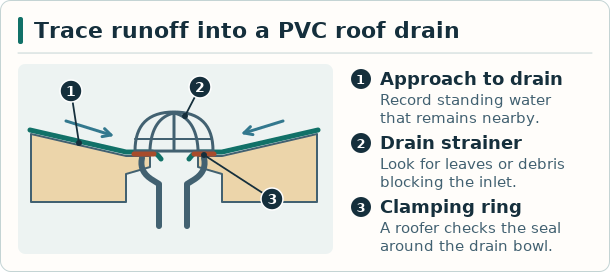
- From a safe vantage, observe the roof's discharge during rain and log any overflow or recurring pool. Have the service team clear debris and check that drain strainers and wall outlets are secure and unobstructed.
- Control service traffic
- Give technicians the approved walkway route and require protection under service equipment and sharp parts. Record every new penetration. Route requests for added anchors, piping supports or penetrations through the building manager and qualified roofer.
When to check
- Spring
- Compare drain paths, corners and patched areas with the previous inspection. Review whether any rooftop equipment, exhaust discharge or cleaning chemicals changed over winter.
- Fall
- Schedule debris clearing and review exposed edge metal and pipe flashings. Reconcile roof-access records with completed repair photos before filing the seasonal report.
- After high winds, hail or equipment work
- Look from inside for new staining and from the ground for displaced perimeter metal. Gather photos from the authorized rooftop team, including the route used to move tools or equipment.
When something changes
- A patch peels or an old seam opens
- Flag the roof section and arrange a prompt inspection. The roofer should identify the existing sheet and patch, check for wet material and decide whether the weathered sheet accepts a compatible repair.
- There is oily staining below an exhaust fan
- Record the equipment ID and product involved. Have the equipment contractor address the discharge and the roofer review membrane compatibility and surface condition before cleaning. Save the manufacturer's written recommendation.
- Cracks recur at the same curb
- Ask for an inspection of sheet flexibility, corner flashing, curb attachment and movement. The repair record should say whether the problem is confined to the detail or extends into the surrounding sheet.
What to ask the roofer
- Ask for a membrane identification and a trial repair or weld evaluation on aged sheet before approving a large patching scope.
- Where PVC meets an older asphalt roof or a different insulation, have the roofer confirm the specified separation or transition detail and document any incompatible contact.
- If stiffness or splitting is widespread, compare localized repairs with replacement of the affected roof section. Include moisture findings and the condition of the deck in the decision.
Who keeps the record?
Homeowners and property owners keep the roof file, authorize work and retain the written scope. Property managers log reports by room or roof section, coordinate trades and track repairs through closeout. Maintenance staff record accessible observations, restrict access to hazards and escalate changes. Leave roof access, probing, cleaning at height and repairs to trained, authorized people using an appropriate access plan.
For each visit, log the date, weather, roof section, observation, photo ID, responsible person and follow-up date. Close the entry with the repair record and the next inspection. A printable log is included in the PDF.