
Asphalt shingles maintenance handbook
A shingle roof sheds water in overlapping rows. Its busiest spots are valleys, pipe openings and roof-to-wall joints. Keep photos of each slope, the shingle product name and any records of decking or valley work so the next inspection starts with a useful baseline.
Download PDFBefore the first check
Identify this roof section on a sketch. Mark downspouts, drains, previous repairs and rooms where leaks have appeared. Find the installer’s care instructions and warranty notice requirements. Choose safe observation points you can return to.
What to check
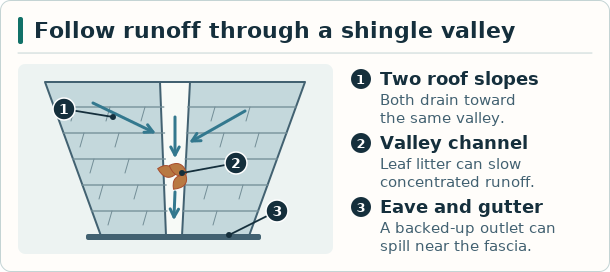
- Compare each slope
- Photograph slopes from the same ground locations. Look for new gaps, lifted or creased tabs, bare patches and loose pieces in the yard. Note which side faces the wind and whether a tree touches it.
- Watch the valleys
- A valley carries runoff from two slopes. From a safe viewpoint, look for packed leaves, blocked discharge or a branch rubbing the shingles. Have an insured contractor remove debris and examine the valley flashing or liner.
- Watch gutters during rain
- From shelter, note any gutter overflow or disconnected downspout. Arrange cleaning from a qualified service. Record whether granule accumulation is increasing and whether bare shingle patches are visible on the roof.
- Check ceilings and accessible attic views
- Use an existing safe access point and flashlight. Look for damp insulation, new staining around a vent pipe and wet roof sheathing. Avoid walking on attic insulation or ceiling board. Record whether the stain returns during wind, steady rain or dry weather.
- Protect the shingle surface
- Refer algae, moss and staining to the shingle manufacturer or roofer for an approved treatment. Pressure washers, stiff brushes and foot traffic can remove protective granules. Arrange branch trimming before abrasion wears a groove.
When to check
- Spring
- Compare the roof to the previous year's photos. Ask the inspector to examine pipe boots, chimney and sidewall flashing, ridge caps and valley intersections where a field of intact shingles can hide a leak.
- Autumn
- Schedule valley and gutter clearing as leaves fall. Confirm water reaches the downspout outlet on the next rain. From indoors, check that bathroom exhaust is properly discharged and discuss attic moisture with the appropriate trade.
- After a wind or hail event
- Record the storm date and photograph exterior changes from the ground before cleanup. Contact the roofer promptly if shingles are missing or an indoor stain is growing. Save dated photos and receipts for any warranty or insurance review.
When something changes
- A single shingle is lying in the yard
- Save a photo and note which side of the building it came from. Arrange a prompt check of adjacent rows, fastener placement, seal strips and exposed underlayment. The damage can extend beyond the visible gap.
- A ceiling stain follows a chimney or pipe
- Mark the spot and the first rain that produced it. Ask for a flashing and pipe-collar inspection as well as an upslope check. Replacing shingles directly over the stain may leave the opening untouched.
- You find granules at the downspout
- Photograph the amount and look for a trend. New shingles may shed some loose granules. Growing bare areas, exposed mat, cracking or widespread brittleness warrant a roof assessment before choosing repair or replacement.

What to ask the roofer
- Ask for photos of failed tabs, flashing or boots and a repair scope that addresses how runoff reaches that location.
- For recurring valley leaks, have the roofer verify the correct liner, fastener placement and shingle layout for the product and local requirements.
- When considering reroofing, ask how the crew will identify, photograph and price unsound decking before covering it. Keep the closeout photos with the warranty.
Who keeps the record?
Homeowners and property owners keep the roof file, authorize work and retain the written scope. Property managers log reports by room or roof section, coordinate trades and track repairs through closeout. Maintenance staff record accessible observations, restrict access to hazards and escalate changes. Leave roof access, probing, cleaning at height and repairs to trained, authorized people using an appropriate access plan.
For each visit, log the date, weather, roof section, observation, photo ID, responsible person and follow-up date. Close the entry with the repair record and the next inspection. A printable log is included in the PDF.