
Spray polyurethane foam maintenance handbook
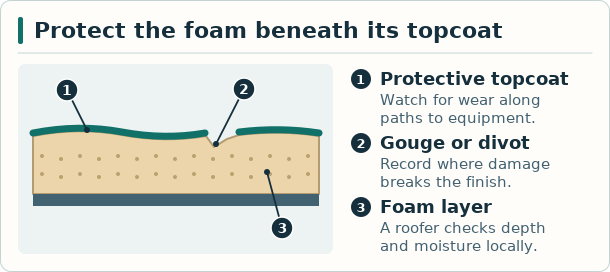
This guide covers exterior spray polyurethane foam (SPF) roofing. A protective surface shields the foam from sunlight and wear. Find out whether yours has acrylic, silicone, another coating or aggregate protection before scheduling a repair or renewal.
Download PDFBefore the first check
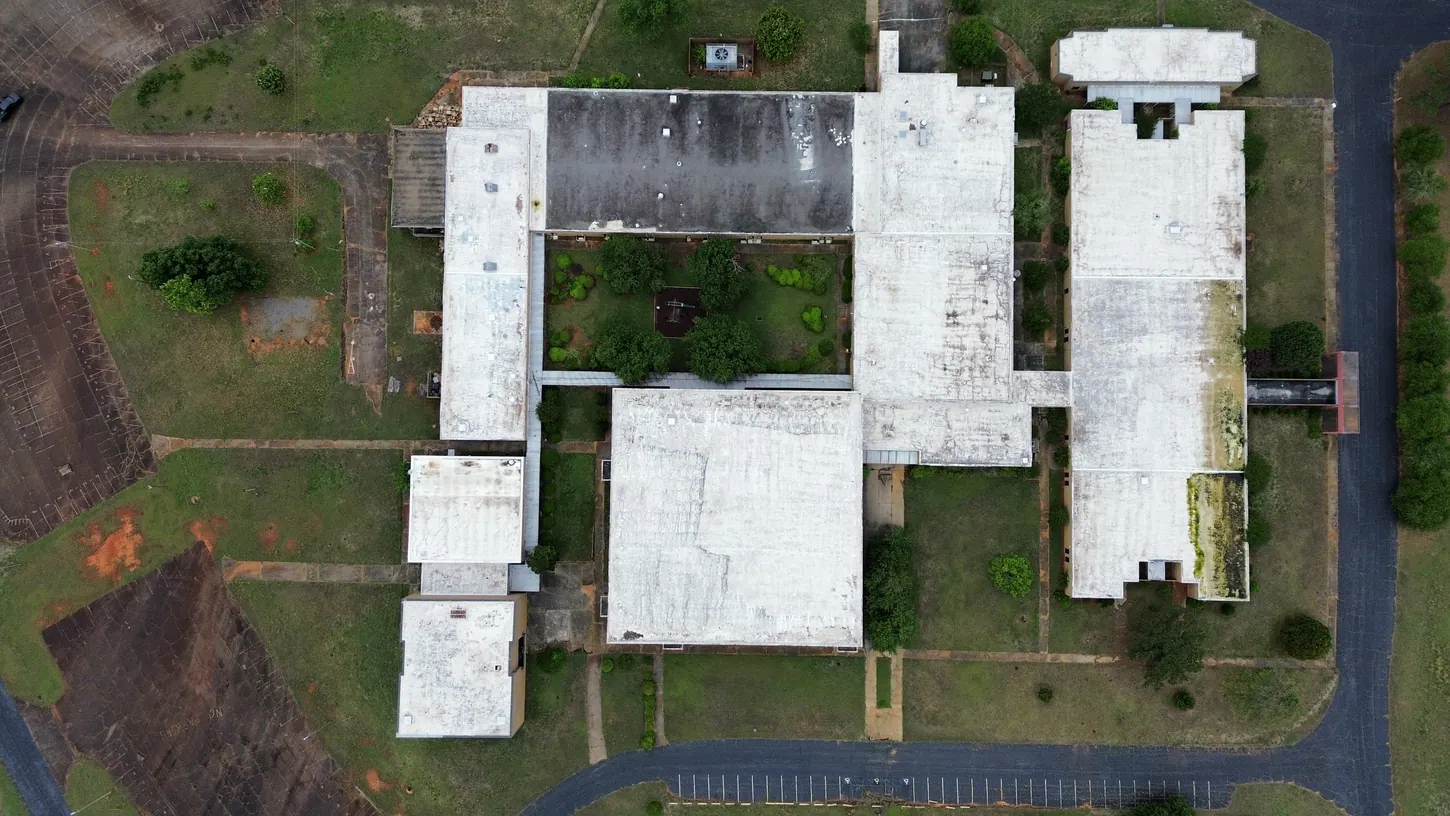
Identify this roof section on a sketch. Mark downspouts, drains, previous repairs and rooms where leaks have appeared. Find the installer’s care instructions and warranty notice requirements. Choose safe observation points you can return to.
What to check
- Make a roof map
- Name each roof area and locate drains, equipment and access points on a simple plan. File the original foam and coating specifications, prior recoat dates, repair photos and warranty notification procedure.
- Track surface wear
- Have the inspector photograph thinning topcoat, exposed yellow-to-brown foam, pinholes, blisters and cracked edges around penetrations. Use repeat photos at the same equipment paths and drain areas to see where conditions are changing.
- Keep water moving
- Arrange drain, scupper and gutter cleaning by trained personnel. Record rain end time and locations that hold water afterward. Ask whether debris, a raised drain, displaced material or the slope of a roof bay is responsible.
- Manage rooftop traffic
- Give HVAC and other trades the approved access route. Request before-and-after photos at service areas. Have a foam-roof contractor assess dropped-tool cuts, dragging marks and foot-traffic wear before they spread.
- Match interior and exterior records
- Log any stain, date and recent weather against the plan. A breach can feed a separated interface or deck joint and show up in another bay. A stain alone cannot tell you how much foam or insulation is wet.
When to check
- Spring
- Book one of the two routine professional inspections recommended by the Spray Polyurethane Foam Alliance. Review winter wear, drain edges, cracks at vertical surfaces and last year's repair sites.
- Autumn
- Arrange the second inspection and outlet cleaning. Ask for a map of coating wear and a written renewal recommendation based on the actual covering, its remaining condition and the current system instructions.
- After severe weather or service work
- Once safe, record interior leaks and ground-visible debris. Obtain a contractor inspection for hail divots, gouges and foam exposed by windborne debris. Keep storm or trade damage separate from older wear in the photo record.
When something changes
- Several small yellow or brown spots appear
- Send photos to the roofer. These may be areas where the protective coat has worn through. Request a timely check of dryness, bond and repair extent before exposure grows.
- There is a raised blister
- Log its location and size from the contractor's photos. Leave it intact. Ask the roofer to determine which layer has released and whether moisture is present before anyone cuts, seals or coats it.
- A newly coated area starts peeling
- Compare the failure to the old coating boundary or a ponding area. Request identification of both coatings, moisture findings, preparation records and adhesion results before another application.
What to ask the roofer
- Request a roof plan marking dry, sound foam separately from damaged, saturated or detached sections. Ask how significant moisture findings were confirmed.
- For a localized repair, ask how unsound material will be removed, foam profile and drainage restored, and the compatible protective covering reinstated.
- For recoating, obtain the written preparation, coverage or film-thickness checks and cure requirements for the exact products. File check photos, product names and the next inspection date.
Who keeps the record?
Homeowners and property owners keep the roof file, authorize work and retain the written scope. Property managers log reports by room or roof section, coordinate trades and track repairs through closeout. Maintenance staff record accessible observations, restrict access to hazards and escalate changes. Leave roof access, probing, cleaning at height and repairs to trained, authorized people using an appropriate access plan.
For each visit, log the date, weather, roof section, observation, photo ID, responsible person and follow-up date. Close the entry with the repair record and the next inspection. A printable log is included in the PDF.