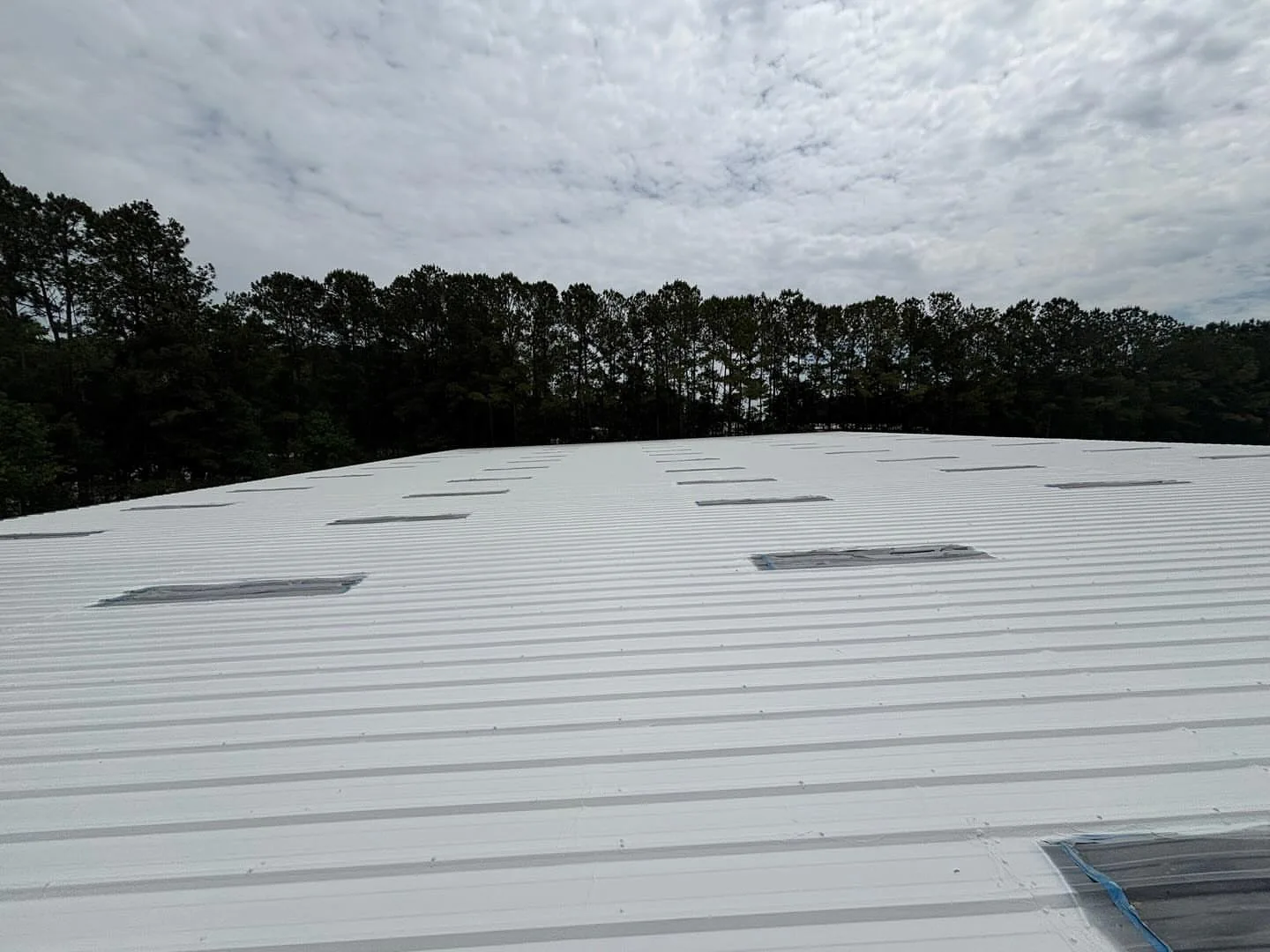
Stand in the bay beneath the skylight. If the crew relies on that daylight, price a replacement. If the space has changed and nobody needs the light, ask what it would take to close the opening with metal. Different bays on one building can call for different answers.
In Pooler, Diamond and Diversified Roofing Solutions restored the R-panel roof and replaced 220 skylights. See the warehouse project.
Replace the skylight or close the opening?
Replace the skylight
Pros. Keeps daylight over workstations, aisles and loading bays. A diffusing lens can soften glare. Daylight can reduce electric lighting use where staff or controls turn lights down. A suitable operable unit can also provide ventilation.
Cons. Sun through clear glazing can add glare and summer heat. Cold glazing can collect condensation. The lens, seals and flashing need inspection, and service crews still need protection around the opening. Hail damage or a failed seal can bring replacement forward.
Pros. A properly supported, profile-matched panel eliminates the aging lens and its seals. It blocks direct sun at that opening and can restore a continuous insulation layer when the scope includes it.
Cons. The bay loses its overhead daylight. Electric lighting or controls may need an upgrade. Work can include framing, insulation, an interior liner and disruption below. The new laps, fasteners and adjoining older roof still need inspection.
Some translucent units open automatically during a fire. Have the building team identify smoke and heat vents, required daylight or ventilation, and roof access on the approved plans. Confirm any change with the design professional and local authority before specifying solid metal. See an example of a daylighting smoke vent.
How long do skylights last?
For budgeting, published manufacturer examples run from about two decades to around three. Identify the unit in your roof before assigning it a replacement year.
Acrylic dome
Over 20 years is Columbia’s expectation for its extruded acrylic units with regular maintenance. Inspect for fine surface cracks, splits or loss of clarity. Acrylic care instructions, page 1 (PDF).
Profiled fiberglass panel
Around 30 years is Filon’s estimate for its industrial fiberglass sheets. On an older warehouse, identify the installed panel and look for surface wear, cracks and loss of useful daylight. Industrial rooflight sheet life.
Modular glass skylight
30 years is the reference service life VELUX Commercial publishes for its modular glass system. This figure applies to that assembly. Fog trapped between panes, damaged glazing or deteriorated seals warrant inspection earlier. Modular skylight reference life, page 14 (PDF).
These figures describe particular products under the manufacturer’s assumptions. UV exposure, hail, upkeep, flashing condition and past repairs can change when work makes sense. Check the age, inspection history and written warranty for the unit you own.
What if water is dripping at the skylight?
From inside, record the bay, rain direction and time of the drip. A wet trail at a curb after wind-driven rain calls for checking the uphill flashing, seams and roof above it. Droplets across the underside on a cold, dry morning point the investigation toward indoor humidity and surface temperature. Both conditions can occur in the same bay.
If glazing and supports are sound, a localized flashing repair may preserve the daylight you already have. A fractured lens, failed glazing seal or deteriorated support changes the repair scope.
Keep people off skylights and translucent roof panels, including weathered units that blend into the roof. Have a qualified crew arrange safe access and fall protection. OSHA fall protection for openings, §1910.28(b)(3).
What belongs in a skylight quote?
Map each opening
Number each opening and identify the occupied bay beneath it. Record whether it is a raised curb-mounted unit or a translucent panel that follows the roof ribs. Have the roofer document dimensions, glazing condition, supports, flashing, drainage and any leak history.
Price each choice
Request separate quantities and unit prices for flashing repairs, replacement skylights and metal infill. For a skylight, specify glazing and curb details. For metal, specify panel profile and finish, support, attachment, weatherproofing, insulation and interior finish. Identify any lighting work and who supplies it.
Plan occupied work
Agree on lift access, work hours, protection below and how long the bay must close. Ask which costs cover damaged framing or wet insulation, who approves extra work, and what the product and workmanship warranties cover.
Give Diamond the building location, approximate opening count and which bays still need daylight. Existing roof plans or photos taken from inside are a useful start.