
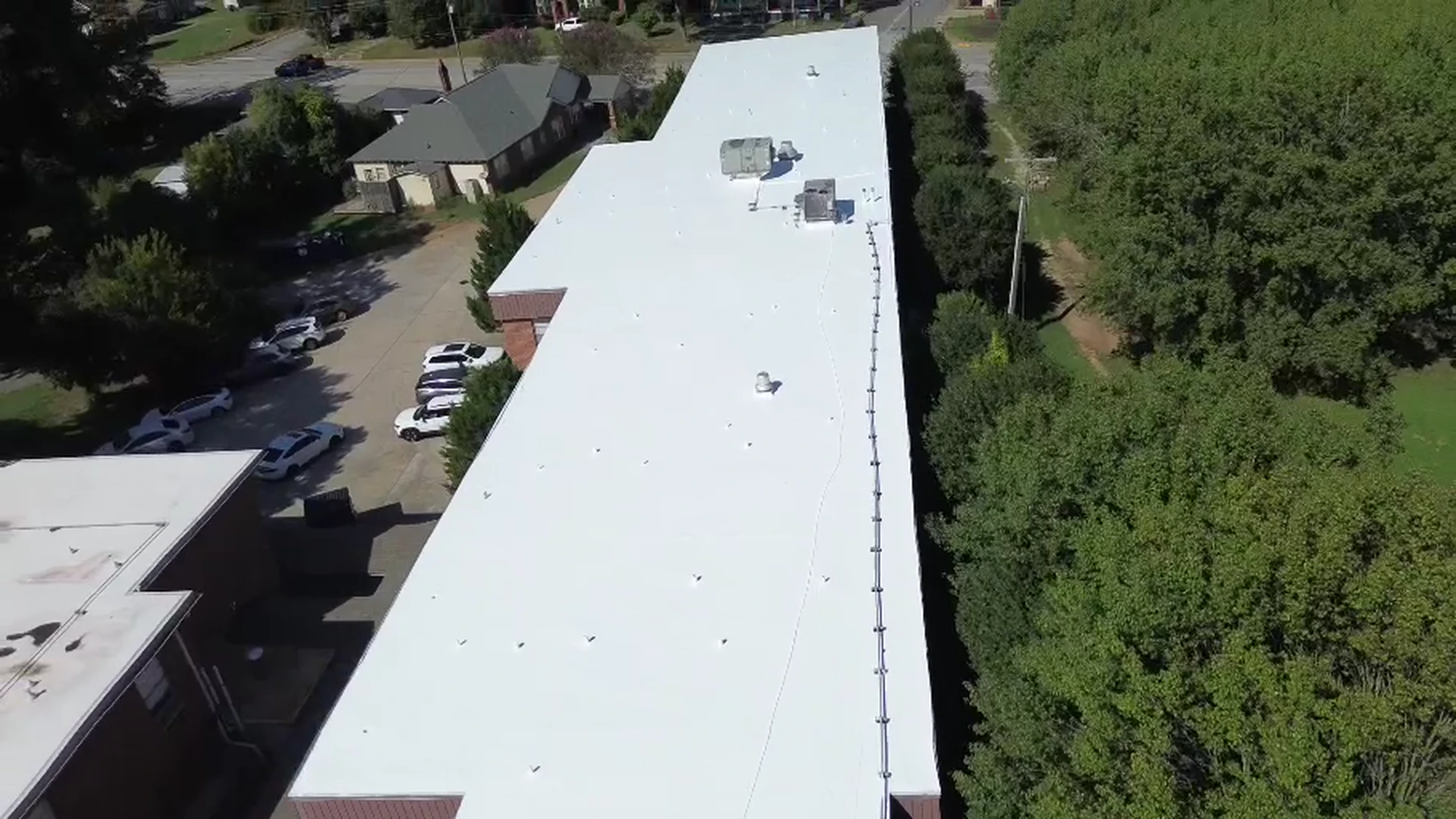
Why the flight usually happens after sunset
Water changes how a roof stores heat. After a sunny day, an area above damp insulation may stay warm as surrounding dry sections cool. A drone records those differences at the roof surface. On a suitable low-slope roof, overlapping images can reveal a broad pattern that is difficult to recognize while standing on one section.
Survey timing depends on the roof and the weather. Rain, ponding, evening dew and wind can obscure the pattern. Heavy ballast can hide small areas, and sections behind equipment or under solar panels may be unreadable. A survey plan should identify those gaps and how they will be checked.
What to look for on the moisture map
Look for a thermal image paired with a daylight roof plan. Drains, curbs, expansion joints and roof section labels should make each area easy to find again. A warm rectangle that matches an old patch deserves a different explanation from an irregular patch that crosses several insulation boards. Different materials, shade and exhaust heat can all change the apparent temperature.
Ask which shapes are suspected wet areas, which have been physically checked, and where coverage was limited. The colored outline can guide an investigation. Its square footage is provisional until the boundary has been checked on the roof.
From flight findings to a repair decision
A roofer can compare a suspect area with a similar reference area, then take authorized core samples to see which layers are wet. A separate inspection traces the entry point. Water can travel sideways, so the best place to open a roof may be some distance from the indoor drip.
A localized finding can support a targeted cutout, deck inspection, replacement of wet insulation and repair of the responsible flashing or seam. Broadly scattered wet areas call for a wider replacement assessment. A one-way vent can relieve vapor pressure in a compatible design. Wet boards still need the treatment specified by the roofing system before coating.
Repair and mitigation options for a wet roof
- Stop water at its source
- Repair confirmed openings at seams, flashings, curbs, drains or penetrations with a detail suited to the existing membrane. Refer leaking drain piping or HVAC condensate equipment to the appropriate trade. Check the repair under the conditions that produced the leak.
- Correct ponding and poor drainage
- Clear and maintain drains, scuppers and gutters. Persistent low spots can call for tapered insulation, crickets or changes to outlet elevations. Have suspected deflection or deck damage evaluated before adding material or load.
- Remove wet insulation and damaged board
- Mark the verified boundary, expose the affected layers, and extend removal to sound, dry material. Evaluate the deck and fasteners, replace unsuitable insulation and cover board, and tie the compatible waterproofing back into the surrounding roof.
- Control condensation and indoor moisture
- Trace humid air, duct leakage and cold surfaces. Address exhaust, air sealing, insulation continuity or vapor control according to the building and climate. Recheck humidity and surface conditions during the operating cycle that produced the wetting.
- Use one-way pressure-relief vents only where specified
- A one-way vent can release vapor pressure from a compatible roof assembly. Its effect depends on a path for vapor to reach it. A vent cannot restore a crushed board, remove standing water or establish that saturated insulation is dry. Obtain the system designer’s or manufacturer’s detail.
- Verify drying, replacement or restoration
- Where an approved drying plan applies, document readings against suitable dry reference areas before closing the work. Broader wetting, repeated leaks or compromised decking can warrant sectional or full replacement. Confirm a dry, sound substrate and coating compatibility before restoration.