
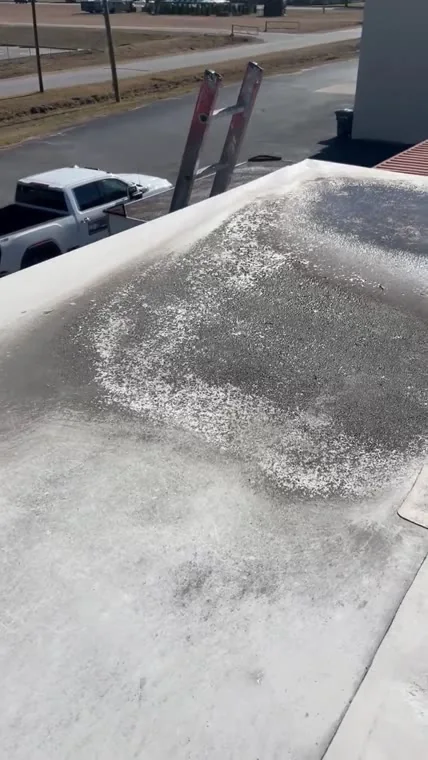
What the scanner measures
A technician moves the instrument across the membrane. Its electrical field interacts with the materials beneath it, and water changes that response. A capacitance meter measures one part of the response. An impedance scanner also accounts for electrical resistance. The resulting numbers are comparative. A reading of 70 on a relative scale does not mean a board contains 70 percent water.
How to read the roof map
The inspector starts with a dry surface, identifies areas with the same membrane and insulation, and scans in adjoining passes or along a recorded grid. A cluster of elevated readings extending away from an old curb repair deserves investigation. A sharp shift exactly where an addition begins could simply reflect a change in the roof construction.
Metal coverings, foil facers and black EPDM can defeat this method. On a protected membrane beneath ballast or plantings, a surface reading can include water intentionally present above the waterproofing. The survey should identify excluded sections and offer a different test for them.
What an elevated reading changes
Ask for a map with a dry comparison area, marked sample locations and the boundary that remains uncertain. Confirmation cores on either side of a suspected boundary help determine which boards need removal. Once the entry detail is repaired, damaged materials can be replaced to sound, dry limits and the membrane reinstated before a coating is considered.
Repair and mitigation options for a wet roof
- Stop water at its source
- Repair confirmed openings at seams, flashings, curbs, drains or penetrations with a detail suited to the existing membrane. Refer leaking drain piping or HVAC condensate equipment to the appropriate trade. Check the repair under the conditions that produced the leak.
- Correct ponding and poor drainage
- Clear and maintain drains, scuppers and gutters. Persistent low spots can call for tapered insulation, crickets or changes to outlet elevations. Have suspected deflection or deck damage evaluated before adding material or load.
- Remove wet insulation and damaged board
- Mark the verified boundary, expose the affected layers, and extend removal to sound, dry material. Evaluate the deck and fasteners, replace unsuitable insulation and cover board, and tie the compatible waterproofing back into the surrounding roof.
- Control condensation and indoor moisture
- Trace humid air, duct leakage and cold surfaces. Address exhaust, air sealing, insulation continuity or vapor control according to the building and climate. Recheck humidity and surface conditions during the operating cycle that produced the wetting.
- Use one-way pressure-relief vents only where specified
- A one-way vent can release vapor pressure from a compatible roof assembly. Its effect depends on a path for vapor to reach it. A vent cannot restore a crushed board, remove standing water or establish that saturated insulation is dry. Obtain the system designer’s or manufacturer’s detail.
- Verify drying, replacement or restoration
- Where an approved drying plan applies, document readings against suitable dry reference areas before closing the work. Broader wetting, repeated leaks or compromised decking can warrant sectional or full replacement. Confirm a dry, sound substrate and coating compatibility before restoration.