
Roof condition guide
Common coated roof problems
A coating protects an existing roof. The condition of the metal, foam or membrane below matters as much as the condition of the visible finish.
All common roof problemsPonding and peeling acrylic
Persistent standing water can shorten the life of many acrylic systems. Compare a low bay with a nearby dry area. Check for a blocked outlet, deflection or missing tapered insulation before choosing a different topcoat. Product-specific ponding limits govern.
Acrylic over silicone
Acrylic applied over cured silicone may peel where it cannot bond. Identify the old coating from records, test a representative area and obtain written compatibility guidance. A successful test patch does not override a manufacturer exclusion.
Thin film, dirty surfaces and failed details
Insufficient film thickness, moisture during application, rust, uncured repairs or contamination can leave pinholes or weak bonds. Check whether peeling starts at the substrate, between coats or at a moving seam. Ask for documented preparation, wet-film checks and cure conditions.
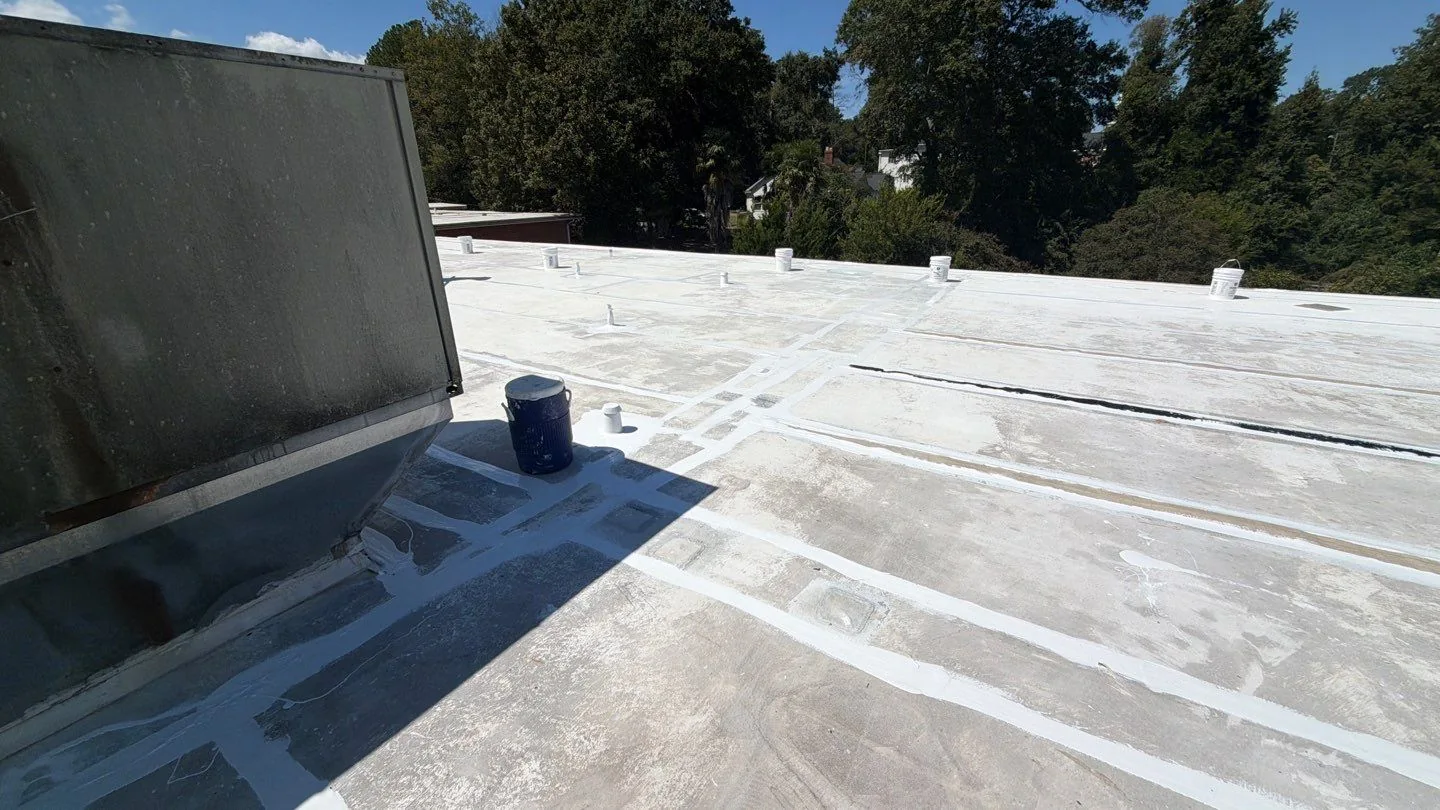
A failed bond can release a coating in sheets
Two leak paths at an internal drain
Next steps
Technical reference · Ponding on acrylic-coated roofs · GAF technical bulletin