
Coated roofs maintenance handbook
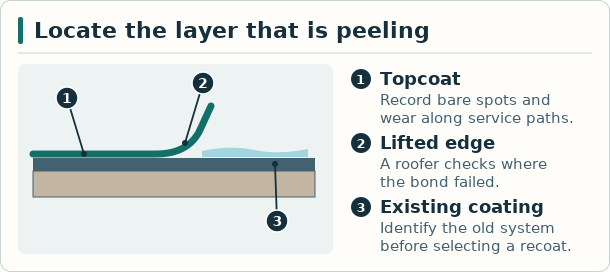
Acrylic, silicone and urethane coatings protect an existing roof. A bright, clean finish can still hide a weak seam or wet insulation. Locate the coating record and identify what is underneath: metal, foam or a membrane. The maintenance plan needs to account for both layers.
Download PDFBefore the first check
Identify this roof section on a sketch. Mark downspouts, drains, previous repairs and rooms where leaks have appeared. Find the installer’s care instructions and warranty notice requirements. Choose safe observation points you can return to.
What to check
- Start a coating record
- File the system name, base and topcoat, application date, repair map, warranty and maintenance instructions. Save the original inspection and thickness records. Give this file to anyone proposing a cleaner, sealant or recoat.
- Map wear by location
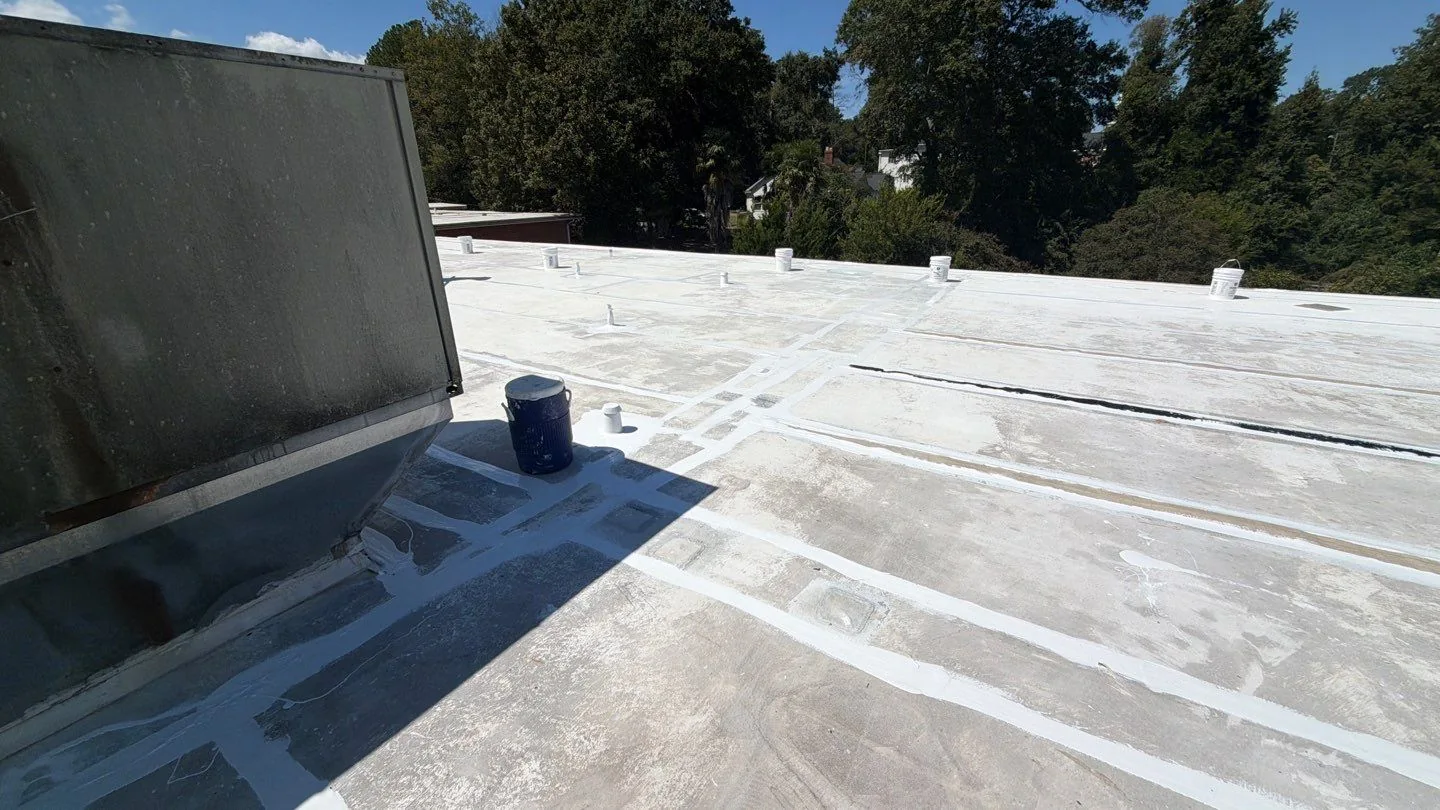
- Ask for dated photos of walk paths, ridges, seams and equipment curbs. Record where the basecoat, fabric, foam or metal shows through, and where film flakes or lifts. A color change alone does not establish coating failure.
- Keep outlets and condensate lines working
- Watch outlet discharge from the ground and mark persistent puddles from inspection photos. Note whether water returns in dry weather when cooling equipment runs. Coordinate repairs to the drain or condensate line before recoating.
- Arrange the right cleaning
- Ask the system manufacturer or installer for the allowed cleaner, method and runoff precautions. Have a qualified crew remove debris and deposits. Avoid improvised solvents, aggressive scrubbing and pressure washing that could lift the finish.
- Control roof traffic
- Keep an HVAC and vendor visit log. Ask crews to use designated walkways, protect the finish under equipment and remove loose parts. Record fresh scuffs, cuts or grease spills with the vendor visit date.
- Check joints and transitions
- Review close-ups around pipe boots, wall flashings, seams, fasteners and old patches. Note whether a crack stays within the film or follows a moving joint. Request a contractor inspection before a broad new coat conceals it.
When to check
- Spring
- Schedule a qualified inspection after winter. Compare coating wear, cracks, drain flow and older detail repairs with earlier photos. Order system-compatible repairs while the damaged areas are still localized.
- Fall
- Arrange debris removal and confirm drains and gutter outlets are open. Review upcoming recoat or warranty inspection dates. Keep completed inspection reports with the original system documents.
- After hail, high wind or mechanical work
- Record the date and location of cuts, dents or displaced equipment. Have suspect areas checked for a breach in the finish and damage to the roof below. Keep everyone off wet, slippery coating.
When something changes
- Acrylic peels in a place that stays wet
- Note how long water remains after rain. Ask for a drainage investigation, a moisture check and identification of the failed layer. Product-specific ponding approvals govern any proposed treatment.
- A patch peels away from an older silicone finish
- Save product records and ask the contractor to identify both films. Before ordering another coating, require written compatibility guidance and representative adhesion tests after the proposed preparation.
- The coating looks thin but the roof is dry inside
- Ask the roofer to check local thickness, bond and the substrate, including heavily traveled areas. A compatible maintenance coat may be timely if the roof is dry and sound. Request a comparison with targeted detail repairs.
What to ask the roofer
- Identify where the bond failed and document conditions underneath. Moisture screening or an infrared image can guide further checks. Verify suspect locations before defining tear-off.
- Ask how worn details, rust, wet material and drainage will be corrected before coating. Confirm the proposed system is approved for the actual existing finish.
- Obtain repair-day photos, product names and application checks. For a recoat, request coverage and film-thickness records, cure conditions, and the next inspection date.
Who keeps the record?
Homeowners and property owners keep the roof file, authorize work and retain the written scope. Property managers log reports by room or roof section, coordinate trades and track repairs through closeout. Maintenance staff record accessible observations, restrict access to hazards and escalate changes. Leave roof access, probing, cleaning at height and repairs to trained, authorized people using an appropriate access plan.
For each visit, log the date, weather, roof section, observation, photo ID, responsible person and follow-up date. Close the entry with the repair record and the next inspection. A printable log is included in the PDF.