
Roof condition guide
Common metal roof problems
Start with the weather pattern. A dripping screw line after steady rain, a wall stain during wind-driven rain and widespread dripping on a cold morning point to different investigations.
All common roof problemsExposed screws and sealing washers
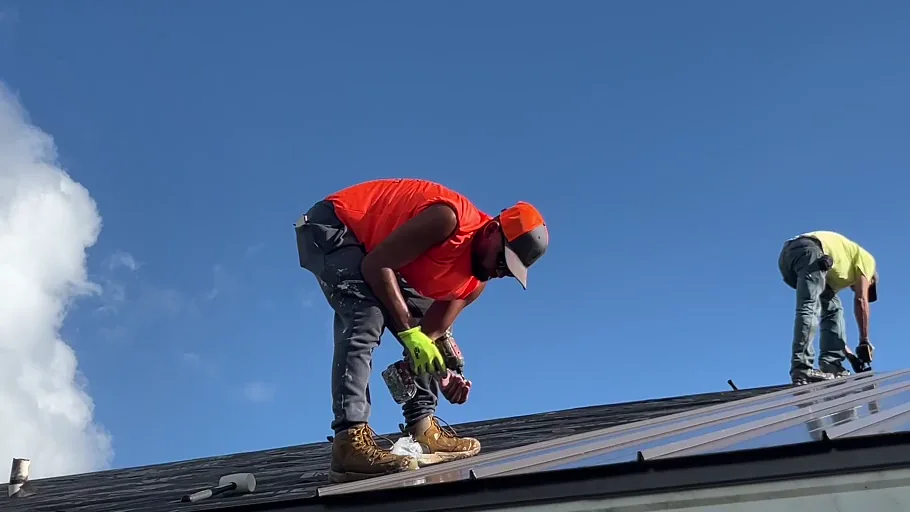
An underdriven screw can leave a gap. Overdriving can split or squeeze the washer sideways. Sun and age can harden it. Thermal movement can enlarge the hole or work the screw loose. Check the hole and the supporting member before specifying replacement fasteners. Standing-seam clips require a different inspection.
Ridge, eave and wall closures
Wind can push rain through the open ribs under a cap or at a roof-to-wall transition. Compare the actual trim, sealant and profile-matched closures with the panel detail. A vented ridge needs a designed vented closure that sheds rain while allowing airflow. Solid foam in a ventilation path creates a different problem.
Gutters that spill toward the wall
A blocked outlet, undersized downspout, poor fall or an eave that discharges behind the gutter can raise water above the back edge. Overhanging limbs add debris. Trace the overflow route and inspect gutter height, offset, capacity, closures and wall flashing together. Cleaning alone cannot correct a sizing defect.
Insulation facing can move the drip
Water entering high on a metal building can run along vinyl-faced blanket insulation, sag into a pocket and escape at a facing joint or wall. Check upslope laps and penetrations as well as the spot directly over the stain. Compare rain events with condensation on cold metal or air-conditioning lines.
Corrosion and movement
Look for rust concentrated at cut edges, trapped debris, dissimilar metals or fasteners. Faded paint alone says little about remaining metal thickness. Split seams, torn clips and deep pitting need investigation before anyone proposes a coating.
How a washer loses its seal
Why the wall drip can be downhill from the leak
How a full gutter can wet the wall
Next steps
Technical reference · Low-slope metal guide · IBHS / RICOWI