
Metal roofing maintenance handbook
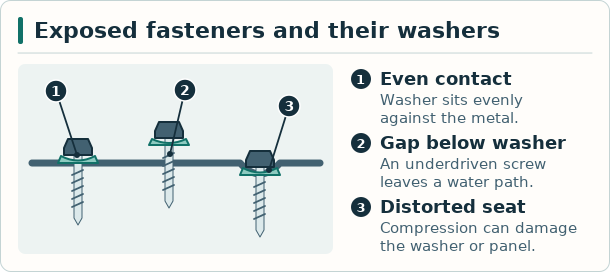
Begin with two things: which panel system you own and where rain should leave it. Exposed-fastener roofs have screws through the panel face. Standing-seam roofs usually attach with concealed clips. Record the profile, finish and installer before ordering service.
Download PDFBefore the first check
Identify this roof section on a sketch. Mark downspouts, drains, previous repairs and rooms where leaks have appeared. Find the installer’s care instructions and warranty notice requirements. Choose safe observation points you can return to.
What to check
- Follow one slope to its outlet
- From the ground, follow the roof edge to the gutter and downspout. During rain, note which outlet flows, where water spills and whether it spills toward the wall. Report recurring overflow even if the gutter was recently cleaned.
- Look along the panel lines
- Use binoculars or a zoom photo from a safe location. Mark lifted edges, uneven seams, loose trim or a new rust streak on a roof sketch. Give the roofer the panel row and nearest door or column.
- Check the inside of the building
- After rain, look for new staining at columns and exterior walls. Water can travel downhill on vinyl-faced insulation and drip at a joint. Mark the first wet spot, storm direction and time. Keep an older dry photo for comparison.
- Keep the finish and drainage paths clear
- Arrange professional removal of trapped leaves, metal filings and branches. Have overhanging limbs trimmed. For cleaning or touch-up, obtain the panel manufacturer's instructions for the actual finish, especially on salt-exposed buildings.
- Control equipment changes
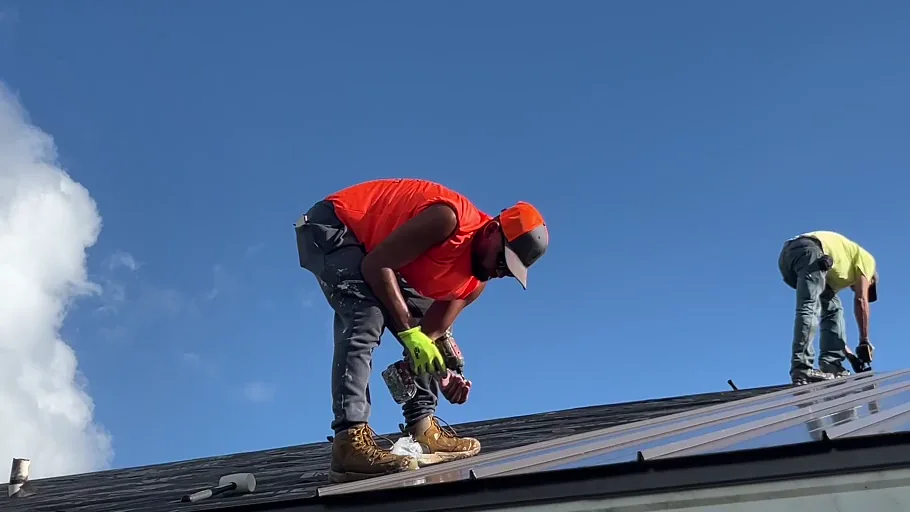
- Before HVAC, solar or sign work, give the trade the roof plan. Have the roofer approve any new penetration or attachment. Ask for before-and-after photos of seams, flashings and the crew's access route.
When to check
- Spring
- Review winter stains and photos from a comparable dry day. Arrange a detailed inspection of seams, eave closures, flashings and fastener rows where wind or water has repeatedly reached the building.
- Before leaf fall or storm season
- Arrange gutter and outlet cleaning, confirm downspouts discharge away from the wall and schedule branch clearance. On the first substantial rain, record whether previously overflowing sections now drain.
- After hail, high wind or rooftop work
- Walk the perimeter once conditions are safe. Photograph displaced trim, punctures, debris or changes in panel shape. Ask for a contractor review before anyone straightens a seam or coats a damaged area.
When something changes
- A rust halo is growing around several screws
- Send a close zoom and a wider row photo. Ask the roofer to examine the sealing washer, hole and support beneath. Tightening every screw can crush washers and leave enlarged holes unresolved.
- The gutter is clear but the wall gets wet
- Record whether water overtops the back edge or runs behind the gutter. Ask the roofer to check eave flashing, profile-matched closures, gutter height, fall, outlet placement and capacity as a system.
- Water appears indoors on cold, dry mornings
- Record indoor humidity if available, equipment operation and elapsed time since rain. Ask for a condensation and insulation-facing review alongside the leak inspection before authorizing seam repairs.
What to ask the roofer
- Request a marked photo plan separating isolated washer or trim defects from panel corrosion and loss of fastener grip.
- Have the roofer verify the correct ridge closure for the panel and ventilation design. Blocking a designed vent can create a second moisture problem.
- Before restoration, request evidence of sound panels, dry insulation, completed rust and seam repairs, and adhesion tests for the proposed finish.
Who keeps the record?
Homeowners and property owners keep the roof file, authorize work and retain the written scope. Property managers log reports by room or roof section, coordinate trades and track repairs through closeout. Maintenance staff record accessible observations, restrict access to hazards and escalate changes. Leave roof access, probing, cleaning at height and repairs to trained, authorized people using an appropriate access plan.
For each visit, log the date, weather, roof section, observation, photo ID, responsible person and follow-up date. Close the entry with the repair record and the next inspection. A printable log is included in the PDF.