
Roof condition guide
Common TPO roof problems
A TPO roof has heat-welded sheet seams. A good-looking white surface cannot reveal whether the lap fused across its required width or whether insulation beneath it is dry.
All common roof problemsCold welds and overheated laps
Contamination, moisture, weld speed and heat affect fusion. A cold weld can lift at the edge. Excess heat can damage the sheet. Qualified installers check trial welds under actual conditions and probe cooled seams, including T-joints and patches.
Attachment below the sheet
A fully adhered field sheet can lift where the adhesive or substrate failed. A mechanically attached assembly relies on its fasteners and plates. Identify which was installed before interpreting billowing, wrinkles or movement.
Parapets, coping and terminations
Missing or loose coping can admit water behind wall flashing. A termination bar fixed to an unsuitable surface, with loose or incorrect anchors or a failed top seal, can detach. Check the approved wall detail, substrate and attachment, including corners.
Drainage and concealed leaks
A raised drain, blocked strainer or low bay can leave ponding. A loose clamping ring can leak at the roof surface. Failed pipe joints below the deck can leak while the membrane stays sound. Survey elevations before recommending tapered polyisocyanurate insulation and crickets; check outlet capacity separately.
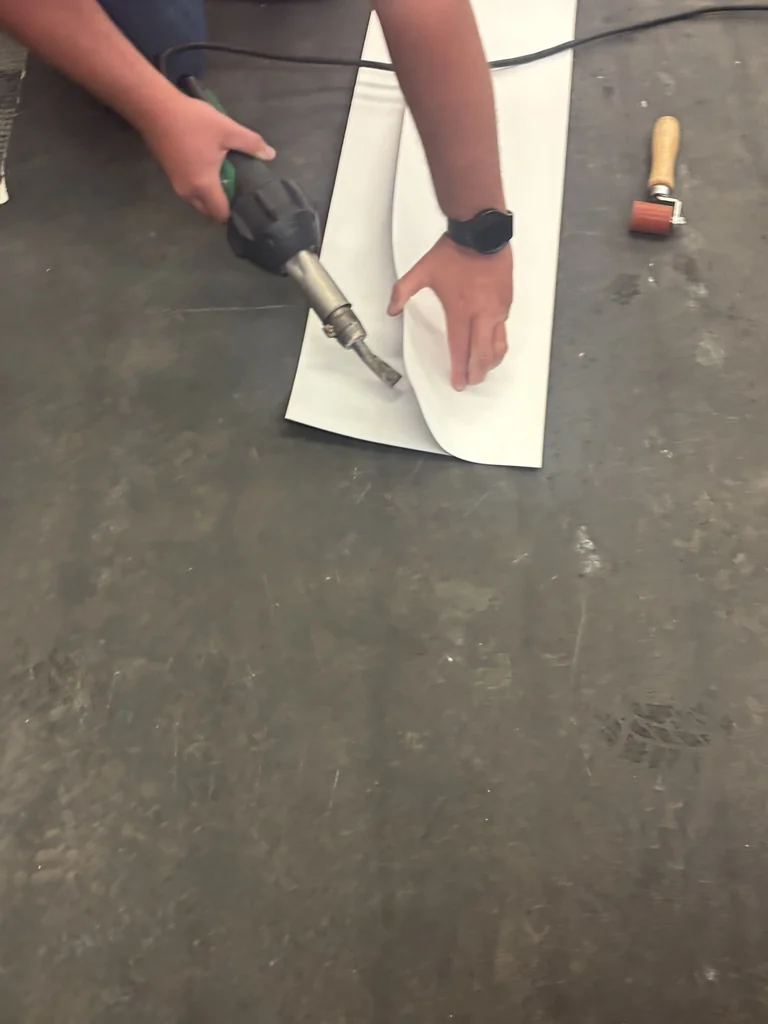
A gap across a membrane lap
Two leak paths at an internal drain
Next steps
Technical reference · Single-ply membrane guide · IBHS / RICOWI