
TPO maintenance handbook
TPO is a flexible roof sheet joined with hot-air welds. Keep its water outlets open and protect the sheet during equipment service. Roof plans, warranty records or membrane markings can establish which TPO system you have. A white roof can also be PVC.
Download PDFBefore the first check
Identify this roof section on a sketch. Mark downspouts, drains, previous repairs and rooms where leaks have appeared. Find the installer’s care instructions and warranty notice requirements. Choose safe observation points you can return to.
What to check
- Map the roof once
- Label each roof level, drain, overflow and equipment unit on a simple plan. Record the membrane brand, installation date, attachment method and last repair when known. Keep the map and warranty contact with the building file.
- Follow runoff after rain
- From a safe window or from the ground, check downspout discharge and wall overflow outlets. Record when rain stopped and which areas still hold water later. Arrange roof-level debris removal and drain-strainer checks with your qualified service team.
- Compare seams and flashings
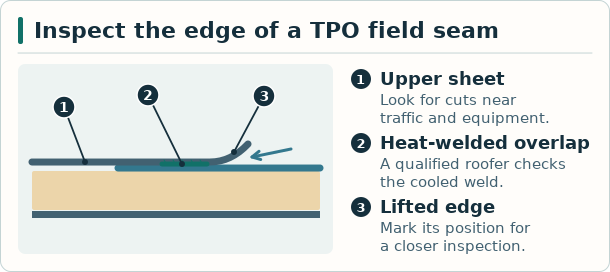
- In inspection photos, check for lifted lap edges, cuts near corners and a loose metal cap at the top of a wall. Flag the location. A roofer can check the welded joint and the wall attachment without damaging a sound seam.
- Protect equipment routes
- Give service vendors a designated access route. Ask them to protect the sheet under tools, collect screws and report dropped parts. Record a before-and-after photo of the work area. Only a roofing contractor should change a penetration or flashing.
- Plan cleaning and document repairs
- If dirt or exhaust residue accumulates, have the contractor identify it and use the maintenance instructions for that membrane. Keep cleaning products, dates, repair locations and completion photos with the roof plan.
When to check
- Spring
- Schedule a roof inspection. Compare drain areas, field seams and equipment curbs with the last report. Ask for dated photos of anything that has opened, moved or worn since winter.
- Fall
- Arrange debris clearing before drains fill with leaves. Confirm drain strainers are seated and overflow outlets are open. Check inside the building after the next rain to see whether earlier stains return.
- After a storm or trade visit
- Once conditions are safe, check occupied rooms for fresh stains and review the contractor's rooftop photos. Record hail, wind direction, service routes and moved equipment. Report fresh punctures or displaced edge metal promptly.
When something changes
- A ceiling drip appears after rooftop equipment service
- Mark the room and time and get the vendor's work location. Ask the roofer to examine nearby traffic paths, the curb and seams, and ask the HVAC team to check the condensate drain. Water may exit away from the entry.
- An overflow outlet runs during ordinary rain
- Record the outlet, rain duration and whether the usual downspout discharged. Have the primary drain and line checked promptly. If the membrane is sound but a pipe joint leaks below it, the repair belongs in the drainage system.
- A lap edge appears lifted
- Send a location photo and arrange a prompt TPO inspection. The contractor can assess the weld and check the insulation beneath the opening. Leave the edge as found so the original defect remains visible.
What to ask the roofer
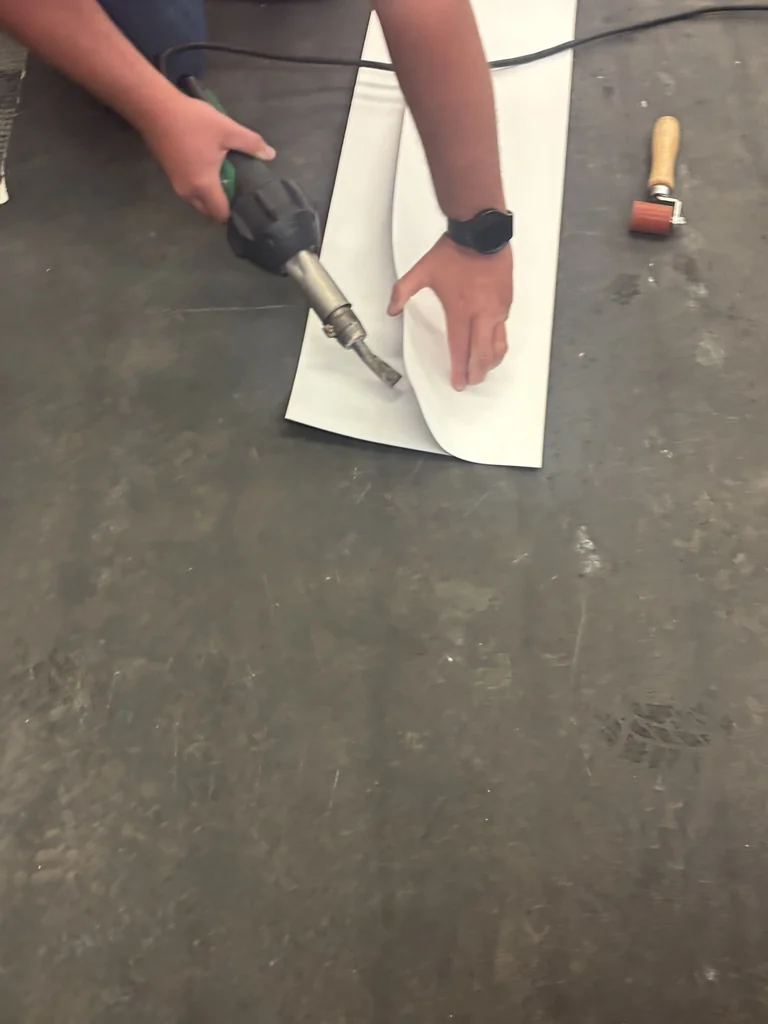
- Ask the roofer to verify sheet condition and weldability before patching, then check the completed weld and photograph it on the roof plan.
- For repeated ponding, request a check of drain height, deck deflection, slope and insulation layout. A blocked line and a high drain need different remedies.
- Before restoration, request evidence of dry, securely attached materials and compatible adhesion. Obtain a separate scope for removing wet insulation or replacing unsound deck.
Who keeps the record?
Homeowners and property owners keep the roof file, authorize work and retain the written scope. Property managers log reports by room or roof section, coordinate trades and track repairs through closeout. Maintenance staff record accessible observations, restrict access to hazards and escalate changes. Leave roof access, probing, cleaning at height and repairs to trained, authorized people using an appropriate access plan.
For each visit, log the date, weather, roof section, observation, photo ID, responsible person and follow-up date. Close the entry with the repair record and the next inspection. A printable log is included in the PDF.