
Reflective finishes
A white acrylic surface reflects sunlight, helping limit roof heat absorption. Cooling savings vary by building.
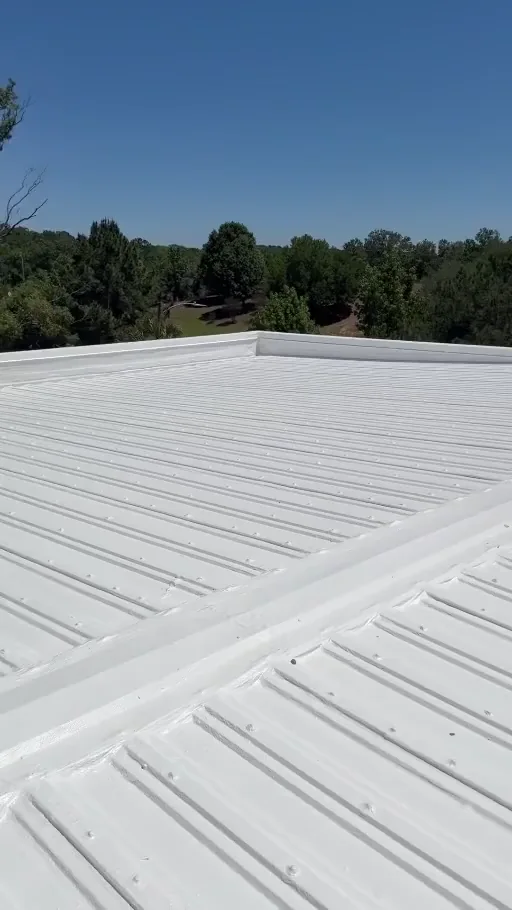
Diamond Roof Restorations · In the field
Acrylic roof coatings can give a sound, well-draining roof a flexible new surface and a clean, reflective finish.
Why consider acrylic?
A white acrylic surface reflects sunlight, helping limit roof heat absorption. Cooling savings vary by building.
A flexible coating protects compatible, prepared surfaces from UV exposure and weathering.
Acrylic is often an economical coating choice when the existing roof remains suitable for restoration.
A consistent finish can refresh weathered metal. Some product lines offer colors beyond white.
Product background: American WeatherStar acrylic coatings, UNIFLEX acrylic finish coat and manufacturer coating comparison.
Match the coating to the roof
Acrylic is commonly considered for metal roofs and other manufacturer-approved substrates. The roof needs a sound foundation, suitable adhesion and reliable drainage.
Chronic standing water is a significant limitation. A silicone system may be a better candidate where prolonged moisture exposure matters, alongside an evaluation of the drainage problem.
Metal restoration involves more than coating the panel faces. Review loose fasteners, open seams, corrosion and existing finishes. Rust treatment and the correct primer help prepare metal for the specified coating; badly damaged components require their own repairs.
At TideWater Trailer Supply in Savannah, Diamond sealed both directions of panel seams and the fasteners before applying acrylic. Read the TideWater repair scope or watch our crew apply coating along metal panels.
Some existing roof materials require specific base coats. A product approved for one roof is not automatically approved for every roof.
Selection and preparation references: acrylic suitability and limitations, rust-inhibitive primer and substrate-specific base-coat requirements.
Compare the scope, not just the pail
Ask for the product names, repair scope, preparation steps and finished coating thickness in writing. Identify which areas need seam reinforcement or primer, and how application conditions will be checked.
Have the proposal explain how wet materials or damaged panels will be handled if discovered. Agree on equipment access, protection of occupied areas and closeout photographs. These details make two estimates easier to compare.
For an example of a specified system, see the white Uniflex acrylic restoration in Brunswick. The project record identifies the selected 10-year system and includes a roof photograph.
A properly specified restoration can help protect prepared metal. Existing corrosion still needs treatment, appropriate primer and a repair decision; a finish coat cannot rebuild missing metal.
A reflective finish may reduce cooling demand. Ask how insulation, roof color, building use and air conditioning affect the likely benefit rather than applying a universal savings percentage.
Service life depends on the selected system, roof condition, thickness, exposure and maintenance. Compare the actual warranty documents, including coverage, exclusions and care requirements.
Further reading: manufacturer acrylic questions and answers.
Make an informed choice
Share your property address, leak concerns and any existing roof records. Diamond Roof Restorations serves Jesup and Southeast Georgia.