
UV stability
Silicone resists degradation from sunlight, an advantage on roofs exposed throughout the day.
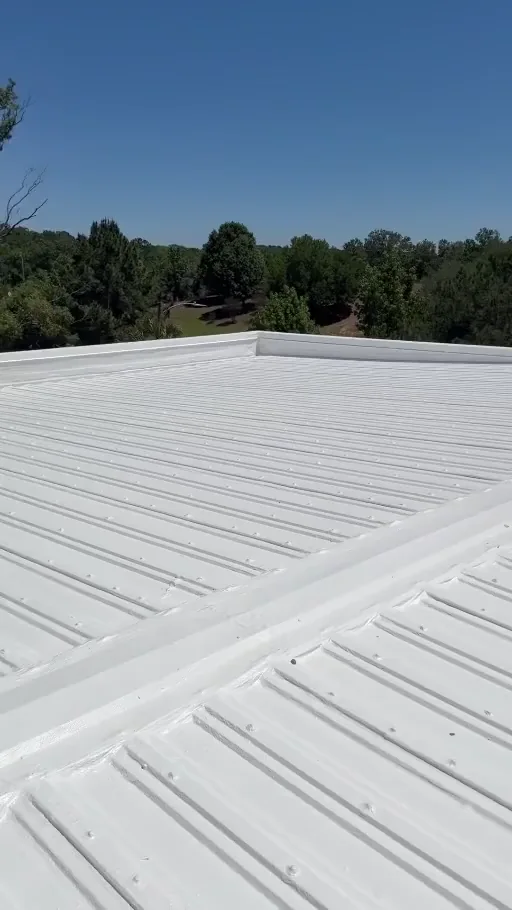
Diamond Roof Restorations · In the field
Silicone roof coatings offer UV stability and moisture resistance for suitable commercial roofs, including many flat and low-slope assemblies.
Why consider silicone?
Silicone resists degradation from sunlight, an advantage on roofs exposed throughout the day.
The chemistry handles prolonged moisture exposure better than some other coating types.
A complete, properly detailed system creates a continuous protective membrane over an eligible roof.
White silicone finishes help limit absorbed solar heat. Building conditions determine the cooling benefit.
Product background: American WeatherStar silicone coatings and UNIFLEX Silicone44.
A system for a suitable assembly
Approved silicone systems can be used over several roof types, including certain single-ply, modified-bitumen, built-up, metal and spray-foam surfaces. Compatibility is specific to the product and preparation.
Wet insulation, damaged materials, failed seams and penetrations need attention before coating. Adhesion checks and any required primer belong in the written scope.
On a Jesup commercial building, Diamond kept the existing TPO membrane and applied GAF silicone. See the roof and the selected silicone system.
Silicone does not change roof slope, unblock a drain or remove the weight of standing water. A restoration assessment should consider drainage and roof condition along with coating chemistry.
Ask which low areas will be corrected and how drains, scuppers and equipment access will remain serviceable after the work.
Suitability and preparation: manufacturer restoration prerequisites and Silicone44 recommended roof surfaces.
Plan beyond installation day
Silicone can collect dirt and become slippery when wet. Plan specified walk paths around regularly serviced equipment and discuss cleaning, inspections and repair materials at closeout.
Ask how the contractor will confirm the specified film thickness, document repaired areas and protect rooftop equipment. Keep product names, photographs and the issued warranty together so future maintenance starts with useful information.
If another contractor later installs a curb, pipe or new equipment, share those records before work begins. Ask for the flashing repair to match the existing system.
Care considerations: American WeatherStar on coating performance and walk paths.
Sometimes. Identify the old material and its condition, test adhesion and follow the proposed manufacturer’s preparation requirements. An inspection determines whether restoration is an option.
It depends on the roof. Compare moisture exposure, drainage, appearance, maintenance and total project scope. Explore acrylic’s benefits for another option.
Ask for the actual warranty sample and identify the issuer, covered work, exclusions, inspection obligations and claim process. A warranty term alone does not explain the coverage.
Compatibility and selection: silicone application questions and silicone and acrylic comparison.
Make an informed choice
Share your property address, leak concerns and any existing roof records. Diamond Roof Restorations serves Jesup and Southeast Georgia.